

Audio By Carbonatix
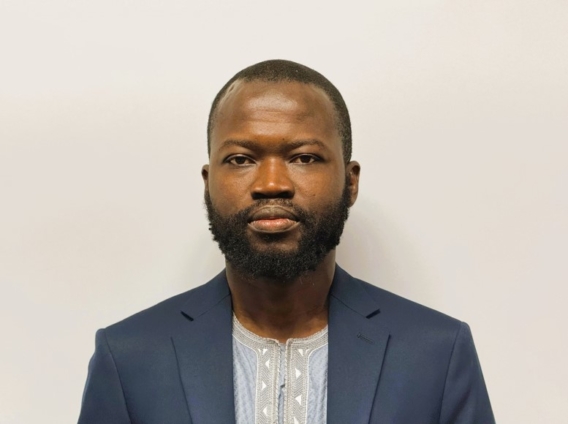
As the world races to cut greenhouse emissions, Ghanaian researcher Dr. Alhassan Ibrahim is helping turn forest and farm residues into cleaner fuels, work he believes could one day power aviation and strengthen energy security across Africa.
A postdoctoral scholar at Oregon State University (OSU), Ibrahim designs and tests nanocatalyst strategies that upgrade crude bio-oils produced from residues like rice straw and forest slash into energy-dense, stable fuel fractions suitable for sustainable aviation fuel (SAF) pathways.
“We’re learning how to get more usable fuel out of waste biomass while lowering carbon intensity,” he says. “My long-term goal is to help transfer these methods to contexts like Ghana, where agricultural by-products are abundant.”
From residues to renewable fuels
Thermochemical processes such as fast/catalytic pyrolysis and hydrothermal liquefaction break down biomass into a heavy, oxygen-rich oil. Ibrahim’s work focuses on bimetallic magnetic nanocatalysts specialized materials that strip oxygen, stabilize the oil, and boost yields during upgrading. In plain terms: less waste, better product, and a cleaner drop-in feed for SAF refining.
Why aviation and why now
Aviation is a hard-to-abate sector; SAF is one of the few near-term tools to reduce its footprint. By improving conversion efficiency and fuel quality from low-value residues, Ibrahim’s research tackles a known bottleneck on the path to lower-carbon jet fuel.
The work has been recognized through peer-reviewed publications and invitations to evaluate others’ research as a journal reviewer and conference poster judge.
Policy relevance and real-world deployment
At OSU, Ibrahim plays a leading role in a state-funded Clean Fuel Initiative modeling Oregon-specific carbon-intensity (CI) outcomes for fuels derived from woody biomass.
He co-authored a Legislature-directed report describing GREET-based CI modeling, process design, and bench/pilot-linked yields evidence that his laboratory advances are feeding into policy and program planning.
What this could mean for Ghana
Ghana generates significant volumes of agricultural by-products (e.g., cocoa husks, corn stalks, sawdust). Ibrahim sees an opportunity to convert a disposal challenge into a fuel resource, provided there is sustained R&D, pilot facilities, and public-private partnerships.
“I don’t yet have formal collaborations in Ghana,” he notes.
“But the science is mature enough to begin feasibility studies mapping feedstock logistics, testing catalysts on local residues, and validating the carbon-intensity benefits under Ghana’s grid conditions.”
The road ahead
Challenges remain capital costs, supply-chain logistics, and consistent policy frameworks but Ibrahim is pragmatic. “The key is to start small and measure everything,” he says. “If Ghana invests in targeted pilots and workforce training, we can build toward a regional hub for sustainable fuels that creates jobs and reduces import dependence.”
Editor’s note: As of August 2025, Dr. Ibrahim’s publications have accrued 77 citations (h-index 3); he has served as a journal peer reviewer and conference poster judge, and he recently co-authored a state-commissioned clean-fuel report at OSU. He welcomes inquiries from Ghanaian universities, agencies, and industry on pilot collaborations.
Author:
Alhassan Ibrahim
Postdoctoral Scholar, Oregon State University (OSU)
Department of Wood Science & Engineering
Latest Stories
-
GSA suspends pre-shipment inspection of imported used vehicles
6 minutes -
Elevate Africa confirms presidents, vice presidents and ministers for 2026 Annual Convening in Accra
30 minutes -
Keta MP commissions 60-seater kindergarten facility to replace unsafe structure
35 minutes -
Salomey Awiti-Baffoe’s lawyers welcome GH¢100,000 bail after earlier rejection
36 minutes -
Domestic tourism and its impact on the local economy
44 minutes -
Top-Up Pharmacy wins Community Pharmacy Chain of the Year at 2026 PSGH Pharma Excellence Awards
45 minutes -
Nigeria military aircraft with 32 on board crashes
47 minutes -
Black Stars need a coach who can inspire players to perform – Ignatius Osei Fosu
48 minutes -
Revenue collector crushed to death on Kasoa-Winneba highway
53 minutes -
GPL Week 5: Stephen Amankona, 8 other outstanding players win NASCO awards
54 minutes -
NPP’s new leadership team has experience to deliver – Dr Asah-Asante
55 minutes -
Mahama committed to developing Volta Region – Chief of Staff
56 minutes -
NPP’s new leadership offers no renewal after ‘micro minority’ defeat – NDC’s Abeiku Hayford
57 minutes -
Blackstar Experience to hold fashion show and summit in November
58 minutes -
Prof Mike Oquaye backs Kojo Bamba’s call for stronger ballot protection
1 hour