

Audio By Carbonatix
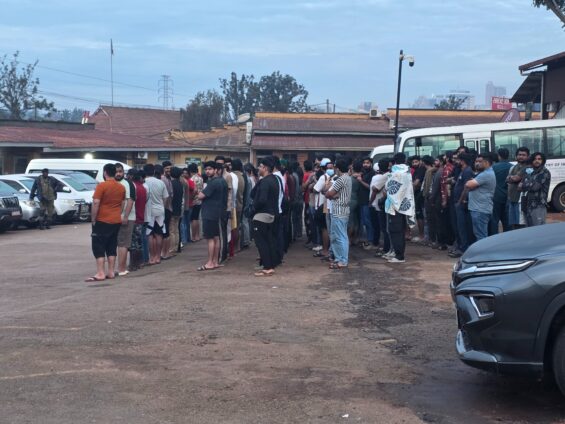
Ugandan authorities launched a massive enforcement operation this week to address illegal migration and organised crime. The Ministry of Internal Affairs confirmed the detention of 231 foreign nationals across two major raids. These actions targeted individuals living in the country without valid documentation. Officials suggest the operations have uncovered a sophisticated network of human trafficking and cybercrime. The sweep represents a significant escalation in Uganda’s efforts to regulate its borders and maintain internal security.
Coordinated Raids in Adjumani and Kampala
The enforcement actions began Sunday in the Adjumani District of northern Uganda. National Citizenship and Immigration Control (NCIC) teams apprehended 62 Nigerian nationals based on "credible intelligence." These individuals were reportedly operating without valid work permits. Simon Peter Mundeyi, the spokesperson for the Ministry of Internal Affairs, stated the group was found running a church illegally. Following this raid, officers conducted a second intelligence-led operation on the night of April 27-28 in the capital city.
Discovery of a Restricted Compound in Bukoto
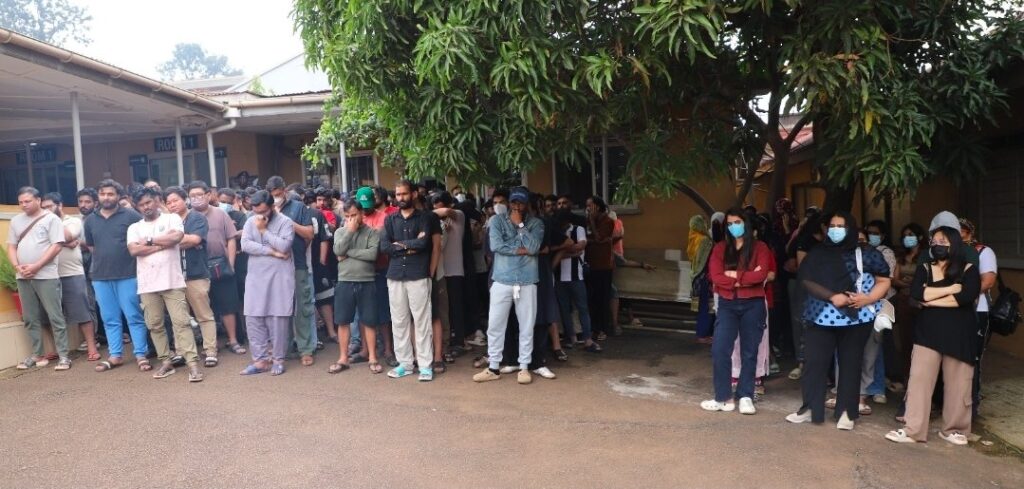
The second phase of the operation focused on an apartment complex in the Bukoto-Ntinda area of Kampala. Security forces detained 169 foreign nationals at this location, including 36 women. The Ministry of Internal Affairs described the site as a “highly restricted, self-contained apartment complex equipped with its own restaurant and internal facilities designed to restrict movement.” Authorities believe the layout was intended to “ensure total focus on illicit operations.” None of the suspects at this location possessed identification documents or travel passports.
Evidence of Cybercrime and Illicit Activity
During the Kampala raid, officers recovered a “significant cache” of computers and information technology equipment. Authorities allege these tools were used to facilitate illegal gaming, betting, and organised scamming. The suspects represent a diverse range of nationalities, including citizens from Pakistan, India, Bangladesh, Ghana, Myanmar, Ethiopia, Sri Lanka, Cambodia, and Malaysia. The presence of specialised equipment suggests the compound served as a hub for cross-border digital fraud.
Categorisation of Detained Individuals
The government is currently working to distinguish between different groups of detainees. Mundeyi told The Associated Press that those held fall into three categories: suspected victims of trafficking, alleged perpetrators, and individuals who overstayed their visas. Mundeyi stated all 231 individuals are “currently undergoing rigorous screening and processing.” Preliminary findings show varied circumstances. “Some individuals have claimed they were trafficked into Uganda with promises of employment. Others were engaged in cyber-scamming activities. A few were found in possession of materials suggesting involvement in other criminal activities,” Mundeyi said.
Legal Consequences and Repatriation Efforts
Those found in violation of national laws will face strict legal repercussions. “Those found in violation of Ugandan immigration laws will face prosecution in accordance with the country’s laws,” Mundeyi said. He added that “cases involving suspected trafficking or criminal activity will be referred to the appropriate law enforcement agencies for further investigation.” Victims of trafficking and simple visa overstayers will be assisted in leaving the country once they secure their own travel tickets. Suspected ringleaders of trafficking networks will face formal charges and potential deportation.
Implications for Regional Mobility and the Diaspora
The inclusion of Ghanaian and Nigerian nationals in these operations raises significant questions regarding the future of intra-African mobility. While Uganda maintains a visa-free or visa-on-arrival policy for many African citizens to promote continental integration, authorities are signalling that this openness is not a license for unregulated residency. For the Ghanaian public and the broader West African diaspora, this crackdown serves as a reminder of the increasing scrutiny on migrant communities. The government’s focus on organised scamming and "illegal gaming" within these communities may prompt tighter enforcement of work permits and residency requirements for all African expatriates seeking opportunities within the East African Community (EAC).
Regional Security and Migration Policy
Uganda has long maintained a reputation for welcoming foreigners, hosting hundreds of thousands of refugees fleeing conflict in neighbouring countries. For short visits, entry visas are not required for people from many countries in Africa and elsewhere. This recent crackdown signals a shift toward more rigorous enforcement. The Ministry and NCIC stated they remain committed to ensuring all foreign nationals are “fully documented and compliant with national regulations.” Mundeyi urged the public to report suspicious activities to the nearest immigration office or police station. These operations highlight the delicate balance the Ugandan government must strike between maintaining its tradition of regional hospitality and addressing the modern threats of transnational organised crime.
Latest Stories
-
Christian Council calls for protection of mission schools’ religious identity
11 minutes -
Mahama holds discussions with India’s External Affairs Minister
17 minutes -
Even when you cough, they come after you — Abanga accuses Mahama govt of criminalising free speech
23 minutes -
Mahama Ayariga proposes bank-adopted streets as part of stronger public-private partnership
31 minutes -
NPP will impose $500m bail bond on NDC offenders if we return to power — Abanga
38 minutes -
Gov’t begins 175-hectare Anunuso irrigation project to raise rice production
49 minutes -
Mahama Ayariga urges banks to take responsibility for beautifying public spaces
56 minutes -
I plan to secure 70 ‘orphan’ parliamentary seats for NPP — Abanga
1 hour -
Annoh-Dompreh brokers talks as Zoomlion pledges support for Adipa communities
1 hour -
Account for the old economy before selling us a new one
1 hour -
Abanga sets 4 million youth-vote target for Bawumia ahead of 2028 election
2 hours -
Gold edges lower with focus on Fed minutes, rate path clues
2 hours -
Oil prices rise as storms and air strikes threaten supply
2 hours -
Nigeria nears 2,000 repatriations from South Africa after latest evacuation flight
2 hours -
‘How can an office…close at 5pm?’ – Abanga questions 24-Hour Economy
2 hours