

Audio By Carbonatix
A youth-led anti-corruption organisation, the Bright Future Alliance, is accusing Ghana’s judiciary of weakening the country’s fight against corruption through prolonged trials, legal setbacks, and poor outcomes in high-profile cases.
At a press conference at the Mikado Holdings Plaza, in Accra, the group criticised what it describes as a troubling pattern of judicial decisions that undermine the work of anti-corruption institutions such as the Office of the Special Prosecutor (OSP), the Attorney-General’s Department, and the Economic and Organised Crime Office (EOCO).
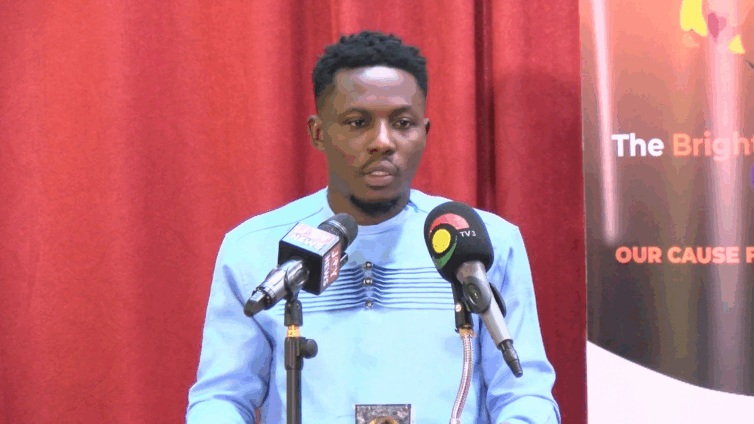
Executive Director of the Alliance and a member of the Youth Integrity Advisory Board under the United Nations Office on Drugs and Crime, Bright Ofori, cited several cases as evidence of systemic failure within Ghana’s courts.
“The case involving former PPA CEO Adjenim Boateng Adjei, accused of procurement corruption, has dragged on since 2020 and is still stuck at the case management stage. Former Sanitation Minister Cecilia Dapaah was found with large sums of unexplained cash. Her frozen accounts were later unfrozen by the court due to lack of evidence, and the case was eventually dropped. Charles Bissue, accused of corruption linked to illegal mining, has experienced repeated delays. The OSP was fined for slow responses, and the matter is now adjourned to May 2025. In Kumasi, a video showed an MCE nominee allegedly bribing assembly members for confirmation. Despite video and witness evidence, the court acquitted and discharged him,” he said.
According to the Alliance, such outcomes erode accountability and suggest that politically connected individuals can evade justice, while marginalised citizens face swift punishment for minor offences.
The group is calling on the Acting Chief Justice and the Judicial Council to treat corruption cases with the same urgency and rigour as political or election-related petitions.
They are also demanding enhanced institutional support for prosecutorial and anti-corruption bodies—through adequate funding, legal protection, and a judiciary that recognises the importance of their work.
They argue that Ghanaians—particularly the youth—are increasingly disillusioned with what they see as judicial inaction. Without urgent reform, they warn, public confidence in the justice system and in Ghana’s democratic institutions may collapse.
Despite these frustrations, the group remains hopeful that with the right changes, the judiciary can be repositioned to serve justice and ensure those involved in corrupt acts are duly held accountable.
Latest Stories
-
Drug bust: NACOC should be part of port inspection team – Twum-Barimah
2 minutes -
Ward appointed Liverpool’s sporting director
2 minutes -
This isn’t the first cocaine bust; NPP must stop the politicisation – NACOC deputy boss
6 minutes -
Drug bust case: Only Customs officers, MPS officials in scanning room – NACOC
1 hour -
I don’t mind being insulted; I have a crocodile skin – President Mahama
1 hour -
Samson’s Take: Verify the badge – and verify the story
2 hours -
President Mahama explains why Ghana must rethink regulation of TikTok, other new media platforms
2 hours -
Rule of law must be protected – GBA condemns EOCO action against Baffour Awuah
3 hours -
950,000 barrels of Sankofa crude head to TOR as GNPC deepens domestic refining
3 hours -
Scales of deception removed – Annoh-Dompreh attacks new cocoa price
4 hours -
Young Positivist Writes : My Experience with GCLP
5 hours -
Strong Day 1 turnout sets tone for Day 2 of Republic Bank-JoyNews Habitat Fair Clinic
5 hours -
Ghana Army warns new soldiers against social media misuse, uniform abuse
6 hours -
AMA calls for science-led action to tackle environmental health risks in Accra
6 hours -
NPP Canada Organizer BigMo urges Diaspora to support Kodua Frimpong
7 hours