

Audio By Carbonatix
Coming events, they say, cast their shadow. This axiom which dwells on the predictability of a situation in the near or distance future has a rendition in our Akan language that says, "AgorƆ b3sƆ a, efiri anƆpa". To wit, "The enjoyability of a performance should be determinable right from the start."
Conventionally, in governance and leadership, the first 100 days of a new government or other entity in power are used as a benchmark in assessing its success over the tenure of office.
It refers to the initial period of a political leader's term in office, and often used as a measure of their success and to gauge their initial priorities and direction.
While not mandated by any law, this period is considered a crucial indicator of a leader's performance and influence.
The key aspects of the "First 100 Days" include the following:
Setting the Tone:
The first 100 days are seen as a time to establish the administration's direction, priorities, and how they intend to work with other branches of government.
Legislative Achievements:
A president's initial actions, including executive orders and the passage of legislation, are closely scrutinized during this period.
Public Perception:
The first 100 days can significantly influence public opinion and how a leader's term is perceived.
Legacy Formation:
While not definitive, the early actions of a leader can potentially shape the overall direction and legacy of their time in office.
The term "first 100 days" is often associated with American leader Franklin D. Roosevelt's presidency. In a radio address, he used it to refer to the 100-day session of Congress.
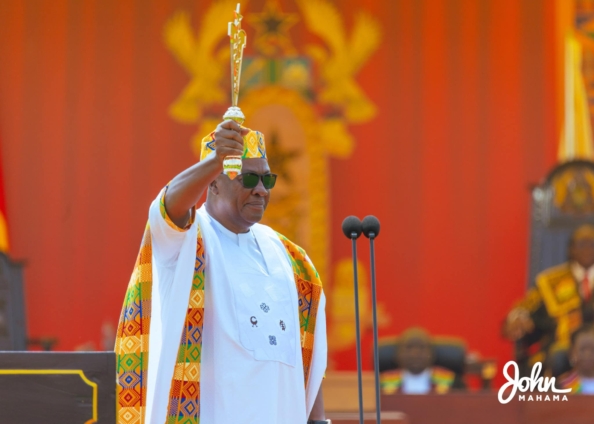
In Ghana, in the run-up to the 2024 general elections, then-candidate John Dramani Mahama of the National Democratic Congress (NDC), veered slightly from the first 100-Day convention and launched a 120-day social contract document. In it he pledged several interventions within his first four months as President.
This document, different from the party’s 200-page manifesto, contained 25 promises covering the economy, education, social interventions, tourism, and governance sectors.
That governance pact, was launched as a performance-based political commitment to demonstrate measurable progress within the first 120 days of President Mahama’s administration after taking office on 7th January 2025.
The 120-day contract was positioned as a benchmark for accountable governance, with a strong emphasis on transparency and impact-driven leadership.
On the evening of Wednesday, May 7, 2025, the day on which the 120-day contract expired, the President said in a televised address in accounting to Ghanaians that "We made promises and we have delivered them".
However, according to the Promise Meter on Ghana Fact, an online portal, the president kept 13 promises (representing 52% of promises) from their analysis of the 120-day social contract. The broken promises, partially kept and promises in the works were 4 each, (representing 16% each).
Key among the 25-item Social contract are: Nominate within the first 14 days the complete list of Cabinet Ministers for parliamentary approval; constitute the leanest and most efficient government under the fourth republic in his first 90 days in office; again within his first 90 days in office, scrap the following draconian taxes to alleviate hardships and ease the high cost of doing business: E-levy, COVID levy, 10% levy on bet winnings, and Emissions levy; and within the first 90 days in office, review taxes and levies on vehicles and equipment imported into the country for industrial and agricultural purposes.
But however one looks at how well President Mahama has tackled the items on the list of 25 promises, he has scored an impressive record of implementation. And as panelists on a TV3 discussion before and after his address, it would augur well for the President to put other social contracts in place going forward. This way, the agenda to build the nation we want would be on course and the promise to reset Ghana can be well tracked.
Latest Stories
-
I assure Otumfuo, Mahama will join him to commission KNUST Teaching Hospital by end of this year – Haruna Iddrisu
37 minutes -
Gov’t to roll out free special education for persons with disabilities from July 1 – Education Minister
59 minutes -
“We used it to test our officiating officials’ readiness” – Bawah Fuseini after CAA Athletics event
1 hour -
Volleyball emerges as Ghana’s fastest rising sport
2 hours -
National Sports Fund needs strong leadership from the top – Administrator David Wuaku
2 hours -
JoySports Exclusive: Steve McLaren in talks with GFA after expressing interest in Black Stars job
2 hours -
Fire guts auto parts warehouse at Bubuashie, one fire officer injured
2 hours -
I owe my victory to coach Ofori Asare – Allotey after winning WBA Africa Gold Super Flyweight belt
2 hours -
Church of Pentecost supports over 2,000 BECE candidates in Obuasi with career guidance seminar
4 hours -
Brandon Asante and Coventry all but promoted to Premier League despite Sheffield Wednesday draw
4 hours -
GPL 2025/26: Late Kwartemaa strike downs Hearts in Tema
4 hours -
Ghana Faces Sierra Leone Moment as Prosecutorial Powers come under strain
4 hours -
Don’t consume fish or seafood from Tema Shipyard until further notice – FDA warns
4 hours -
Why volunteering might be Africa’s most underrated career accelerator
5 hours -
ActionAid Ghana raises concern over gender gaps in Feed Ghana Programme
5 hours