

Audio By Carbonatix
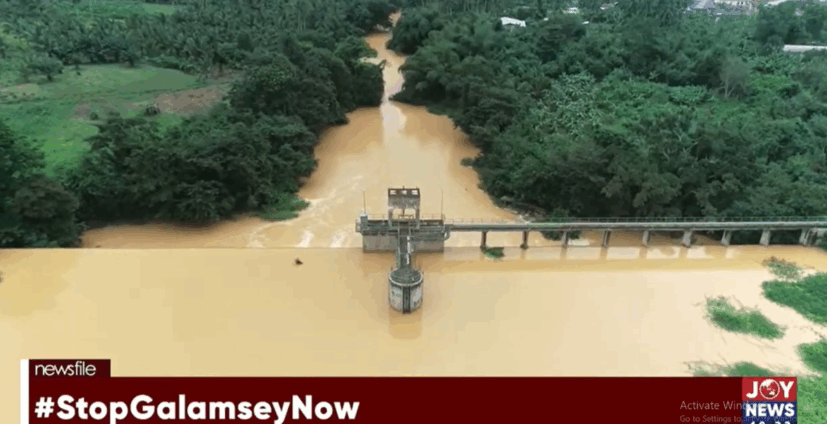
Research Scientist at CSIR and Adjunct Lecturer at the University of Mines and Technology (UMaT), Albert Kobina Mensah, has raised alarm over the growing presence of toxic heavy metals in Ghana’s soil, water, and food as a result of galamsey activities.
Speaking on JoyNews’ Newsfile on Saturday, September 27, Mr Mensah said his research has confirmed dangerous levels of metals such as arsenic, cadmium, mercury, and lead in areas affected by illegal mining.
These, he warned, are entering crops, water sources, and even medicinal plants, posing serious health risks.
According to him, while some metals like copper, zinc, iron, and manganese are essential in small amounts, others, such as arsenic, lead, and mercury, are not needed by humans or plants.
“Even a minute fraction of these non-essential metals becomes concerning,” he said.
Citing a study he carried out in Amansie West in the Ashanti Region, he revealed shocking findings.
“The total element content of metals in the soils there was about 1.73 times higher than the world average. Cadmium alone was 180 times higher, mercury was 1.74 times higher, and lead was 1.16 times higher,” Mr Mensah stated.
Mr Mensah further demonstrated how food crops absorb these metals. In one experiment using contaminated soil to grow lettuce, he found that “The mercury in the lettuce was more than 3,600 times higher than the reference limit. Lead was more than 83 times higher, and chromium over 27 times higher.”
He also discovered similar dangers in medicinal plants such as achampre (used widely for herbal treatments).
“Arsenic concentration in the shoots was about 1,200 milligrams per kilogram, while copper accumulation in the same plant was 750 milligrams per kilogram. These are very high,” he warned.
The scientist explained that rice, a staple food in Ghana, is especially vulnerable. “You may be eating rice, but unfortunately, you may be eating arsenic as well. Because rice is grown in waterlogged fields, it easily takes up arsenic,” he said.
He added that children and pregnant women are most at risk.
“Lead in young children, adults and pregnant women can lodge in the blood, brain, liver, and kidney, leading to serious consequences such as neurological disorders, deformities in unborn babies, kidney damage, and cognitive malfunctions,” he cautioned.
“We have to be very serious about this. If we continue like this, we risk chronic diseases, deformities in babies, and generations growing up with neurological problems. Galamsey is not just destroying land and rivers; it is poisoning the food we eat and the water we drink.”
Latest Stories
-
Prof. Kwofie urges publishers to use indigenous knowledge systems to decolonise AI
4 hours -
NDC’s two years of economic gains not enough to establish stability – Alan Kyerematen
4 hours -
AFCON 2027Q: Nine new call-up for Cote, The Gambia matches
5 hours -
Ghana’s MSMEs: Burdened by regulation and overtaxed; why the system isn’t working
5 hours -
Patience Akyianu, former Barclays Bank Ghana MD and Hollard Group CEO, reported dead
5 hours -
Mahama pushes ‘health sovereignty’ agenda, says Global South needs control over resources
5 hours -
Mahama: We are reforming systems, fighting corruption and improving use of public funds
5 hours -
Catholic Bishops welcome task force to tackle drug menace, acknowledge inter-agency efforts
5 hours -
Ghana Catholic Bishops demand urgent action against drug trafficking
5 hours -
Tamale: 5 arrested over suspected drug activities; police seize pistols, narcotics
6 hours -
We have lost a great developer – Mankranso residents pay tribute to late DCE
6 hours -
Ghana Law Society sets September 30 for maiden Bar Conference on legal reforms
6 hours -
GPL Week 3: Port City’s Gyetuah bags a brace as 9 outstanding players named NASCO Players of the Match
6 hours -
Visibility without substance is just noise; I don’t seek popularity—Dr Oppong-Fosu
6 hours -
The late Abubakar Sedik was an exceptional DCE – Ashanti Regional Minister
7 hours