

Audio By Carbonatix
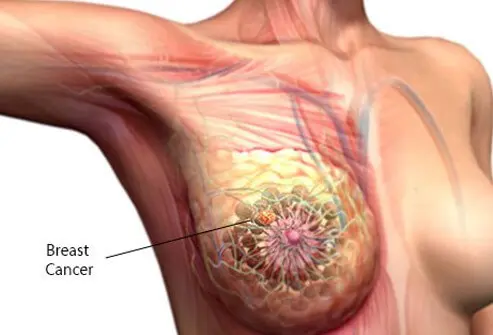
Anatomic Pathologist, Professor Patrick Kafui Akakpo, has revealed that women of African descent are more likely to develop aggressive forms of breast cancer compared to their counterparts in Europe.
Speaking on the Joy FM Super Morning Show on Monday, October 20, as part of Joy Cancer Awareness Month, Prof Akakpo said that “Black people don’t tend to have as many breast cancers as White people. However, when we do have breast cancer, it tends to be aggressive.”
He noted that these aggressive types, known as triple-negative breast cancers, are more difficult to treat because they are not driven by the usual hormone receptors.
“People of African descent have more triple-negative breast cancers, and these cancers grow faster than the average oestrogen receptor-positive or HER2 positive breast cancer,” he explained.
Prof Akakpo said the nature of breast cancer in African women makes early detection even more important.
“Because you don’t know what type you have, when you see a lump, you quickly have to check because you don’t know whether it’s the house cat type or the tiger type,” he said, comparing slow-growing and fast-growing tumours.
He added that the more aggressive “tiger-type” cancers can take over the breast in a matter of months.
“It doesn’t take six months for you to notice that the thing has ulcerated your breast,” he said. “At that stage when you have those major physical changes going on, it means your stage is late.”
Explaining further, Prof Akakpo said that pathologists play a key role in determining how to treat each case.
“For every person who has a breast cancer, you have to first look at it, type it, do the hormone receptor status, grade it, stage it, and then look at the imaging,” he said.
He said that breast cancer treatment must be personalised. “No two cancers are the same. No two patients are the same, each patient, depending on their hormone receptor levels and other factors, requires a different treatment plan decided by a multidisciplinary team.”
Prof Akakpo encouraged continuous public education and access to early screening to reduce the impact of aggressive breast cancers in Ghana. “Early detection is what will save lives,” he said.
Latest Stories
-
Government has improved sanitation in one-and-a-half years — Salaga South MP
3 hours -
Nkwanta North Assembly to appear before Parliament over DACF sanitation spending
3 hours -
Mourinho prints out ‘red card’ incidents after Real lose derby
3 hours -
Atletico beat 10-man Real in feisty Madrid derby
3 hours -
Twelve Tribes of Israel Ghana to mark 40 years with anniversary celebration
4 hours -
GPL 2026/27: Hearts held by Bechem as Kotoko, Samartex share spoils
4 hours -
My Story (Kwaku Antwi-Boasiako)
4 hours -
We expect growth rate to re-accelerate in second-half of 2026 – IC Insights
4 hours -
The ungodliness and unrighteousness underlying the National Cathedral mess!
5 hours -
T-bills auction: Government fails to achieve target; yield on 91-day-bill remains unchanged
5 hours -
It’s Ghana’s shame to denigrate Nkrumah when the whole world honours him as African of the Century – Asiedu Nketiah
5 hours -
No other nationalist can compare to Nkrumah – Asiedu Nketiah
5 hours -
Collateral Registry: Foreign banks accounted for GH¢19.9bn of secured credit in quarter 2, 2026
5 hours -
This government should expect scrutiny – Asiedu Nketiah
5 hours -
Two-year-old girl dies in domestic fire at Cantonments
6 hours