

Audio By Carbonatix
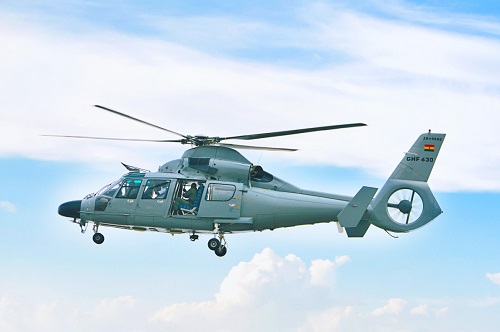
On the morning of August 6, 2025, a Ghana Air Force Z-9 helicopter operating a scheduled flight from Accra to Obuasi crashed in the Amansie Central District of the Ashanti Region, killing all eight people on board. The aircraft had three crew members and five passengers, including the Minister of Defence and his entourage.
It was one of the Air Force’s serviceable aircraft that had been used in various assignments, including medical evacuations and cargo transport. On the day of the incident, the crew delayed their departure from Accra due to poor weather conditions across southern Ghana.
They waited until the weather improved slightly and eventually departed from Accra at 9:12 a.m. The weather at takeoff was misty, with visibility ranging between five and seven kilometres, and low clouds beginning at about seven hundred feet above ground level.
The crew flew under Visual Flight Rules, a method that allows pilots to navigate using visual cues rather than relying only on instruments. Throughout the flight, they adjusted altitude to avoid patches of low clouds and poor visibility.
As the helicopter moved north toward Obuasi, weather conditions deteriorated significantly. Eyewitnesses in towns such as Brofiedru and in the Dampia Forest Reserve area described the weather as foggy, with light rain and poor visibility.
The visibility in some parts dropped to about two hundred metres, which is dangerously low for visual navigation. The area also has rugged and hilly terrain that is known to create turbulent wind currents and downdrafts during unstable weather.
At about 9:56 a.m., as the helicopter neared Obuasi, the crew encountered thick cloud and mist and entered what is called Instrument Meteorological Conditions. This means they could no longer see the ground or the surrounding terrain and had to depend fully on their cockpit instruments to continue flying.
They transitioned from Visual Flight Rules to Instrument Flight Rules. The cockpit voice recording captured the crew remarking that they could see high ground below and believed they had cleared it. However, only moments later, the aircraft suddenly lost altitude. There was no sign of mechanical failure or loss of power, but the helicopter descended rapidly and struck the hilly forested area about six and a half miles from Obuasi at approximately 9:58 a.m.
Emergency teams reached the crash site about two hours later despite the heavy rain and difficult terrain. Investigators described the response as timely, considering the steep slopes and slippery conditions that made access extremely challenging.
The impact destroyed the aircraft completely and left no survivors. Subsequent recovery and technical analysis focused on the aircraft’s maintenance, the condition of the crew, the weather, and the operational standards of the Air Force.
The investigation established that the Z-9 helicopter was airworthy at the time of the accident. It had been manufactured in 2012 and delivered to the Ghana Air Force in 2015. The aircraft reached its ten-year service threshold in May 2025, but the manufacturer approved a ninety-day extension that was valid until August 18, 2025.
Prior to the flight, it underwent a mandatory hundred-hour maintenance inspection, and both engineers and the captain signed it off as serviceable. Data retrieved from the flight recorder confirmed that all major systems were functioning normally before impact.
Despite being airworthy, the aircraft lacked some advanced safety systems that could have helped the pilots manage the situation better in poor weather. These included a Terrain Awareness and Warning System, an advanced autopilot or automatic flight control system, and enhanced terrain-mapping navigation tools.
The absence of these safety features meant that the pilots had to manually control the helicopter at all times, increasing their workload and limiting situational awareness during instrument flying. The investigators strongly recommended that future Air Force aircraft be equipped with such systems to improve flight safety.
The flight crew were found to be competent, well-trained, and medically fit. The captain held a green instrument rating, which was the highest level available within the Ghana Air Force. He was an experienced pilot who had flown multiple assignments on the same helicopter.
The co-pilot had obtained his FAA commercial and instrument-rated license from the Bristol Academy in Florida in April 2023. Medical and psychological records showed no signs of fatigue, illness, or medication use that could have affected their performance. Both pilots had rested for over twenty-four hours before the flight, which exceeded the Air Force’s rest requirement.
The investigation found no evidence of engine failure, fuel exhaustion, or maintenance lapses. The analysis of the flight data recorder, cockpit voice recorder, radar information, and weather data indicated that the crash resulted from a combination of poor weather and environmental conditions over the mountainous terrain near Obuasi. The helicopter suddenly lost altitude and lift as it flew through strong downward air currents known as downdrafts.
A downdraft is a column of air that moves rapidly downward, especially in rugged areas where warm and moist air collides with cooler air layers. When this happens, even an aircraft with normal power can be forced downward faster than it can climb.
The investigation concluded that the direct cause of the accident was a sudden loss of altitude and lift due to downdraft. The flight data showed that the loss of altitude occurred without any change in engine power or control input from the pilots, confirming that it was an external environmental factor rather than a mechanical or human error. The downdraft was consistent with changing atmospheric conditions over the high terrain of the Dampia Forest Reserve, where the weather had created unstable air currents.
Disclaimer: The information provided here is based entirely on the findings and details presented in the official investigative report of the Z-9 helicopter crash.
Latest Stories
-
I have no issue with John Boadu; we’ll work together – Justin Kodua
59 minutes -
Adom FM Y2K Jam delivers a night of music, fashion and nostalgia
2 hours -
Lawrence Kobena Nsarko Otoo, Esq
3 hours -
Bel-Aqua intensifies mental well-being campaign ahead of 15th anniversary
3 hours -
From banking to party finances: Alfred Kwadwo Thompson elected NPP Treasurer
3 hours -
George Christian Papa Mends
3 hours -
Ali Suraj elected NPP NASARA Coordinator
3 hours -
Mustapha Hamid misses out on NPP Vice Chairmanship by 31 votes despite early poll lead
3 hours -
Kojo Bamba, Henry Nana Boakye and Nana Akomea elected NPP Vice Chairmen
4 hours -
From Delta Force to NPP First Vice Chairman – Kojo Bamba’s political journey
4 hours -
Police restore calm at Larteh following Odwira festival disturbance
5 hours -
‘All the camps will dissolve’ – Bawumia demands one NPP for 2028
5 hours -
There is no time to waste – Bawumia orders NPP to begin 2028 work
5 hours -
Sarkodie visits MobileMoney Fintech LTD
5 hours -
John Boadu unveils new NPP strategy to win back youth and modernise party
5 hours