


Audio By Carbonatix
I’ve noticed yet again announcements by major Oil Marketing Companies (OMCs) for further fuel price reductions in the second pricing window of January 2026. Looking back to December 2024, petrol was averaging over GH¢14 per litre, diesel above GH¢15, and LPG near GH¢18–19 per kilogram. Today, petrol is approaching GH¢9.97–9.99 in some stations, with diesel and LPG also significantly lower, providing much-needed relief for ordinary Ghanaians.
Fuel prices impact households, transporters, businesses, and the prices of everyday goods. The reductions we are seeing are influenced by several factors: a stronger Ghana cedi against the US dollar, declining international refined petroleum product prices, and structured oversight and coordination along the value chain.
The National Petroleum Authority (NPA) is well-positioned to support this value chain in regulating prices, monitoring supply, and protecting consumers. I believe under Godwin Edudzi Tamakloe Esq., the NPA has effectively coordinated importers, distributors, Oil Marketing Companies, LPG marketers, and strategic storage operators to maintain market stability. Initiatives such as the Unified Petroleum Pricing Fund (UPPF) Scheme, monitoring of fuel stocks and supply chains, issuing clear pricing frameworks and floors, enforcing compliance, and ensuring consistent pricing across regions have been key to achieving these reductions. Ghana currently maintains sufficient reserves, over 200 million litres of petrol and 150 million litres of diesel, enough to sustain domestic needs for more than two months, shielding the country from global shocks.
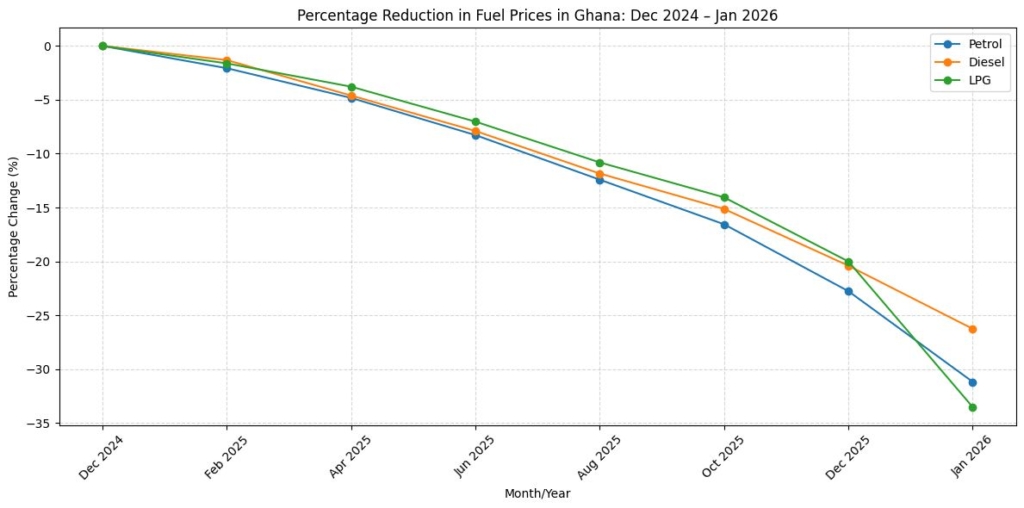
Through its data-driven approach, the NPA has made pricing predictable, transparent, and fair, boosting public confidence and allowing businesses to plan effectively. By keeping fuel costs down, the government, through the NPA, indirectly eases transport and logistics expenses, moderates prices of goods and services, and increases disposable income for households and small businesses.
I commend the NPA for its effective role in coordinating the petroleum value chain and ensuring these tangible benefits for ordinary Ghanaians. I also encourage other state companies to leverage the enabling environment created by the government and the Finance Minister through prudent macroeconomic policies to drive similar positive outcomes that improve the everyday lives of citizens.
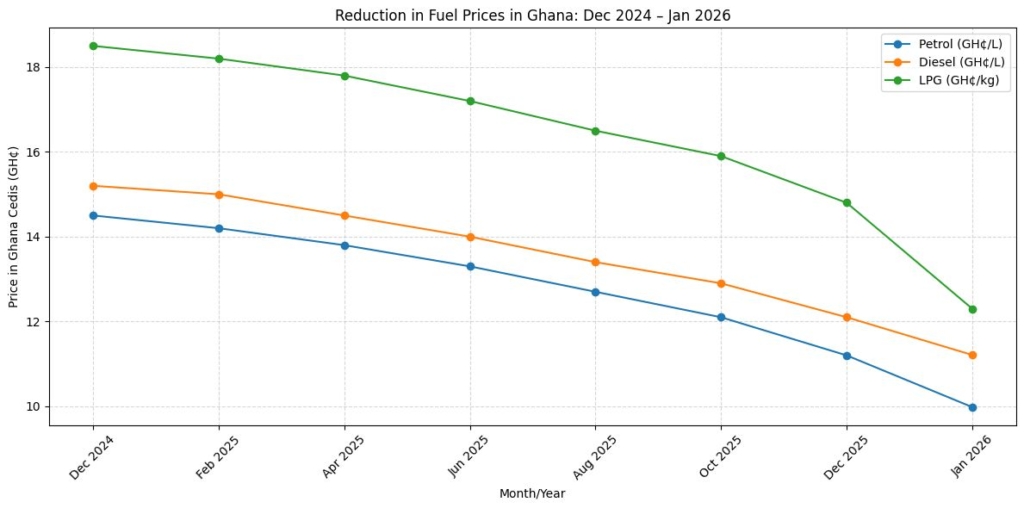
As an Energy and Finance Analyst observing the market, it’s clear that effective regulation, oversight, and coordinated action along the value chain can deliver real relief and sustainable benefits for the public.
Latest Stories
-
Zanetor pledges to turn scientific research into jobs, industrial growth
54 minutes -
Trade Minister inspects site for Cape Coast garment factory
60 minutes -
$270m poultry investment to create 12,000 jobs under 24-Hour Economy
1 hour -
My petition against Special Prosecutor put on ice after political intervention – Kpebu
1 hour -
‘Don’t fail our teachers’ – Parents demand full implementation of strike deal
1 hour -
Ghana Baptist Convention ordains 92 ministers, urged to live above reproach
1 hour -
SIGA’s GH¢19.8bn SOE profit claim misleading – Bright Simons
1 hour -
Kpebu vows to publish full petition if case against OSP is thrown out
1 hour -
Central Regional Minister inspects projects in Assin South
1 hour -
Mahama must show stronger leadership in galamsey fight – Prof. Bokpin
1 hour -
Abu Jinapor defends Domestic Gold Purchase Programme, credits Bawumia with its introduction
1 hour -
I’ll beat NDC for third time through my development record in Karaga – Amin Adam
2 hours -
Denkyirahene hosts sixth Akwasidae, calls for unity, peace
2 hours -
Edem Agbana outlines development gains, future projects at Ketu North accountability forum
2 hours -
Let’s develop a culture of reading – Tourism Minister
2 hours