

Audio By Carbonatix
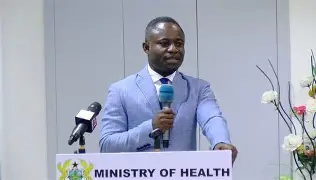
Honourable Minister Kwabena Mintah Akandoh, I write publicly with respect for your office and appreciation for your decision to personally chair the committee investigating the circumstances surrounding the death of Charles Amissah.
Your intervention signals that this matter is being treated with the seriousness it deserves, and it has already reassured many citizens that the issues raised will receive careful attention.
Ultimately, however, public confidence will depend not only on the announcement of an investigation, but on the clarity, fairness, and durability of its conclusions.
This is a medical doctor's open letter to Ghana's Health Minister, give it a clear headline or title for online publication of the full letter without any changes.
This letter is not written in anger, nor to assign blame in advance of your committee’s work. It is written out of urgency and a shared national interest in strengthening emergency care.
The facts emerging from the incident, as reflected in official reports and public documentation, have revived long-standing concerns about how emergency cases are managed when hospitals are under strain.
Whether the failures in this instance were individual, institutional, or systemic is precisely what your committee must determine. It is essential that conclusions be grounded in evidence, not assumption.
At the same time, the incident has highlighted a broader question that extends beyond one facility or one night: how Ghana’s emergency care system performs under pressure, and how it can be made more resilient.
This investigation should therefore look beyond identifying isolated decisions and examine the conditions that make such decisions possible.
A system designed to respond to emergencies must ensure that, even under constraint, minimum standards of assessment and stabilisation are consistently protected.
This is not a criticism of any individual professional group; it is a recognition that complex systems sometimes evolve in ways that require deliberate correction.
The public conversation surrounding this case reflects a deeper issue of trust.
Citizens must feel confident that when an emergency occurs, the health system will respond predictably, fairly, and with urgency. That trust is a foundational element of public health. When it weakens, fear and uncertainty replace cooperation, and the effects extend far beyond a single incident.
Your committee’s work can help restore and strengthen that trust if it pursues several key outcomes. First, factual clarity. The public deserves a transparent and careful reconstruction of events, including what actions were taken, what protocols applied, and where decision points occurred. Second, institutional learning.
If weaknesses are identified, they should be treated as opportunities for structural improvement rather than solely as grounds for punishment. Sustainable reform requires understanding how systems behave in real-world conditions.
Third, enforceable reform. Recommendations should translate into practical, measurable standards that guide emergency response across facilities, supported by training, oversight, and continuous evaluation. Fourth, protection of good-faith action.
A strong emergency system depends on professionals who are confident that acting decisively in the interest of patients will be supported by policy and leadership. Reform should strengthen accountability while also reinforcing a culture of responsible action.
This investigation will ultimately be judged not by its speed, but by whether it leaves Ghana with a safer and more reliable emergency care framework than existed before February 6th.
Honourable Minister, moments like this present an opportunity to reaffirm national expectations about how emergencies are handled and how institutions respond when those expectations are tested.
If approached with transparency and balance, this process can become a turning point that strengthens confidence in Ghana’s health system and clarifies a shared commitment to protecting life under all circumstances.
The country is watching with hope that this work will produce lasting solutions that benefit every citizen who may one day depend on emergency care.
Respectfully, Dr Papa Kojo Mbroh
Concerned Citizen
Latest Stories
-
Man City suffer as PSG masterclass sets up Champions League win
33 minutes -
Customer Service Africa CEO urges business leaders to observe staff and customer interactions
43 minutes -
On night of mayhem for Liverpool, Barcola arrives in style
44 minutes -
Muzic Mensah finds healing and renewed love in new single ‘WayƐ Late’
56 minutes -
FIFA to offer extra £2.6bn for football development
58 minutes -
Government backing is no EPA permit – Authority warns GoldBod, ministries
1 hour -
Real Madrid produce stunning late fightback to down Roma
1 hour -
EPA orders immediate halt to unpermitted reclamation and dredging nationwide
1 hour -
Afenyo-Markin’s lawsuit against Sammy Gyamfi takes focus away from development – Kpebu
2 hours -
FWSC urges media to guard against misinformation in proposed IPEC transition
2 hours -
MoMo Fest 2026: Shatta Wale to Rock Accra Stadium on October 17
2 hours -
GTEC’s letter directing public universities to reopen by October 16 is unprofessional – GAUA
2 hours -
Suspect in viral video assaulting wife jailed for 3 months
2 hours -
GAUA insists strike will end only after Fair Wages addresses market premium issue
2 hours -
Kpemka seeks compensation as he sues BOST over alleged unlawful termination
2 hours