

Audio By Carbonatix
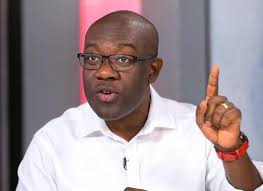
Member of Parliament for Ofoase-Ayirebi, Kojo Oppong Nkrumah, says the government must be transparent about the methods being used to achieve Ghana’s recent decline in inflation.
Speaking on Joy News, the Pulse on March 4, Mr Oppong Nkrumah said the public has a right to know how inflation is being managed.
While acknowledging the drop in inflation, he has urged authorities to fully disclose the strategies behind the figures and outline the potential long-term implications for the economy.
“Inflation doesn’t just drop by itself — it reduces because of the interventions the government introduces. It’s important that government is candid, because every method comes at a cost,” he said.
He pointed out that heavy sterilisation has been a major tool, where money is withdrawn from the economy to control demand.
“In 2025 alone, the government sterilised about 62 billion Ghana Cedis. That money would have been available to stimulate demand, but it was mopped up instead,” he explained.
The minister warned that while sterilisation addresses the demand-pull side of inflation, it does not solve the cost-push factors, like rising production costs, tariffs, and electricity bills.
“Tariffs are going up, electricity bills are increasing between 24 to 28%, yet liquidity is being removed from the economy. The question is: what has been done to reduce these real costs?”
Kojo Oppong Nkrumah also questioned the sustainability of current interventions.
“If the central bank no longer has the reserves to intervene in the market, what happens to our currency? Intervention is part of the toolkit, but when it becomes routine, people should question its long-term impact,” he said.
He urged the government to align inflation targets with economic growth and job creation. “Our inflation target has a lower band of 6% to support productive activity. If interventions push it down to 3.3%, don’t just celebrate — ask what it means for jobs and real sector productivity.”
Finally, he called on the Ghana Statistical Service to clearly explain the methods behind the reported figures.
“It’s not enough to report numbers; we must check if they reflect the lived experiences of Ghanaians in the markets,” Oppong Nkrumah concluded.
Latest Stories
-
Gauff’s flaw forgotten on winning US Open return
12 minutes -
Birds stop play but Medvedev flies into third round
24 minutes -
LA Clippers fined $30m by NBA over Leonard scandal
35 minutes -
Uber to cut over 3,000 jobs in major global restructuring
44 minutes -
Tiger Woods gets five-year driving ban after reckless driving plea
53 minutes -
South African airline behind daring stadium stunt cancels next flyby
1 hour -
PURC urges ECG to address outages, metering delays
1 hour -
Police engage traders over alleged harassment, extortion on Aflao-Accra highway
1 hour -
Uber shuts operations in Nigeria and Uganda with immediate effect
2 hours -
Netherlands moves billions in gold to London in ‘crisis preparedness’ move
2 hours -
Legal vacation does not halt urgent court cases – Chief Justice
2 hours -
Keta residents react with mixed feelings to fresh fuel price hike
2 hours -
Managing Director on GH¢150,000 bail over five dud cheques
2 hours -
BOSTenergies reports strong 2025 performance, pays first-ever dividend to government
3 hours -
Carlos Queiroz reappointed as Black Stars head coach
3 hours