

Audio By Carbonatix
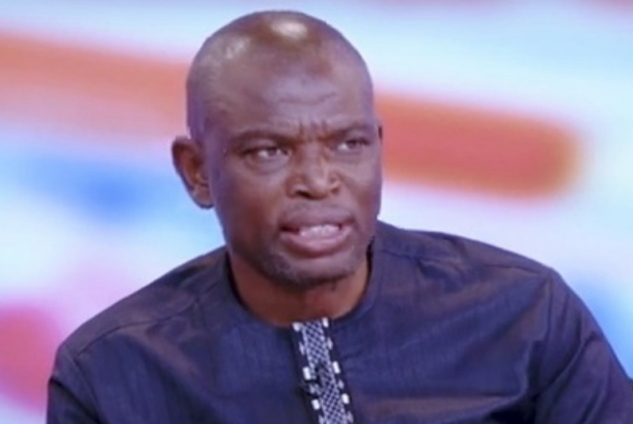
The Member of Parliament (MP) for Sissala East, Mohammed Issah Bataglia, has claimed that Ghana’s economy has improved significantly, citing greater stability and positive economic indicators.
Speaking on JoyNews AM Show on March 17 while discussing the state of the economy, Mr Bataglia expressed confidence in the country’s economic direction, stating that both macroeconomic and microeconomic indicators point to substantial progress.
“So, to me, I think that, yes, the economy is very stable. The economy has improved drastically,” he said. “We have all seen the indicators, both at the macro and micro levels. We have seen the actual issues that are happening here.”
According to the MP, the current level of economic stability has made it easier for businesses to plan and operate with greater predictability. He noted that individuals and enterprises across the country are already experiencing the effects of this stability in their daily activities.
“You and I, who live in this country, have seen the stability. Business people can predict the kind of business they want to go into,” he added.
Mr Bataglia acknowledged concerns about a potential increase in fuel prices, noting that projections indicate a rise of about 17 percent in the third pricing window. However, he argued that even with such an increase, the overall economic situation remains comparatively better than in previous periods.
He pointed to recent adjustments in utility tariffs as a mitigating factor, referencing reductions approved by the Public Utilities Regulatory Commission. According to him, electricity tariffs have been reduced by approximately 3.8 per cent, while water tariffs have seen a decline of about 4 per cent, helping to cushion households and businesses against rising costs.
“These are clear signs that when we can restrain ourselves, discipline ourselves, and ensure that fiscal prudence becomes a hallmark, Ghana will not suffer shocks,” he stated.
Drawing comparisons with international practices, Mr Bataglia highlighted lessons from South Africa, where he recently undertook an official visit. He noted that strategic planning and investment in infrastructure have enabled that country to build resilience against global economic disruptions.
“For instance, a single tank at their refinery can hold over 1.1 million barrels. If they have multiple tanks, they can stock over 12 million barrels, allowing them to withstand global shocks,” he explained.
In contrast, he said Ghana’s current storage capacity remains significantly lower, with the greatest estimated at 300,000 barrels, raising questions about the country’s preparedness for external shocks.
Mr Bataglia also addressed developments at the Tema Oil Refinery, noting that the facility, which had been largely inactive for years, is now operational again. He described this as part of a gradual process to strengthen the country’s energy infrastructure.
“Today, it is back and functioning. Currently, it is producing about 28,000 barrels per stream day, but efforts are underway to increase output to 45,000 and eventually 60,000 barrels,” he said.
Mr Bataglia concluded that while challenges remain, the combination of fiscal discipline, infrastructure development, and policy direction provides a strong foundation for continued economic improvement.
Latest Stories
-
Services drive 7.4% expansion in Ghana’s economic activity
6 minutes -
‘I don’t make music for awards, I make it to connect people’ – Rocky Dawuni
18 minutes -
Farmer jailed for three months over assault on wife in viral video
24 minutes -
Police arrest eight in Okaishie operation targeting illicit drugs and medicines
26 minutes -
David Agyemang Yeboah: Marriage is not the problem; your approach is
30 minutes -
Lawyer sues Standards Authority over used-vehicle import restrictions
32 minutes -
Ukraine to restart strikes on Russian oil refineries, Zelensky says
32 minutes -
CIMG awards drive competition among Ghanaian businesses
38 minutes -
NSA regional director Emmanuel Reagan files nomination to contest NDC Ashanti Regional Organiser position
42 minutes -
Obuasi SHTS: Number of students alleging sexual abuse rises to 16
48 minutes -
Ghana’s economy grows by 7.4% in July 2026
59 minutes -
NDC member challenges Dennis Yeboah Twumasi’s eligibility for Bono Regional Secretary elections
1 hour -
Popular Nigerian gospel singer Toluwanisings dies
1 hour -
Spio-Garbrah proposes debt swaps to fund reparative justice in Africa and Caribbean
1 hour -
Alban Bagbin calls for governance reforms and coordinated action to address Africa’s debt crisis
1 hour