

Audio By Carbonatix
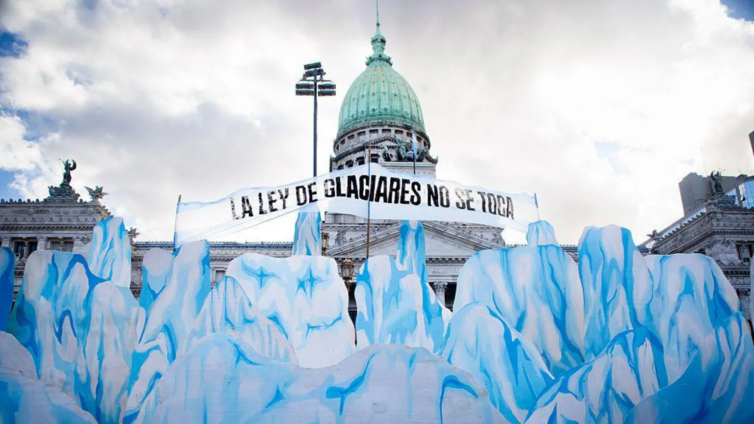
Argentina's Congress has passed a controversial amendment making it easier to mine in glacier regions, a move environmentalists say weakens protections for crucial water sources.
The pioneering Glacier Law, approved in 2010, prohibited all mining and exploration activities in glacier regions by protecting them as water reserves.
The reform shifts the responsibility of defining protected glacier areas from the Argentine Institute for Snow, Ice and Environmental Sciences (Ianigla) to the provincial governments.
President Javier Milei, who backed the reform, said the change "empower[s] the provinces to utilise their resources" and allows mining activities "where there was nothing to protect".
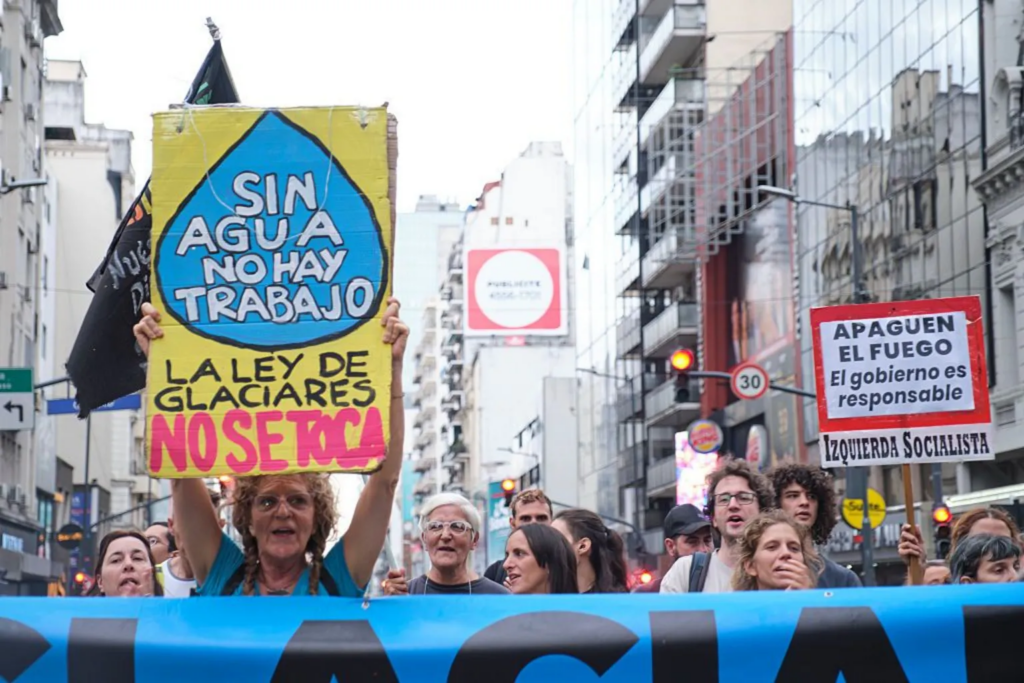
Argentina's Senate had already approved the bill in February 2026, so approval by the lower house was the last major hurdle left.
Opponents of the reform argued that it would put a fundamental resource - water - at risk. "Without water, we can't even think about a growth and development project," Congresswoman Natalia de la Sota said.
But a backer of the bill, Congresswoman Nancy Picón Martínez, said that the mining industry was being portrayed "as if it were a monster".
"This law protects glaciers, no matter how much some people want us to believe otherwise," she said.
Following the reform, glaciers and periglacial environments - which may not be covered by ice but are frozen at least part of the year- will be protected by the national Ianigla inventory until provincial leaders prove they do not serve as "strategic" water reserves.
There are 16, 968 glaciers in Argentina, providing water to 36 river basins across 12 provinces, home to seven million people.
Water from melted glaciers helps to reduce the impact of droughts - especially in semi-arid provinces like Mendoza - which are becoming more common due to climate change
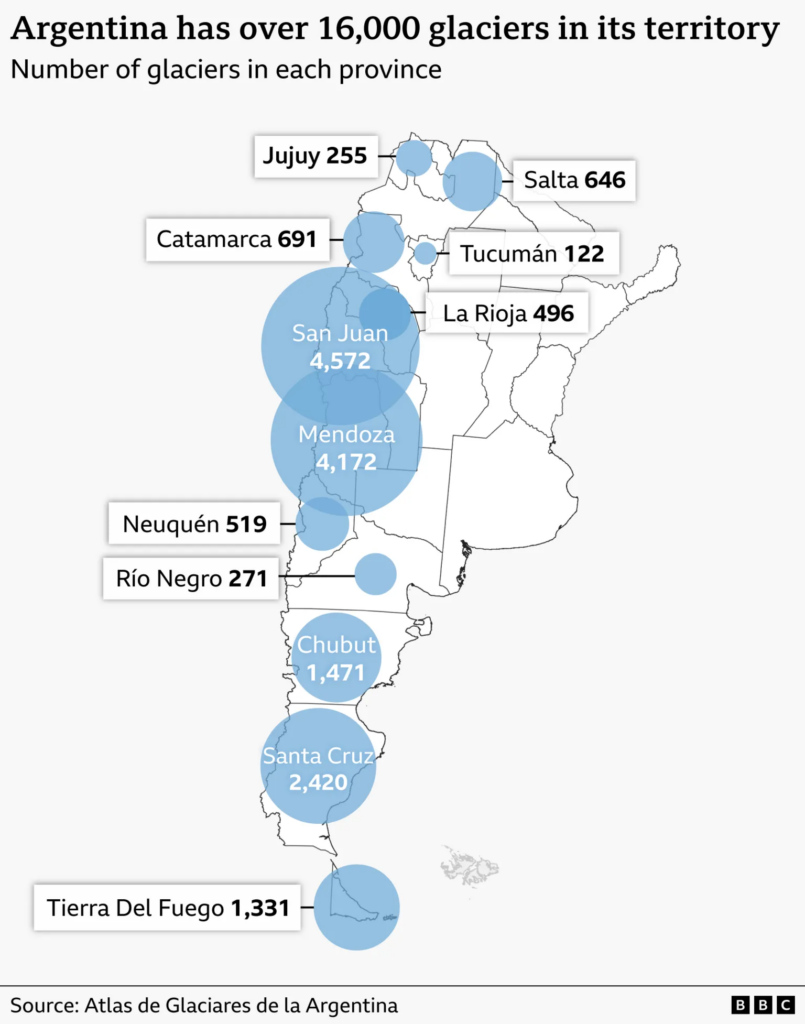
Governors from the mineral-rich provinces of Catamarca, Jujuy, Salta, Mendoza and San Juan had expressed their support for the bill, stating that the 2010 Glacier law hindered the goal of "promoting a sustainable economic development of the provinces and the Nation without compromising future generations".
But Greenpeace has criticised the bill for arguing that not all glaciers and periglacial environments act as strategic water reserves.
"The primary function of all glaciers and the entire periglacial environment is to act as a freshwater reservoir," Agostina Rossi Serra, a biologist working with Greenpeace said.
"The periglacial environment, apart from being water reserves because they consist of water inside, undergoes a gradual thaw that feeds the rivers and streams of our country," she explains.
"And a large part of our country, especially the regions that were keen to see this law amended, are arid and semi-arid areas, where water is a scarce resource," Rossi Serra added.
Latest Stories
-
“US Embassy introduced TRIBE Culture Fest to NSA, GTA” – Kofi Adams
1 hour -
“NSA did not tell us of any embassy arrangement” – Kofi Adams
2 hours -
Glasner suffers loss on Selhurst return as Palace beat Forest
3 hours -
WAFU B U17: ‘We won but I expected more from my boys’ – Kassim Ocansey
3 hours -
Man City cruise to statement win over 10-man Liverpool
3 hours -
Be careful with cross-border lending, foreign currency exposures – BoG to financial institutions
6 hours -
GPL 2026/27: Medeama go three clear as Hearts of Oak recover and Bechem stage stunning comeback
6 hours -
Ntiamoah Foundation launches “BEYOND 20” anniversary campaign
6 hours -
Credit Risk Management Directive: BoG to begin implementation for banks, others from July 1, 2027
7 hours -
Ghana Brands Awards 2026: Leading brands, business trailblazers to shine on November 20
7 hours -
T-bills auction: Demand improves as government exceeds target by about 76%; interest rates soften
7 hours -
Ziope undertakes initiative to build a technologically inclined community, commissions self-help ICT lab
7 hours -
ECG announces power outage in parts of Tema, Central Region due to network fault, maintenance
8 hours -
When the Gospel Becomes a Weapon: The church, blackmail and the abuse of faith
8 hours -
JoyNews’ Jacqueline Ansomah Yeboah selected for UK Media Excellence for Emerging Technologies Fellowship
9 hours