

Audio By Carbonatix
The National Democratic Congress (NDC) has admitted that implementing the Supreme Court’s decision to abolish the political party delegate system will come with significant financial implications for political parties.
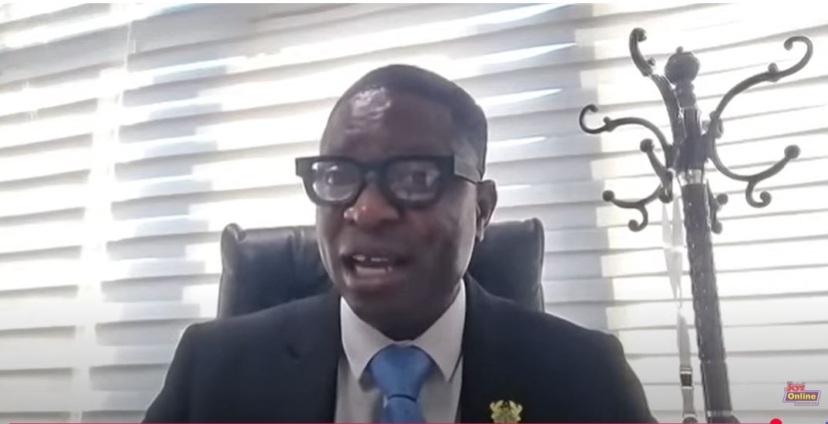
The party’s Deputy Director of IT and Elections, Rashid Tanko Computer, said although opening up internal elections to all party members would increase the cost of organising such exercises, the need to protect democratic principles within political parties must take precedence.
Speaking on JoyNews’ The Pulse on Wednesday, July 29, Mr Tanko said political parties would have to find innovative ways of raising funds to meet the increased cost of conducting broader elections.
"Of course, it's going to be a costly organisation for us, the political parties, to organise such an election. But we want to defend the democratic credentials of our political parties," he said.
His comments follow the Supreme Court’s declaration that the delegate system used by political parties to elect parliamentary and presidential candidates is unconstitutional, a decision expected to compel parties to allow wider participation by their members.
Mr Tanko said the NDC accepts the authority of the apex court and will work towards complying with the ruling.
He argued that with party members gaining a direct role in selecting leaders and candidates, there would be a need to strengthen internal funding mechanisms, particularly through the payment of membership dues.
"Now that party members are going to participate fully in deciding who leads the parliamentary caucus and the presidential [candidate], it means you need to pay your dues. We have to strengthen that aspect because it is the membership dues that we will have to use to organise this," he explained.
Mr Tanko added that the ruling presents an opportunity for parties to deepen engagement with their members by ensuring that those who have a voice in decision-making also contribute financially to sustaining party activities.
He maintained that while the transition may be expensive, it will ultimately reinforce internal democracy and improve member participation in political parties.
Latest Stories
-
EOCO court warrant authorised search of Baffour Awuah’s law firm, not residence – Afenyo-Markin
4 minutes -
NPP delegates conference: 3,000 to 4,000 police personnel deployed for security in Kumasi – Anthony Karbo
6 minutes -
KGL Foundation commits $200,000 to support juvenile football for the next two years
22 minutes -
UNDP invites Mahama Ayariga to Northern Peace Conference in Tamale
27 minutes -
Afoko can give NPP ‘new identity’ ahead of 2028 to overcome NDC – Political scientist, Dr Amakye-Boateng
41 minutes -
2 injured amid gunshots during raid at Nawara Mining office at Nsuapemso
45 minutes -
St Augustine’s College retains 2026 National Investment Quiz title
49 minutes -
KNUST Nursing and Midwifery School staff recognised at 2026 Health Ministry Excellence Awards
58 minutes -
JoyNews’ Esther Esi Nkrumah selected for UK Media Excellence for Emerging Technology Fellowship
1 hour -
Five NDC youth organisers in Western Region pay courtesy call on Armah-Kofi Buah
1 hour -
NACOC demands tighter port controls to prevent Tema Harbour drug trafficking
1 hour -
Ghana’s startup ecosystem must build sustainability into innovation – Ghana Hubs Network
1 hour -
Friday’s beachfront demolition was carried out at Labadi Beach Hotel’s request, not for flood mitigation – Stan Dogbe
2 hours -
LA 2028: Mukarama returns to Black Queens squad for Olympic Games qualifiers
2 hours -
Fusaini Yakubu Abanga leads NPP National Youth Organiser race with 45% in Global InfoAnalytics poll
2 hours