

Audio By Carbonatix
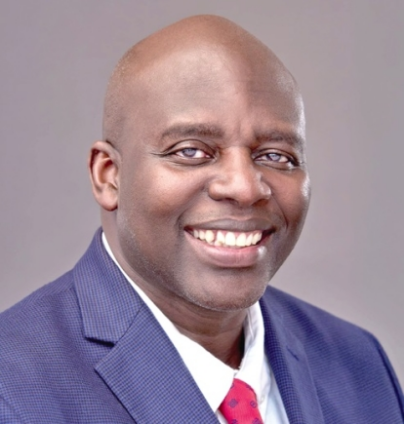
Project Director for the Democracy Project, Dr John Osae-Kwapong, has commended the Ghana Tertiary Education Commission (GTEC) for its decision to enforce the laws restricting public officers in tertiary educational institutions from holding both public office and political party executive positions.
“We often lament that Ghana has good laws on the books but weak enforcement mechanisms. Section 26 of the Political Parties Act, 2000 (Act 574) restricting active partisan activity by public officers exists precisely to preserve the neutrality of the public service,” he stated.
“GTEC deserves credit for applying the law rather than looking away,” Dr Osae-Kwapong stated in an interview in reaction to the GTEC directive to governing councils and management of tertiary education institutions to ensure full compliance with the law.
It is a directive that GTEC issued to public officers holding political party executive positions, requiring them to resign from their political party roles or be relieved of their public offices.
Tumu College
In a July 27 letter to the Principal of the Tumu College of Education, GTEC ordered the Registrar of the college, Majeed Salifu, to choose between his role as Registrar and his position as NPP Constituency Chairman for Sissala East.
“As the Registrar of a public College of Education, Mr Salifu occupies a public office within Ghana's public tertiary education system and is therefore expected to conduct himself in a manner consistent with the legal and ethical obligations applicable to public officers,” he stated.
Dr Osae-Kwapong said the directive was a welcome, if rare, example of enforcement.
He explained that the enforcement was critical because Ghanaian politics was “becoming increasingly partisan, and there is a real risk that our tertiary institutions could gradually become extensions of political parties rather than neutral spaces for teaching, research, and learning.
“Left unchecked, this can erode professionalism and open the door to victimisation of staff or students perceived to hold different political loyalties,” he stated.
Dr Osae-Kwapong, however, said a blanket ban on holding party executive office might unnecessarily narrow the pool of capable people available to run political parties well.
“Rather than an outright prohibition, we might consider a middle path: allow public officers to take up party responsibilities strictly outside official working hours, paired with clear, enforceable safeguards against political victimisation,” he stated.
That, he said, "would protect institutional neutrality during work hours, while allowing civic and party participation after hours."
Statement
In a separate statement, GTEC said the directive applied to officers, including vice-chancellors, principals, pro vice-chancellors, vice-principals, registrars, directors of finance, deans, heads of departments, and other senior officials.
“Accordingly, GTEC wishes to remind all heads of tertiary education institutions to ensure full compliance with these legal requirements,” it said.
Latest Stories
-
FTBLRLIFE targets Ghana in expansion of global grassroots football network
6 minutes -
Former ‘American Idol’ contestant sentenced to life without parole for wife’s murder
1 hour -
Education Ministry commends Ghanaian teachers on World Teachers’ Day 2026
2 hours -
NPP can reconcile with aggrieved members who want to return – Nana Akomea
2 hours -
Tamale Child Deaths: Vehicle owner arrested as IGP deploys homicide team
2 hours -
From ShattaFest to MoMo Fest: Entertainment takes centre stage in youth engagement
2 hours -
Nigerian military aircraft crashes, killing 32
2 hours -
MTN encourages Ghanaians to use MoMo for saving, investing and financial planning
2 hours -
Absa Bank Ghana names Stephen Ato Frimpong as Board Chair
3 hours -
Pickford ‘almost caused crash’ with careless driving
3 hours -
Author and former politician Jeffrey Archer dies aged 86
3 hours -
No education reform can succeed without teachers – Education Ministry
3 hours -
Gauff condemns racist abuse after China Open win
3 hours -
Medvedev disqualified for hitting spectator with ball
3 hours -
Oliseh scores twice in late comeback win for France
4 hours