

Audio By Carbonatix
The Ghana National Fire Service has confirmed the complete dousing of the devastating fire that raged for two days at the Blue Light Arena in Adum, Kumasi.
The Friday dawn inferno, which left over 5,000 traders and shop owners reeling from its impact, was finally brought under control through what the GNFS describes as the “relentless efforts” of its firefighters.
In a statement released on Sunday, the Ghana National Fire Service (GNFS) praised the Ashanti Regional Fire Command and management for their heroic work, confirming that the Blue Light Arena is now rid of any fire.
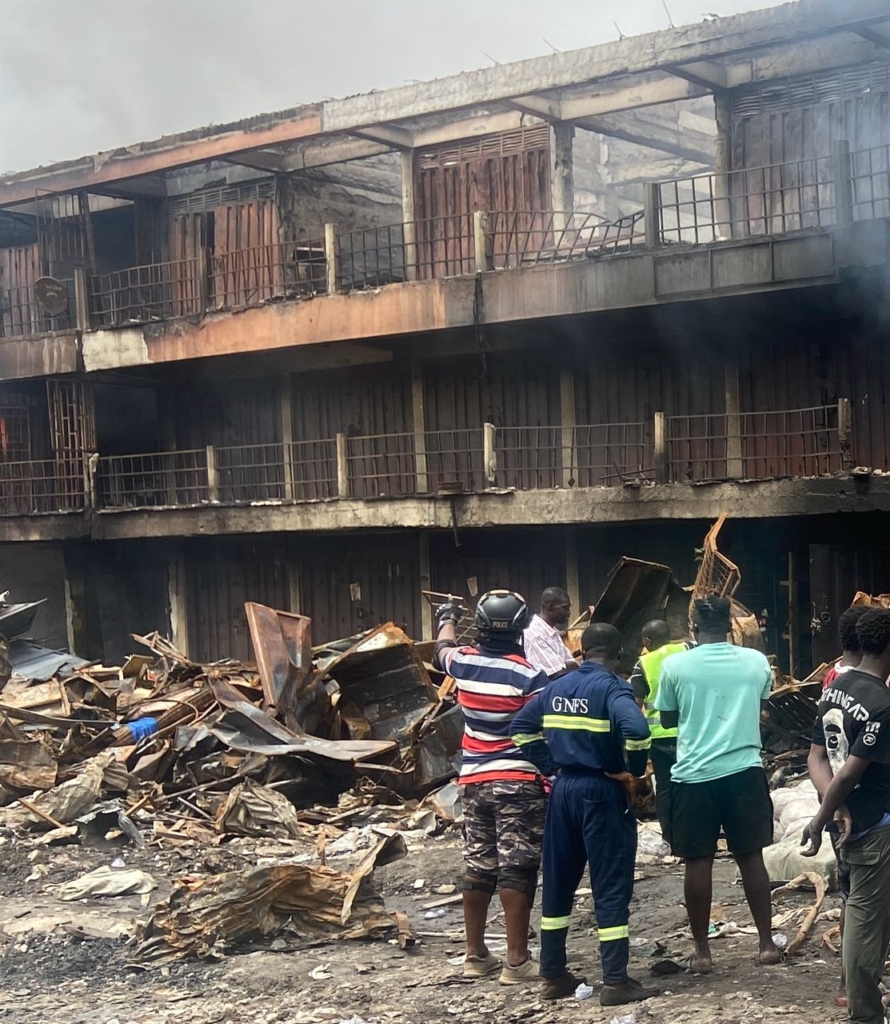
“The devastating fire has been fully extinguished, thanks to the relentless efforts of our gallant and dedicated firefighters. Well done Ashanti Regional Fire Command. You have done what Napoleon couldn’t do. Sincere appreciation to all stakeholders who supported us in bringing closure to this fire management,” the statement disclosed.
However, some of the affected traders, have criticised the Fire Service, alleging that a lack of water exacerbated the destruction.
They claimed the response to the fire incident was inadequate, which they believe facilitated the fire getting out of control.
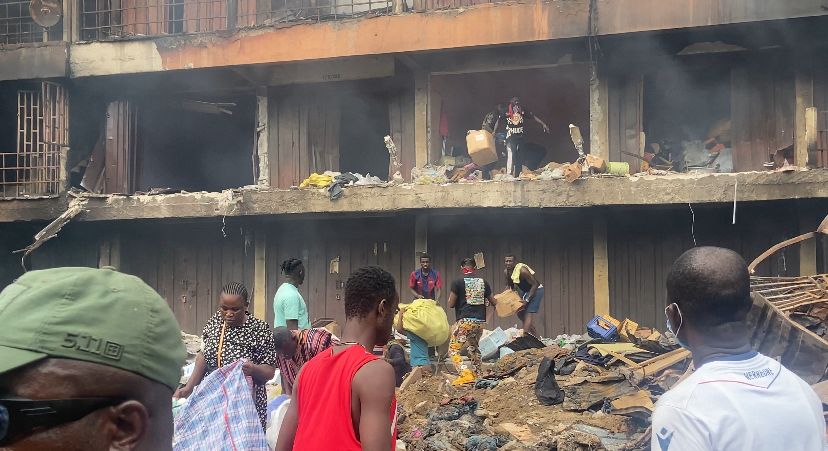
Meanwhile, the Ghana National Fire Services has responded to the claims, attributing the delays to the congested layout of the arena.
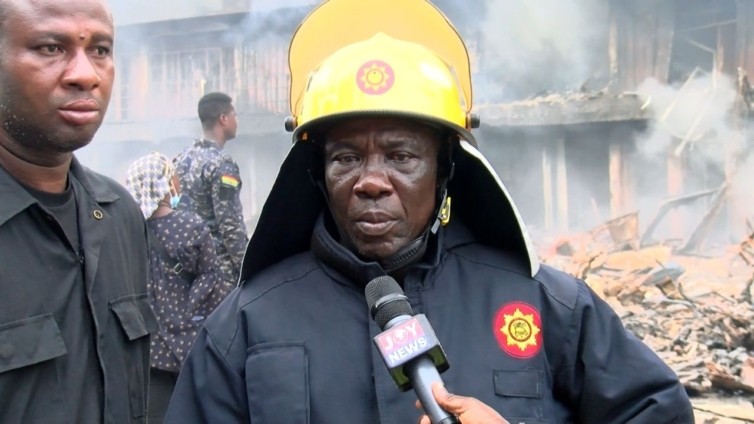
Regional Fire Commander, Assistant Chief Officer 2, Peter Tetteh, indicated that the problem was not lack of water, but lack of access to the burning area.
“We were here minutes after the call about the fire. We have been on the ground since then. It was late when the excavator was brought to create a path for us to enter the arena. If we had that intervention early, we could have salvaged the situation in a very short while. We surrounded the whole place but there was no access.” he said.
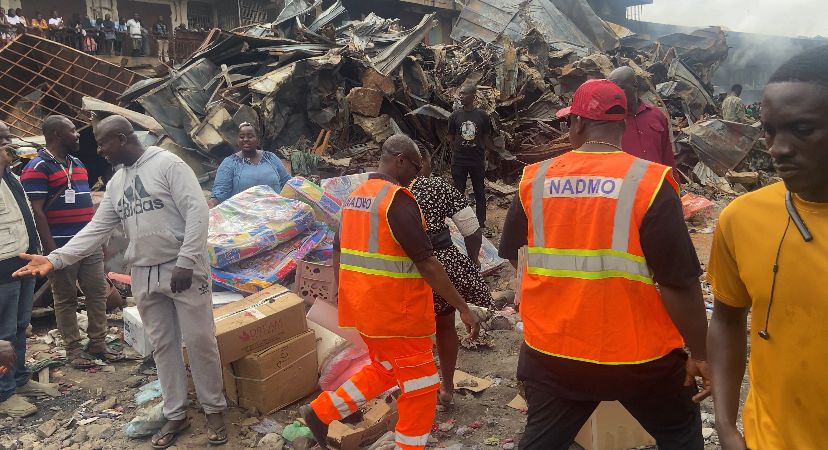
ACFO2 Peter Tetteh further explained that firefighters had connected to the Kejetia hydrant early in the operation, dismissing water scarcity as the issue.
“We were connected to the Kejetia hydrant already and began…. It was not about water, but accessibility. Four tenders were brought, tankers were available, water cannon came, and the ambulance service, the military and the police were also there. The problem was accessibility because when we arrived there was no issue with water. The issue was about accessibility,” he said.
Latest Stories
-
The 7-foot giant of Ngleshie Amanfro: Seven-foot Ghanaian Ephraim Saawa dreams of joining the national basketball team
30 minutes -
Government promises support for Kumasi Central Market fire victims
36 minutes -
Vibes The Movie: Big Ghun’s Ghanaian film earns five nominations at 2026 REFFA
1 hour -
MamaCare CEO warns unresolved conflicts among health workers could undermine maternal and neonatal care
2 hours -
Health professionals urged to translate medical knowledge into practice to save mothers
2 hours -
Conflicts among care providers linked to maternal, neonatal deaths – Expert
3 hours -
GIS marks 10th TIME conference, champions improved teaching practices
3 hours -
BRICS Or Balance? What Ghana’s bid really means
4 hours -
GPRTU wants full TRAFFITECH-GH implementation to start in 2027
4 hours -
Mahama announces plans to import electric wheelchairs for PWDs
4 hours -
KGL U17 Colts 2026: Western beat Prempeh Elite Academy to set up final final with Greater Accra Region
4 hours -
Late Solanke strike salvages 10-man Spurs draw at Man United
5 hours -
Gender Ministry to monitor welfare of Nana Akua Addo’s children amid domestic violence case
5 hours -
Benedict Okyere Yeboah: Ghana’s football problem goes beyond sacking a coach
5 hours -
GPL 2026/27: Darkwah Wiafe’s winner sees All Blacks beat Kotoko
5 hours