

Audio By Carbonatix
The Ashanti caucus of the New Patriotic Party (NPP) in Parliament has questioned the government’s funding priorities following the decision to downgrade the Suame Interchange Project, arguing that claims of debt-related constraints are inconsistent with broader road infrastructure spending.
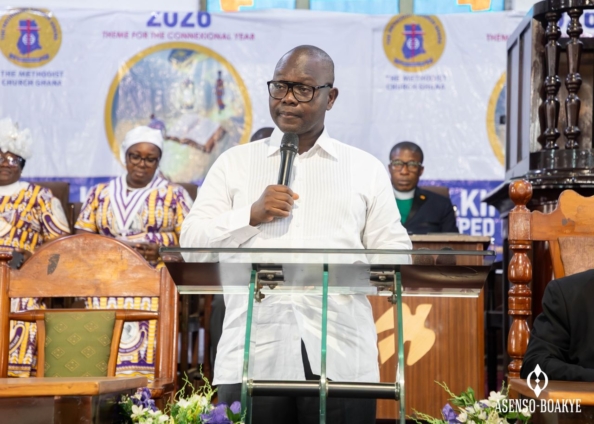
Speaking on behalf of the caucus at a press briefing on Monday, February 6, Francis Asenso-Boakye, MP for Bantama and former Minister for Roads and Highways, asked why the government could mobilise funds for other major road projects while the Suame Interchange, intended as a long-term solution to Kumasi’s worsening traffic congestion, was being scaled back.
“If government could mobilise funds for the Ofankor–Nsawam road and other major projects, why is the Suame Interchange being short-changed?” he queried.
The caucus highlighted what it described as contradictions in government policy. They noted that the Suame Interchange was included in the Big Push Road Programme in 2025, which was meant to guarantee continuous funding for critical infrastructure projects.
Mr Asenso-Boakye also referenced public statements by the Finance Minister indicating that GHS 43 billion has been allocated to road infrastructure this year, questioning why a fraction of that funding could not be used to complete the Suame Interchange as originally designed.
The MPs criticised the government for prioritising 64 new road projects awarded through sole sourcing instead of completing ongoing, high-impact infrastructure, saying this undermines economic efficiency and long-term urban planning.
According to the caucus, failure to complete the Suame Interchange as planned will not only prolong congestion in Kumasi but also result in continued productivity losses, higher transport costs, and deteriorating mobility across the city.
The Ashanti Caucus, therefore, called on the government to reconsider its funding approach, restore the original four-tier design of the Suame Interchange, and ensure that allocations reflect the strategic importance of Kumasi as Ghana’s second-largest city and a national transport hub.
“Kumasi deserves infrastructure that meets its scale and significance,” Mr Asenso-Boakye said. “Short-changing major projects now will cost the city and the nation—far more in the long term.”
Latest Stories
-
Mahama’s Reset Agenda will make resource wealth benefit citizens – Dr Djokoto
16 seconds -
La Pleasure Beach to reopen after demolition exercise
4 minutes -
La Pleasure Beach demolition victims to receive compensation
17 minutes -
NPP Germany congratulates new national executives, calls for unity ahead of 2028 elections
20 minutes -
Avaricious elitism and intellectualism
22 minutes -
Speeding tipper truck kills 2 basic school students at Ekumfi
24 minutes -
‘I’m 16, passed my BECE and want to become a lawyer’ – Adanwomase ‘smallish’ SHS boy
42 minutes -
Ghanaians in their 30s and 50s dying from heart disease without knowing – Cardiothoracic Centre
48 minutes -
Emeritus Professor Kwame Akon Ninsin: The man who mentored a department
48 minutes -
BoG orders banks to give fraud units direct access to CEOs
53 minutes -
Government must clarify fate of 29,000 teachers awaiting promotion – NAGRAT
1 hour -
Paramount takes over Warner Bros in $110bn Hollywood merger
2 hours -
Human resource practitioners asked to embrace digital revolution for efficiency in service delivery
2 hours -
AMA intensifies enforcement to reclaim BRT bus shelters from traders
2 hours -
TGMA controversy hasn’t affected my relationship with Diana Hamilton – Piesie Esther
2 hours