

Audio By Carbonatix
The Head of the Political Science Department at the University of Ghana, Professor Alidu Seidu, has urged political parties not to lump up too many things in their manifestos.
According to him, it is imperative to always target the low-hanging fruits in presenting policy ideas to the people.
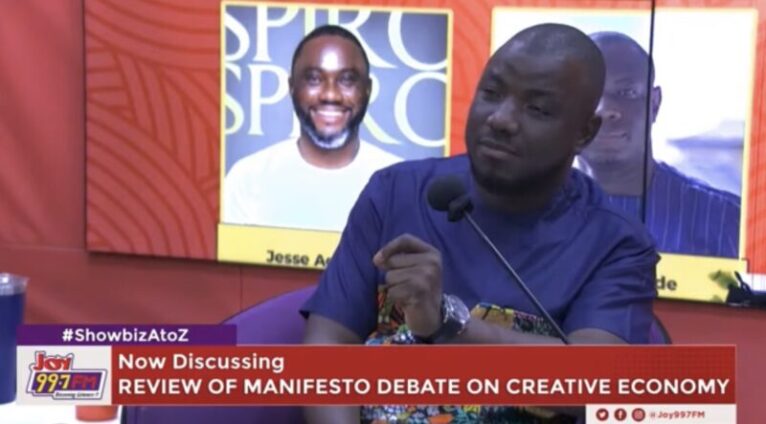
He told Kwame Dadzie on Joy FM’s Showbiz A-Z that instead of giving excuses like “manifestos are not cast in stone”, the politicians should rather prioritise their policies.
“It’s good to put the most important ones that you are ready to implement for public scrutiny in your manifesto. Those that you think are good, but you are not certain about, keep them. If the environment is right and you do them, then you surprise the people, other than just lump everything up.
So you pick their manifestos, 100 pages, 200 pages, everything is there. And the politicians are convinced that they can’t implement all these things even in 20 years,” he said.
Responding to the outcome of Joy FM’s Manifesto Debate on Creative Economy, vis a vis the propensity of political parties to renege on their promises, Professor Alidu noted that it is always imperative that they keep to their promises.
“Manifestoes are political contracts so what you say you are going to do will influence people to vote for you. So in democracies where there is deep accountability, it is important that you do what you promise. Because people are going to vote for you just because of one particular thing that you promise them you’re going to do.
That is why when you are doing the manifesto you take into consideration a whole lot of things: how do you cost the manifesto especially the very key ones? There are some that are just policy issues - 'when we come, we leverage this, we upgrade this', those are different. But you should be able to cost key policy decisions you have in your manifesto,” the Political Science lecturer noted.
He said this will enable the political parties to know the amount of money required to implement the intended projects.
“If you are able to cost your project, it gives you the opportunity to either decide whether it’s going to be public sector-led finance, private sector-led finance or public-private partnership. And we all agree that it’s not going to be easy for the public sector moving forward,” he intimated.
He further indicated that even with private sector investments, there are indicators that influence such moves.
“The private sectors don’t come into a project just like that. Definitely, they will look at the viability, visibility, and also maybe the risk associated with it,” he indicated.
Stakeholders in the cultural and creative industries, have always held policy makers accountable for their works. Various political parties have been mauled for not delivering on their promises.
However, by way of deepening the commitment of politicians to the arts, Joy FM organised the Manifesto Debate on Creative Economy on September 14, 2024, inviting representatives from various political parties to explain creative arts ideas in their manifestos.
Latest Stories
-
Asantehene plants trees to commence Jimi Watercourse Rehabilitation destroyed by galamsey
4 minutes -
15 arrested, 6 trucks impounded over sandwinning activities on Kumasi-Accra Expressway
4 minutes -
OFFICIAL: Vinicius will miss El Clásico, suspended four games
7 minutes -
Prayer vigil held after four arson attack murders
14 minutes -
GRA fully recovers $154k legacy debt owed by foreign entities between 2022 and 2024
16 minutes -
Kwesi Pratt Jr warns bus preachers are adding to passengers’ stress with accident prophecies
17 minutes -
MTN Ghana to spend $1.1bn in 3 years, build 500 new sites as MoMo hits 44% Growth
19 minutes -
I have no regrets joining Assemblies of God – Mahama
19 minutes -
Starlink restrictions in Ukraine war linked to political situation, Zelensky aide says
22 minutes -
Furniture boost for Techiman North schools as MP donates to 20 institutions
22 minutes -
Assemblies of God to loan 10,000-seater dome for Ghana@70 celebrations
23 minutes -
Government to audit 2,016 community network sites – Communications Minister
23 minutes -
Heritage Series notes: BoG promises more inclusive cedi with improved sizes, tactile features
40 minutes -
‘We want answers’ – Family seeks probe into 14-year-old’s death 12 days after starting SHS
51 minutes -
No preacher has the right to impose beliefs on bus passengers – Kwesi Pratt Jr backs preaching ban
55 minutes