
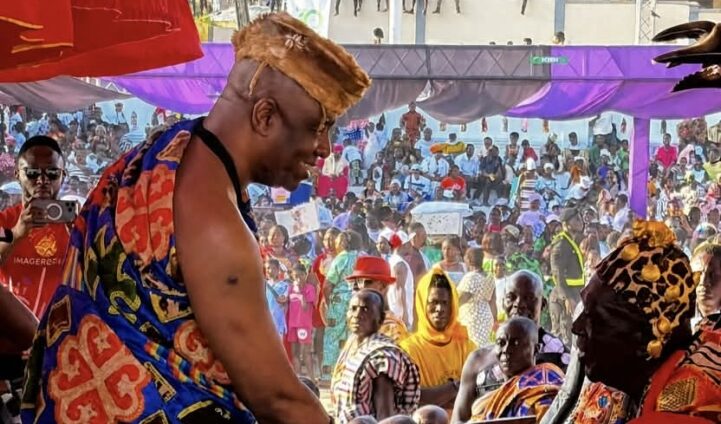

Audio By Carbonatix
I was in Cape Coast from Thursday September 3, through Monday September 7, 2026, for Oguaa Fetu Afahye, the Festival of the People of Cape Coast.
The city was charged, alive and ready for the weekend. I was there at the invitation of the Visit Cape Coast Initiative team, a story I'll get into another time.
When I arrived on Thursday, the sights and sounds were overwhelming. There was a warmth to the place, that unmistakable feel good energy you notice the moment you step off the bus. This was my first time actually experiencing the festival, so everything felt new.
I'd heard about past editions and seen the pictures floating around, but I never really paid it much attention or made the effort to see it for myself, until this year.
And let me say this boldly. This is, by far, one of the most decorated and biggest festivals in Ghana. Some of you will argue with me on that, and that's fine. It's my opinion, so we move.
Now, Orange Friday.
Oh boy. I loved it.
There's something about watching an entire city dressed in orange. The streets, the businesses, the young people, families, visitors, everyone folded into the same story. It wasn't just a dress code. Orange Friday has become a movement.
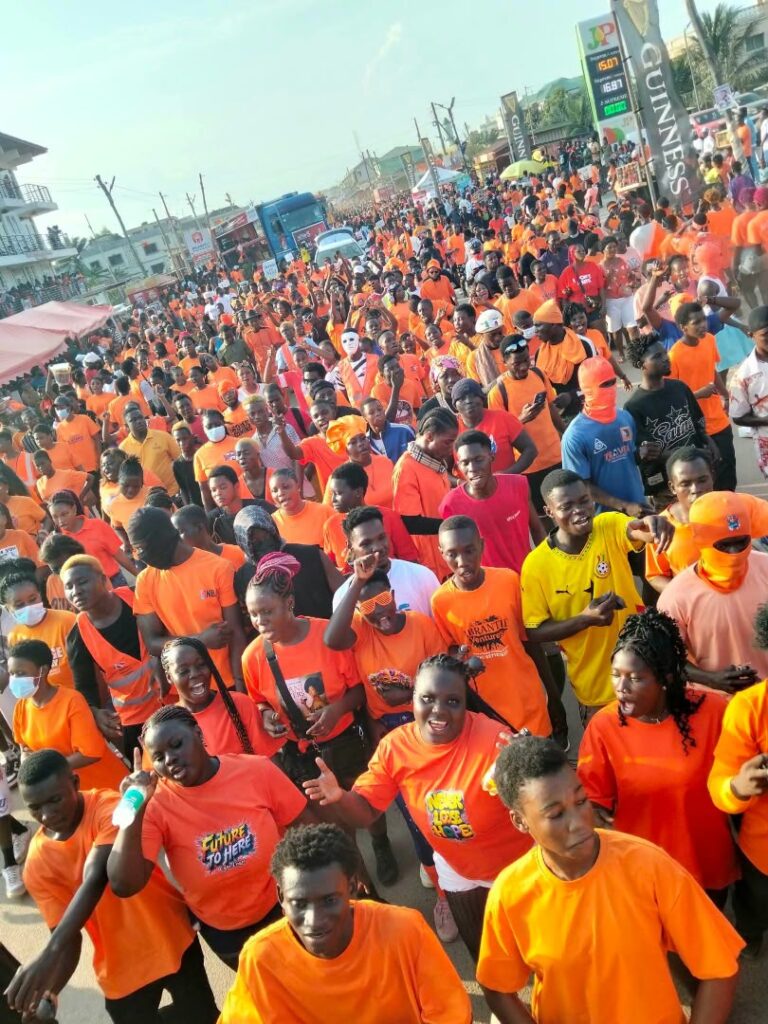
The energy was wild. The numbers were even wilder. Thousands of people poured into Cape Coast, creating a cultural and social gathering that businesses, brands and the tourism industry simply can't afford to ignore.
And that's where I see a real opportunity.
Orange Friday needs a bit more branding. Not a reinvention, the magic is already there, but some intentional packaging: stronger commercial partnerships, branded experiences, ways for businesses to plug into the movement without stripping away its cultural soul.
Because when thousands of people willingly wear one colour, move through one city and generate that kind of organic excitement, you're no longer looking at an event. You're looking at an asset.
Orange Friday could become one of Ghana's biggest cultural lifestyle brands. There's real commercial value sitting right there, waiting to be picked up.
The town was packed, as if all of Ghana had made its way to Cape Coast to witness the culture and tradition of its people.
Then came the Grand Durbar.
This is where the whole experience climbed another level.
The streets were already buzzing, but the atmosphere around the durbar was something else. Chiefs arrived in magnificent traditional regalia, carried in palanquins, surrounded by drummers, dancers and traditional attendants, with people lining the streets just to catch a glimpse of their royals.
The procession itself was a spectacle. You could feel the history. You could feel the pride. You could feel just how much weight the traditional institution still carries.
The Oguaa Traditional Area put its culture on full display, with Osabarimba Dr. Kwesi Atta II, Omanhen of Oguaa, at the centre of it all. Chiefs, Asafo companies, traditional leaders and dignitaries brought their own expressions of Ghanaian royalty and culture together in one place.
Then the Ga Mantse arrived.
His Royal Majesty King Tackie Teiko Tsuru II, Ga Mantse.
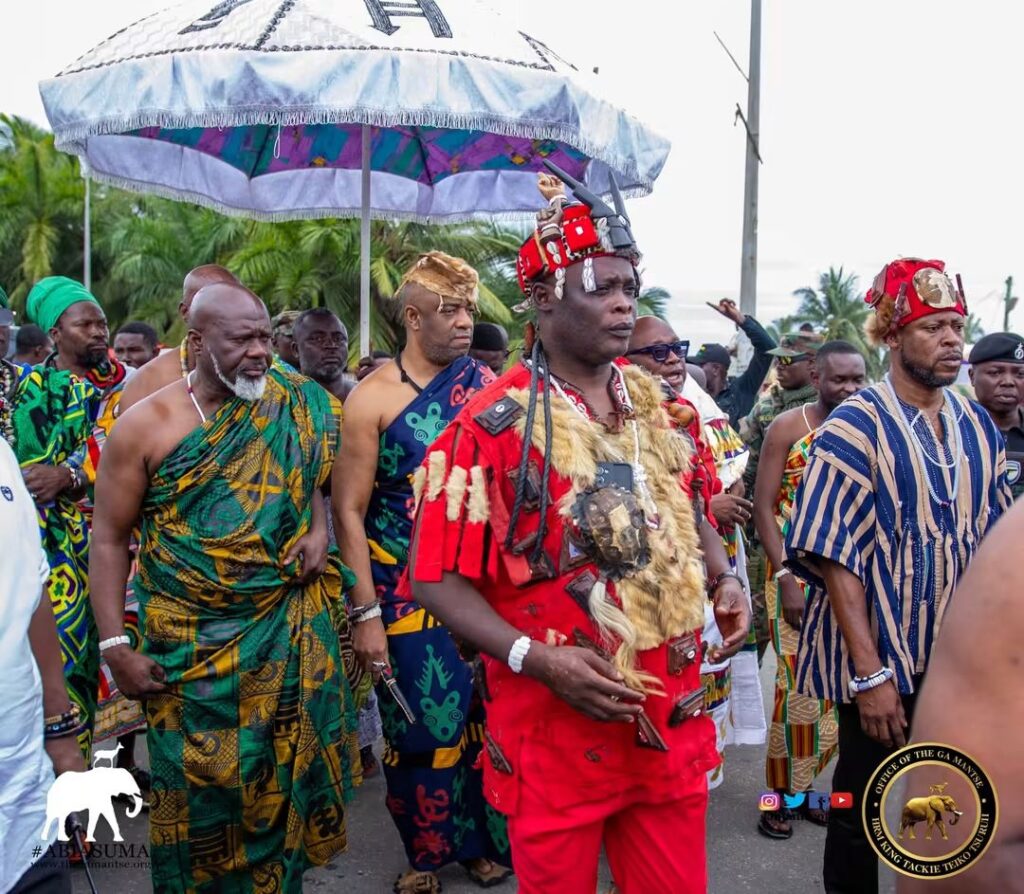
I don't know how else to put it: wow.
I stood in the crowd and watched. First you noticed the movement. Then the sound. Then the colours. Then the people. And finally, the King himself.
There was something commanding about the entrance. The richness of the Ga regalia, the procession, the symbolism, the sheer presence, it all came together to demand your attention. This wasn't just a chief arriving at a durbar. For me, it felt like Ga had entered the room.
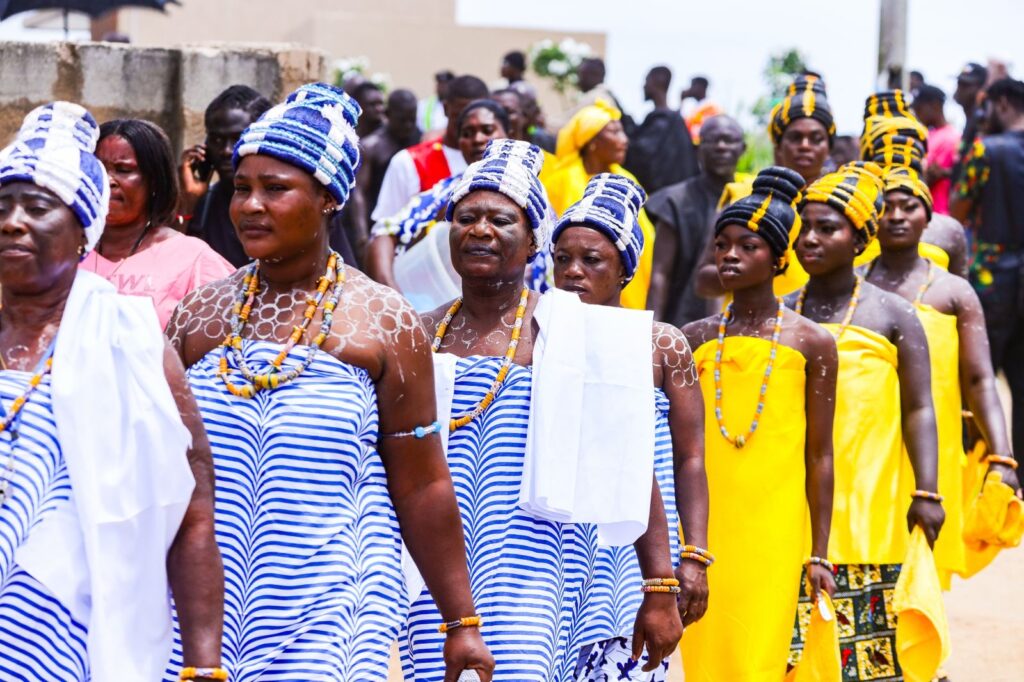
And that's what struck me most.
Watching King Tackie Teiko Tsuru II make his way into Victoria Park, I found myself thinking about the beauty of Ghana's traditional institutions and the different identities that make this country what it is.
Ga meeting Oguaa. Two historic coastal cultures. Two proud traditional institutions. One Ghana.
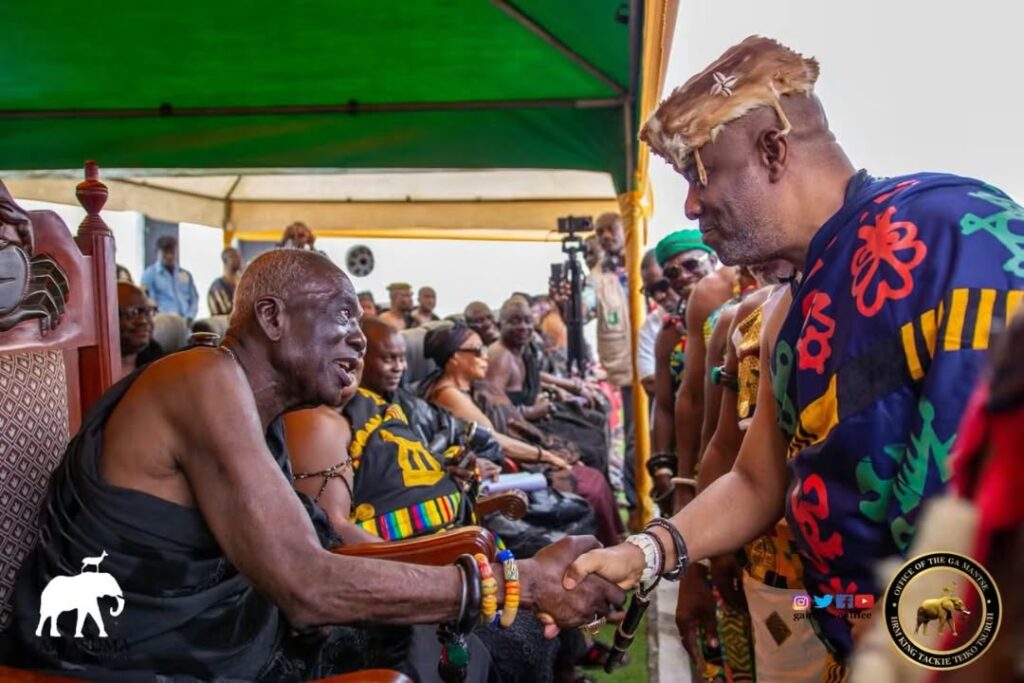
The Ga Mantse's presence added another layer of colour and significance to an already magnificent durbar. He was received with great respect, exchanging warm greetings with Osabarimba Kwesi Atta II, host of the Grand Durbar.
And it wasn't just the Ga Mantse. His Royal Majesty Jira Yagbonwura Bii-Kuntuo Jewu Soale I, King and Overlord of the Gonja Kingdom, was also among the distinguished royal guests. Seeing traditional leaders from different parts of Ghana gathered in one place was a powerful reminder of just how diverse and interconnected our heritage really is.
But forgive me if I linger a little longer on the Ga Mantse, because as a proud Ga, that moment did something to me.
There are times when you see your culture represented and you simply feel it. No explanation needed. No long speech required. Just pride.
I looked at the Ga Mantse and everything he represented, and I thought to myself: this is who we are. This is the beauty of Ghana. This is what happens when culture isn't locked away in history books but carried into the streets, into the public square, into the consciousness of a new generation.
Nii Ga, may you live long. You gave me another reason to be proud of being Ga.
And maybe that's the bigger lesson from Fetu Afahye. Festivals aren't just about parties. They're not just music, food, fashion and street celebrations. They are identity. They are history. They are tourism. They are business. They are community. And, increasingly, they are becoming serious economic assets.
The 2026 Fetu Afahye made that plain. Cape Coast wasn't simply celebrating, it was working. People were selling, hotels were full, restaurants and temporary businesses were busy, artisans were at their stalls, creatives were earning and visitors were spending. Reports from the festival period captured the scale of that commercial activity across the city.
Which brings me back to my point about Orange Friday. There's real value here, and with the right strategy, the right partnerships and the right commercial thinking, Fetu Afahye can become an even bigger cultural tourism product for Ghana. But as we commercialise it, we have to be careful not to commercialise away its soul. The culture must remain the product. The brands should come to support and amplify it, not take it over.
To the people who put this together: mo ayekoo. To Osabarimba Dr. Kwesi Atta II and the Oguaa Traditional Council, the Fetu Afahye planning team, the chiefs and elders, the Asafo companies, the performers, the volunteers, the Visit Cape Coast Initiative team, the businesses, the media and everyone who helped bring Cape Coast to life: thank you. You gave me an experience I won't forget.
I came to Cape Coast as someone who had heard about Fetu Afahye. I left as someone who had experienced it. And there is a big difference.
Cape Coast, you have something special. Protect it. Package it. Promote it. And most importantly, own it.
Because what I saw over those few days wasn't just a festival. I saw a city telling its story to Ghana, and to the world.
My name is Philip Nai. I am who I say I am.
Latest Stories
-
Ghana’s tuna industry in crisis as 20 hook-and-line vessels collapse
30 minutes -
South Tongu MP launches apprenticeship programme for 159 young people
44 minutes -
The Pusiga connection behind Gertrude Atongi’s work in New York
1 hour -
Teachers took promotion exams in December to beat government clearance deadline – GNAT
1 hour -
NPA launches 2026 staff welfare week with focus on teamwork and employee wellbeing
1 hour -
Ghana, Saint Kitts and Nevis sign labour deal to strengthen protections for Ghanaian nurses
1 hour -
Delayed promotions put teachers’ retirement benefits at risk – GNAT
1 hour -
No ‘Bawumia candidates’ in NPP executive elections – Anthony Karbo
1 hour -
Over 3,000 displaced as flooding overwhelms Hohoe communities
2 hours -
Sunyani East NPP executives begin reconciliation drive ahead of 2028 polls
2 hours -
Agric Minister engages Ga Mantse on agriculture transformation agenda
2 hours -
Aayalolo expansion targets private car users, not trotro operators – Mahama Ayariga
2 hours -
KNUST, GMTF explore AI partnership to transform healthcare delivery
2 hours -
MTTD records 9,000 preventable crashes, over 900 deaths in eight months
2 hours -
UN Secretary-General expresses optimism about future, pledges support for Mahama, AU
2 hours