

Audio By Carbonatix
A Professor of Strategic Management has stressed the need for Ghana to strengthen its industrial development agenda to position industries as strategic tools needed to harness opportunities to drive the country’s economic transformation.
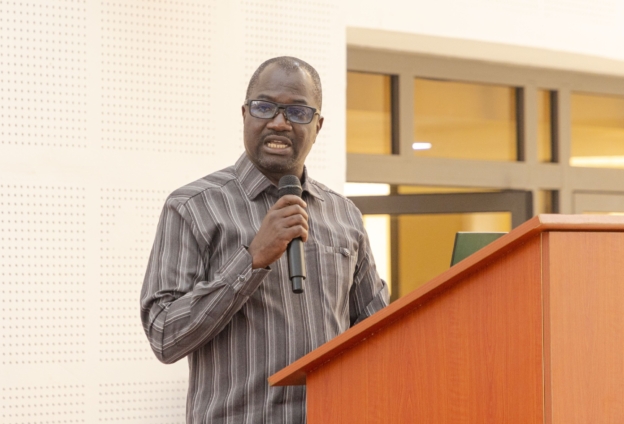
Professor Ahmed Agyapong, who is also the Dean of the School of Business at the Kwame Nkrumah University of Science and Technology (KNUST), said although Ghana had in recent times made significant strides in industrial development, a lot more is needed to help achieve holistic and transformative industrial agenda.
Speaking at the maiden Business and Policy Review Series organised by KNUST Business School in Kumasi, he said Ghana stood at a pivotal juncture in its development journey with the rapid changes in the global economic dynamics, technological advancements, and evolving market demand.
It was therefore important for the country to embrace innovative technologies while enforcing a culture of innovation which was essential to increase productivity and efficiency in the industrial transformation agenda.
The series was on the theme “Industrial Transformation of Ghana: Strategic Priorities.”
Professor Agyapong called for investment in research and development and digital transformation support at the industrial level.
Again, he suggested that to ensure human capital development for industrial growth, the nation required skilled and adaptable workforce, adding that, this called for continuous investment in education and training aligning academic curricula with industry and promoting lifelong learning.
He pointed out that infrastructural development, sustainable practices, policy and regulatory framework and public-private partnerships were all paths for identifying and prioritising the key areas to drive sustainable growth and competitiveness.
The Chief Executive Officer of the Association of Ghana Industries (AGI), Mr. Seth Twum-Akwaboah observed that the challenge at the small and medium-scale enterprises level in Ghana had been how to train people to adapt to modern technologies.
He said it was hindering versatility and innovativeness in businesses and suggested that industry embraced modern technologies to drive economic growth.
Mr. Twum-Akwaboah said a transformed industry had to protect products as intellectual properties.
He also stressed the need for Ghana to prioritise the development of the transport network, energy supply and digital infrastructure to facilitate smooth and efficient industrial operations.
A former Deputy Finance Minister highlighted energy transition as a new wave to drive industry transformation.
He said energy must be produced at a competitive price that when added to inputs of business, industries would be able to price products economically.
He called for energy to be used efficiently.
Latest Stories
-
Lawrence Kobena Nsarko Otoo, Esq
38 minutes -
Bel-Aqua intensifies mental well-being campaign ahead of 15th anniversary
40 minutes -
From banking to party finances: Alfred Kwadwo Thompson elected NPP Treasurer
45 minutes -
George Christian Papa Mends
50 minutes -
Ali Suraj elected NPP NASARA Coordinator
1 hour -
Mustapha Hamid misses out on NPP Vice Chairmanship by 31 votes despite early poll lead
1 hour -
Kojo Bamba, Henry Nana Boakye and Nana Akomea elected NPP Vice Chairmen
2 hours -
From Delta Force to NPP First Vice Chairman – Kojo Bamba’s political journey
2 hours -
Police restore calm at Larteh following Odwira festival disturbance
3 hours -
‘All the camps will dissolve’ – Bawumia demands one NPP for 2028
3 hours -
There is no time to waste – Bawumia orders NPP to begin 2028 work
3 hours -
Sarkodie visits MobileMoney Fintech LTD
3 hours -
John Boadu unveils new NPP strategy to win back youth and modernise party
3 hours -
Hawa Koomson elected NPP National Women’s Organiser
3 hours -
John Boadu begins NPP rebuild from grassroots ahead of 2028 election
3 hours