

Audio By Carbonatix
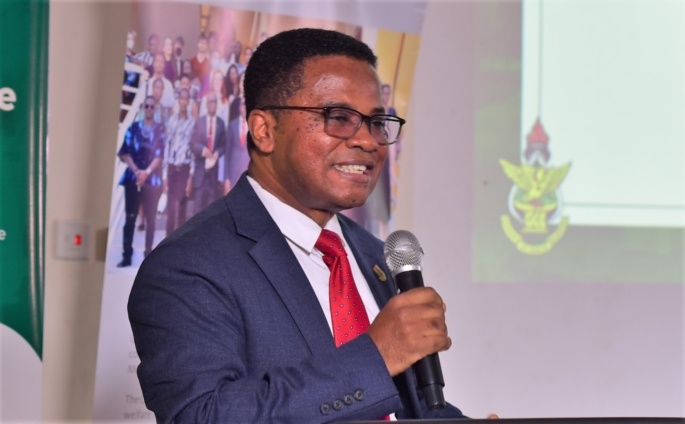
The director of the Kumasi Centre for Collaborative Research in Tropical Medicine (KCCR), Prof. Richard Odame Phillips, wants more opportunities given to the youth to pursue postgraduate education.
With a booming youth population, he believes the move will translate into sustainable economic growth.
Speaking at the 2nd annual postgraduate conference of the College of Health Sciences, he called for more investment in research.
“Postgraduate education is where new skills are gained inside and outside academia, we learn how to deal with ethical dilemmas, assess the role of new technologies and communicate to all societies. So, investing in doctoral programmes is investing in a sustainable future.
“There has to be significant investment in the youth when it comes to postgraduate education because 60 % of Africa’s population is under 25, More than 40% of African youth make up the global youth population and it’s believed that if we follow the same trajectory, we’ll have about 1 billion youth by 2050.
“There’s the need to give more opportunity to the youth because developed countries don’t have that and so we have a real advantage to invest more in the youth,” he explained.
In doctoral training, Prof. Phillips advocated an approach aimed towards meeting various career paths aside from academia.
“For a very long time, PhD holders have built careers in academia and research to the extent that those who failed to get in consider themselves as failures, with other sectors considered as lesser value,” he observed.
The two-day conference which is under the theme: “Harnessing postgraduate research to achieve Sustainable Development Goals,” will feature both oral and poster presentations and discussions highlighting the latest advancements in healthcare research.
This year, the number of abstracts saw an increase from 48 to 165.
The pro-vice chancellor, Prof. Ellis Owusu-Dabo admonished the college to work across the various SDGS.
“It’s important that we do not work in silos but work across the various SDGs. When you pick health, for instance, it has ripples,” he said.
The provost of the College of Health Sciences, Prof. Christian Agyare entreated participants to actively engage in knowledge and ideas exchange.
Chairman of the Planning Committee, Prof. Alexander Debrah stressed the need to “engage stakeholders, policymakers and communities around us to ensure our work has real-world impact”.
Latest Stories
-
Young woman found dead at Kasoa Peace Town
27 minutes -
Livestream: The Law examines lawful arrest in Ghana
52 minutes -
Mahama urges African governments to treat healthcare as an investment, not budget cost
1 hour -
Bawumia congratulates John Boadu and new NPP executives, pledges support ahead of 2028
1 hour -
‘No talent should be left out’ – Bawumia pledges inclusive NPP campaign for 2028
2 hours -
Prof. Mike Oquaye recounts how he blocked Special Prosecutor’s attempt to arrest Bawku Central MP
2 hours -
Make health sovereignty a priority for Africa – Mahama
2 hours -
Dorimon Naa, Wa West DCE lead massive clean-up exercise; threaten sanctions against recalcitrant residents
2 hours -
Photos from Adom FM Y2K Jam
2 hours -
Praye Tiatia steals the show at Adom FM Y2K Jam [Watch]
3 hours -
Boakye Agyarko congratulates John Boadu, pledges support for NPP leadership
3 hours -
Antwi HiMight thrills fans with Antwi ne Antwi hits at Adom FM’s Y2K Jam [Video]
3 hours -
Amb. Edward Boateng congratulates Boadu, Kodua on election wins
3 hours -
John Boadu pledges to rebuild NPP from grassroots and restore ‘winning machinery’
3 hours -
Ashaiman Assembly deploys monitoring system to curb dumping in storm drain
4 hours