

Audio By Carbonatix
The history of the Ghanaian Cedi has far too often been told as a tragedy of external dependencies. It was a narrative where our national currency was a fragile leaf tossed by the winds of Washington or the cold mandates of the IMF. But as we stand in the light of 2026, that old script has been shredded.
The Cedi’s remarkable 35 per cent appreciation over the past year is not a windfall of foreign benevolence. Nor is it a miracle of global markets as some detractors have sought to propagate. It is the hard-earned harvest of a domestic industrial revolution engineered by the Mahama administration, a "Great Reset" that has fundamentally shifted the tectonic plates of our economy from consumption to production.
To understand this resurrection, one must first applaud the strategic brilliance of the Gold for Reserves (GoldBod) initiative. By aggressively accumulating over 38 tonnes of bullion, the Bank of Ghana provided the Cedi with a metal-backed spine that the markets could no longer ignore. GoldBod acted as the vital anchor in the storm, giving the nation the "hard" credibility needed to intervene and stabilise the exchange rate.
Yet, while gold provided the anchor, the true strength of a currency is the shadow cast by its industry. For decades, Ghana’s greatest fiscal wound was the 10 billion dollars we bled annually to import refined petroleum. This was the ultimate irony of a nation sitting on crude oil yet begging for fuel.
By prioritising the resurrection of the Tema Oil Refinery and providing the strategic environment for the Sentuo Oil Refinery to scale, the government has effectively applied a tourniquet to this haemorrhage. We are no longer merely exporters of raw materials; we are architects of value.
By refining our own Sankofa and Jubilee crude, we are retaining 400 million dollars every month that used to vanish into the coffers of international traders. This is the essence of sovereignty: when the state ensures you stop chasing the Dollar for your basic energy needs, the Dollar stops chasing you.
This spirit of self-reliance extends deeply into the heart of our industrial zones. Without the empty vanity of slogans, the administration has quietly fostered a manufacturing base that is now the envy of the sub-region. From the mass production of construction materials to the sophisticated processing of our agricultural yields, Ghana is finally building what it once bought.
The result is a staggering 6.2 billion dollar trade surplus that has acted as a structural "Import-Brake." Every bag of cement and every litre of cooking oil produced within our borders is a victory for the Cedi. The government has proven that the best way to defend a currency is not to borrow for it, but to produce for it.
Behind this industrial fortress stands a formidable duo of professional stewardship. The Ministry of Finance and the Bank of Ghana have moved in a rare, flawless synergy that has silenced the cynical whispers of the opposition. By turning a chronic deficit into a primary surplus and swelling our gross international reserves to over 11 billion dollars, they have built a "Fortress Cedi" that can withstand any global shock.
They have demonstrated that fiscal discipline is not an external conditionality to be feared, but a domestic duty to be embraced. To credit the IMF for this stability is to credit a bystander for the speed of a sprinter. The IMF provided a framework, but it was the professional brilliance of our own state institutions that executed the recovery.
Furthermore, we must recognise the silent, steady pulse of our energy infrastructure. The Atuabo Gas Processing Plant has become the unseen guardian of our reserves. By decoupling our power grid from the volatility of global oil and utilising our own domestic gas, the state has saved upwards of 700 million dollars annually.
This is the "Energy Buffer" in action, ensuring that the Cedi is no longer a hostage to the fluctuations of the Brent Crude price index. It is a masterpiece of economic planning that ensures our growth is fuelled by our own resources rather than foreign debt.
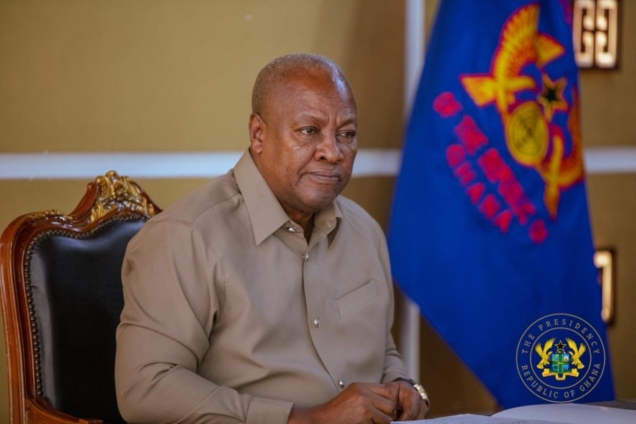
The rise of the Cedi is the ultimate manifestation of the audacity of self-reliance. President Mahama, the Finance Minister, and the Governor of the Central Bank have not merely managed a crisis; they have redefined the Ghanaian identity.
They have shown that when a government has the courage to "Reset" the foundations of production, the currency will inevitably reflect that strength. We are no longer a nation waiting to be rescued by the West; we have found the keys to our own house. The Cedi is strong today because Ghana is finally working for itself, by itself, and for its own future.
Latest Stories
-
Conflicts among care providers linked to maternal, neonatal deaths – Expert
21 minutes -
GIS marks 10th TIME conference, champions improved teaching practices
28 minutes -
BRICS Or Balance? What Ghana’s bid really means
54 minutes -
GPRTU wants full TRAFFITECH-GH implementation to start in 2027
1 hour -
Mahama announces plans to import electric wheelchairs for PWDs
1 hour -
KGL U17 Colts 2026: Western beat Prempeh Elite Academy to set up final final with Greater Accra Region
2 hours -
Late Solanke strike salvages 10-man Spurs draw at Man United
2 hours -
Gender Ministry to monitor welfare of Nana Akua Addo’s children amid domestic violence case
2 hours -
Benedict Okyere Yeboah: Ghana’s football problem goes beyond sacking a coach
2 hours -
GPL 2026/27: Darkwah Wiafe’s winner sees All Blacks beat Kotoko
2 hours -
ITF World Tour : Patel Wins Boys’ Singles Final at J100 Accra
2 hours -
Ghana must pursue BRICS partnership if it brings economic benefits – Kpebu
2 hours -
Success and Wright Claims J100 Accra Girls’ Doubles Championship
2 hours -
ITF J100: America’s Wright wins J100 Accra Girls’ Singles Title
2 hours -
Expedition hopes to find aviator Amelia Earhart’s plane on remote island
3 hours