

Audio By Carbonatix
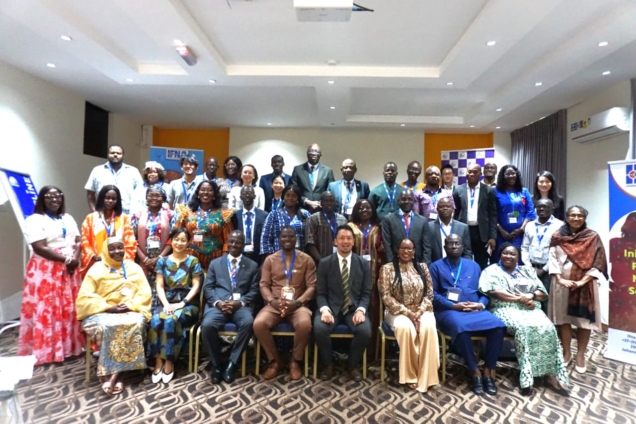
The Initiative for Food and Nutrition Security in Africa (IFNA), in partnership with the Economic Community of West African States (ECOWAS), has announced a pivotal regional training designed to bolster national technical capacities for food security and nutrition within ECOWAS Member States.
The training was held at the Airport View Hotel in Accra.
The intensive three-day program aimed to equip national technical officials with advanced knowledge and practical tools to address the complex challenges of nutrition across various sectors.
Building on IFNA's established framework, which was jointly launched by the African Union Development Agency-NEPAD (AUDA-NEPAD) and Japan International Cooperation Agency (JICA) in 2016, the training emphasized two key approaches: the Nutrition-focused Food Access Improvement Approach (NFA) and the Multi-sectoral Approach (MSA).
The NFA focuses on identifying dietary gaps through assessment and recommending food-based solutions, while the MSA provides a comprehensive examination of multi-sectoral efforts to understand and address the underlying causes of malnutrition.
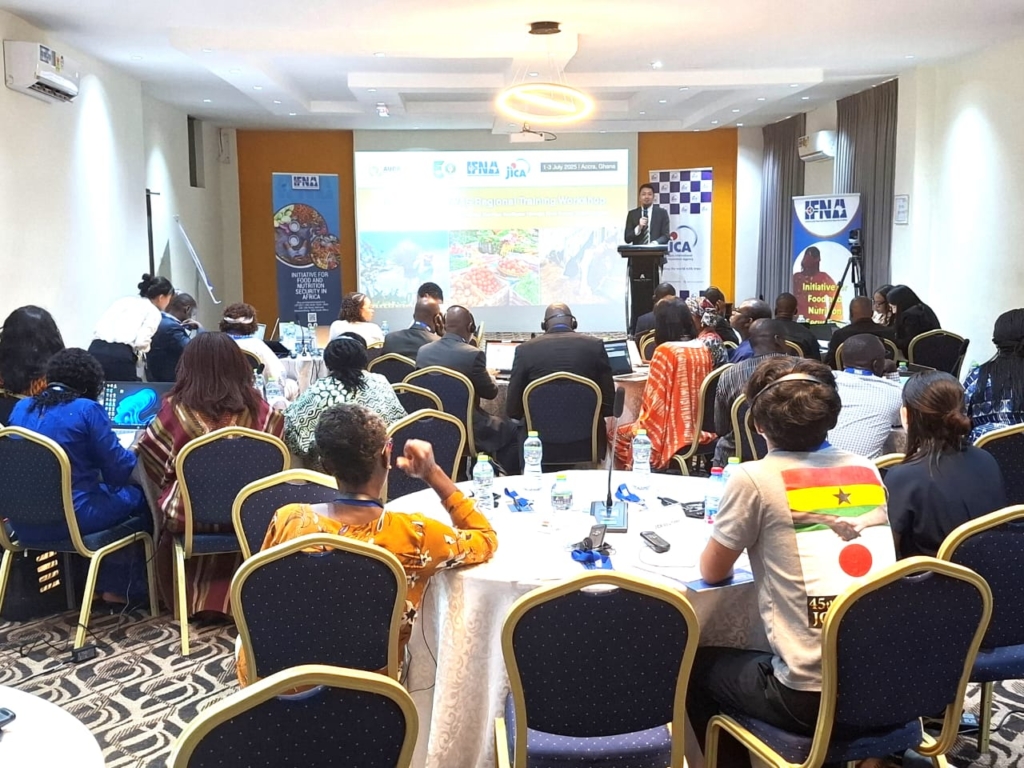
Participants gained critical insights into developing a Multidimensional Action Plan for implementation, informed by data and robust analytical tools.
In the opening address, the Senior Representative of JICA Ghana, Ryotaro Oda, underscored the urgency of collaborative action,
"Despite global efforts, malnutrition remains a critical challenge in Africa. Climate shocks – from droughts to floods – alongside conflicts in Ukraine and Gaza, threaten vulnerable communities. Through IFNA, we empower nations to transform policies into tangible actions using multisectoral strategies."
Aligned with the UN Sustainable Development Goals (SDG) 2 and Africa’s CAADP framework, the workshop aimed at understanding key nutrition issues within the context of CAADP, SDGs, and national commitments, gaining practical knowledge of relevant investments, intervention measures, and tools, learning about the concept and good practices of NFA and MSA and dentifying priority nutrition challenges and developing Multilateral Action Plans with clear accountability mechanisms.
Upon completion of the training, participants deepened their understanding of nutrition issues, acquired practical knowledge of intervention tools, and got better positioned to translate national and regional nutrition targets into actionable strategies.
An IFNA regional consultant will further collaborate with country teams to develop project concepts and identify funding opportunities.
Latest Stories
-
Ghana’s economy grows by 7.4% in July 2026
8 minutes -
NDC member challenges Dennis Yeboah Twumasi’s eligibility for Bono Regional Secretary elections
18 minutes -
Popular Nigerian gospel singer Toluwanisings dies
28 minutes -
Spio-Garbrah proposes debt swaps to fund reparative justice in Africa and Caribbean
36 minutes -
Alban Bagbin calls for governance reforms and coordinated action to address Africa’s debt crisis
38 minutes -
AAK Academy Ghana trains 22 chocolate and confectionery companies in production techniques
40 minutes -
Adwumawura Programme trains second cohort of young entrepreneurs in Bono East
41 minutes -
Destroying Jimi River for gold could cost us our lives – Asantehene
48 minutes -
Sammy Gyamfi didn’t say BoG has ceded its forex role to us – GoldBod
2 hours -
High Court sets November 4 for ruling on Wontumi’s bail application
2 hours -
Tetteh Kwetey files nomination for NDC Greater Accra Regional Chairmanship
2 hours -
Korle Bu appeals for more doctors, nurses as A&E Centre struggles under pressure
2 hours -
AFCON 2027Q: ‘I’m optimistic Black Stars can turn things around’ – Agyemang-Badu
2 hours -
Digital innovation could widen Africa’s inequalities if people are left out – Sam Jonah
2 hours -
Galamsey is an economic, health and moral problem – Sam Jonah
2 hours