


Audio By Carbonatix
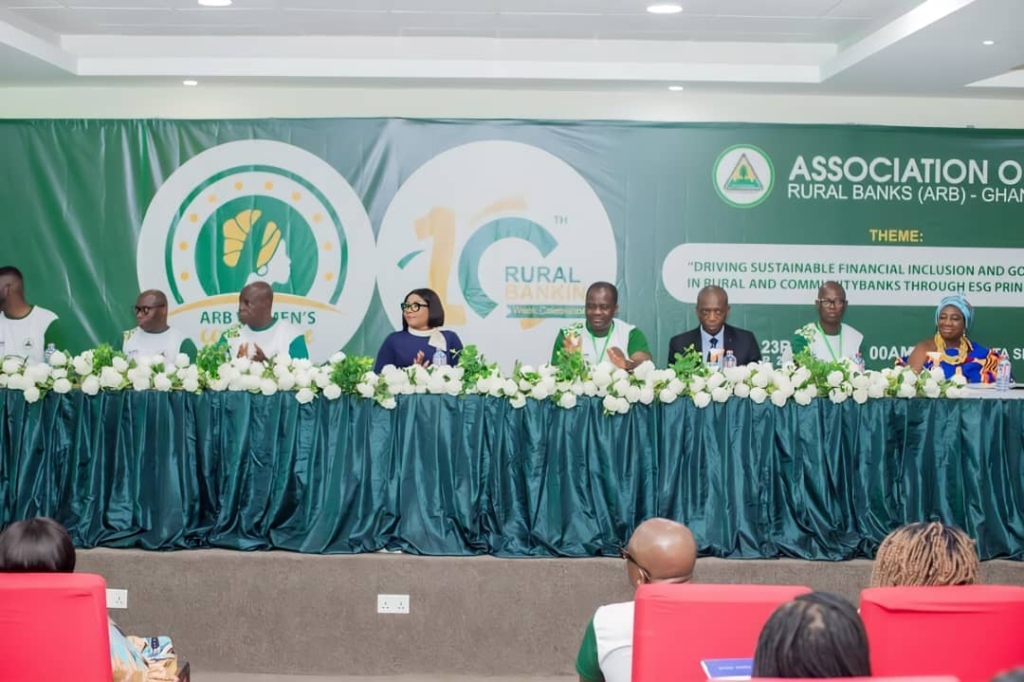
The Second Deputy Governor of the Bank of Ghana (BoG), Matilda Asante-Asiedu, is urging Rural and Community Banks (RCBs) in the country to move beyond the regulatory requirement of appointing at least one woman to their boards.
According to her, RCBs should be working toward the 30% representation target set under the Affirmative Action Law by 2026.
Matilda Asante-Asiedu disclosed this at the Second ARB Women’s Conference and the climax of the 10th National Rural Banking Week at the Volta Serene Hotel.
She noted that this is why the Bank of Ghana requires that every RCB board include at least one woman.
She added that “I therefore urged institutions to move beyond the minimum requirement and work toward the 30% representation target set under the Affirmative Action Law by 2026.”
The Second Deputy Governor revealed that discussions at the meeting “affirmed a critical truth: the future of rural banking in Ghana depends on our ability to integrate ESG principles, strengthen governance, and empower women at every level of leadership.”
“As technology, climate risks, and customer expectations rapidly evolve, rural and community banks must respond with innovation, discipline, and foresight. ESG is not a trend; it is the blueprint for resilience, responsible growth, and long-term value creation,” she added.
Mrs Asante-Asiedu noted that “I am especially inspired by the remarkable women shaping the rural banking ecosystem.”
She also highlighted how the leadership of these women “continues to drive financial inclusion, deepen community trust, and unlock opportunities for households and enterprises across the country.”
She therefore advised them to work hard to “build institutions grounded in integrity, sustainability, and fairness—and ensure that financial inclusion becomes true empowerment, not just access.”

Banking and ESG Principles
The Second Deputy Governor also noted that, looking at current developments around the world, banking through ESG principles is the way to go for rural and community banks.
She added that “we are entering an era where the strength of financial inclusion is not measured only by profit, but also by the quality of its impact and the fairness and responsibility with which it manages risk.”
The Deputy Governor also announced that the regulator remains a committed partner and will continue to strengthen supervision, support capacity building, and promote responsible innovation.
She said that in collaboration with ARB Apex Bank, they will be working to deepen the sector’s resilience.


Latest Stories
-
When dialogue fails and strikes speak: Is industrial action the only language government understands?
45 seconds -
Ghana launches Social Protection Act regulations and Affirmative Action Gender Equity Regulations
2 minutes -
Mahama swears in Emelia Afi Agbenyo, Joseph Kwaku Asamoah as EC Deputy Commissioners
12 minutes -
Wetland communities in Northern Ghana face a hotter, flood-prone future as climate risks intensif
14 minutes -
Sam George tasks KNUST to develop Twi AI model as Ghana plans local-language artificial intelligence
17 minutes -
Poor roads choking eco-tourism potential – Avatime Paramount Chief cries out
22 minutes -
DVLA records GH¢25 million surplus in 2025 as contributions to state funds reach GH¢98.1 million
27 minutes -
Over 10 suspected scam centre kingpins arrested and remanded – CSA
31 minutes -
Ministers, CEOs, policymakers to grace 7th Africa Public Sector Conference in Accra
33 minutes -
NDC sets filing fees for national executive elections, with chairman aspirants paying GH¢100,000
35 minutes -
Muntaka urges Ghanaian cannabis growers to form cooperatives under licensed cultivation framework
44 minutes -
84 suspected drug offenders in custody as NACOC freezes nearly 73 assets – Muntaka
54 minutes -
Immediate reconciliation key to building united NPP — COKA
57 minutes -
MPs, CSOs push for dedicated budget line for malaria
58 minutes -
Jeffrey Nortey’s viral Kanayo O. Kanayo bar gets the legend’s attention, leads to a meet-up
59 minutes