

Audio By Carbonatix
The Irish website The Liberal revealed, in a leaked official document, the outlines of a political project led by the Sudanese Armed Forces to reshape the country's political and constitutional landscape in the coming phase.
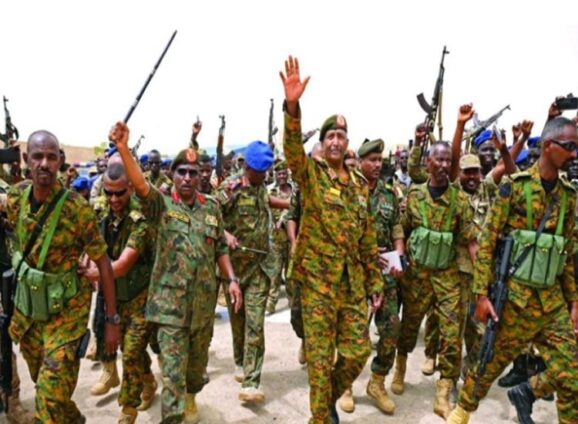
The document, which includes direct instructions from the Chairman of the Sovereignty Council, Lieutenant General Abdel Fattah al-Burhan, reveals a plan based on governing Sudan through military rule for five years. This includes restructuring decision-making centers, limiting international initiatives, and relying on regional alliances to provide political and diplomatic cover for the project.
The document, issued by the office of the Chairman of the Sovereignty Council on June 16, 2026, shows direct instructions from al-Burhan to begin preparing a "comprehensive political and strategic vision for Sudan." The plan stipulates that the country will be governed by a military government comprising a president and a government of national competencies for five years, followed by general elections. This reflects a move to solidify the military's role in leading the next phase.
The document also included a call for a "Sudanese-Sudanese" dialogue involving national forces "whose hands are not stained with the blood of the people," while rejecting any outcomes from conferences or initiatives held outside Sudan. Analysts believe this approach represents an attempt to circumvent international and regional pressures aimed at launching a comprehensive political process, and to confine the settlement process within a framework controlled by the military.
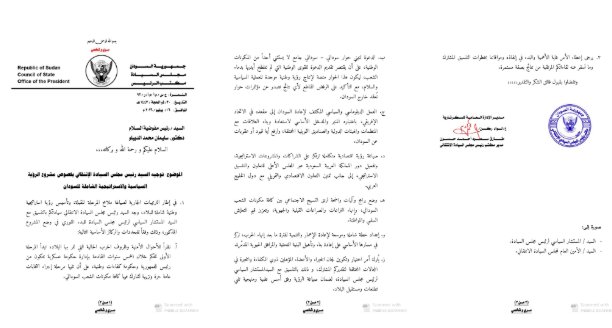
The document also outlined the project's economic and diplomatic vision, emphasizing enhanced cooperation with Saudi Arabia through the Supreme Council for Strategic Cooperation and Coordination, expanding economic partnerships with Gulf states, and working to reinstate Sudan's membership in the African Union, which would contribute to easing its isolation and international restrictions. This coincided with the development of a post-war vision focused on rebuilding infrastructure and vital facilities, considered a cornerstone for restoring stability.
These trends explain the noticeable decline in the role of the Peace Commission, established after 2019 to negotiate with armed groups and oversee the implementation of the Juba Peace Agreement.
Recent developments indicate a gradual transfer of the peace file from civilian institutions to sovereign and military bodies in Port Sudan, reflecting the military leadership's desire to tighten its control over this file and manage it outside the frameworks established by the transitional period.
Meanwhile, analysts believe that the condition of excluding those “whose hands are stained with the blood of Sudanese people” carries political implications that extend beyond being a criterion for participation in the dialogue. It could be used to present the military establishment and its leadership as the protectors of the state, distancing them from accusations related to human rights violations and war crimes, thus granting them greater scope to lead the next phase and reshape the political landscape.
At the regional level, Burhan seeks to secure political support for his project by strengthening relations with Saudi Arabia, one of the most prominent regional actors capable of providing political and economic cover for the new authority, in addition to expanding cooperation with the Gulf states. Political assessments also indicate that Burhan presented the outlines of his project during his recent visit to Turkey, in an attempt to obtain additional political and military support from Ankara, which would enhance the chances of success for his internal arrangements.
Experts on Sudanese affairs agree that the project aims to achieve three main objectives: first, to solidify Burhan and the military establishment’s hold on the leadership of the state, while re-presenting the army as the sole legitimate authority capable of governing the country during the next phase.
The second objective is to circumvent international and UN initiatives calling for a resumption of the civilian transition process by rejecting external platforms and confining dialogue to within Sudan. The third objective is to maintain the cohesion of military alliances, particularly with the armed movements in Darfur, and prevent them from adopting independent positions that could affect the arrangements for the next phase or weaken the influence of the Port Sudan authority.
Experts conclude that the project reflects a clear trend toward restructuring the Sudanese political system on foundations that grant the military a pivotal role in governing the state in the coming years, relying on regional support that provides political and diplomatic legitimacy to the new regime.
Conversely, experts warn that these steps could further complicate the chances of reaching a comprehensive political settlement and prolong the conflict, given the continued internal divisions and the stalled international efforts aimed at ending the war and returning Sudan to the path of political transition.
Latest Stories
-
Ghana Reference Rate falls to 10.04% in October as borrowing costs ease
8 minutes -
Catholic Bishops demand tougher action on tramadol, marijuana and other drugs
16 minutes -
Government positioning Banda District to become major tourism destination hub – Housing Minister
22 minutes -
Deputy Education Minister appeals to striking teachers to return to classrooms
27 minutes -
Government to involve corporate Ghana in street maintenance – Ayariga
33 minutes -
Contractors to resume work on Phase Two of Kejetia Market Project
40 minutes -
Government committed to resolving teachers’ concerns - Vice President
46 minutes -
Agric Minister cuts sod for construction of Inland Valley project at Aninkroma
52 minutes -
Nana Akomea denies boycotting NPP swearing-in after third-place finish
53 minutes -
Ghana, Egypt explore fresh avenues in defense, pharmaceuticals, and infrastructure
58 minutes -
CSOs call for review of gold reconnaissance activities along Ghana’s inshore waters
1 hour -
Gov’t is committed to addressing teachers’ conditions of service, deprived-area allowance – Minister
1 hour -
Traffic, not sour grapes, kept Nana Akomea away from NPP swearing-in
1 hour -
Trump says he will stop using taxpayer funds for ads after bipartisan pushback
2 hours -
Nana Akomea explains why he ignored polls ahead of NPP election
2 hours