

Audio By Carbonatix
The global diplomatic architecture is facing its most severe test in decades following a daring and controversial U.S. military operation in Venezuela. On January 3, 2026, American forces conducted what Washington describes as a "surgical law enforcement operation" across Caracas and northern Venezuela. The mission resulted in the capture of Venezuelan President Nicolás Maduro and his wife, Cilia Flores.
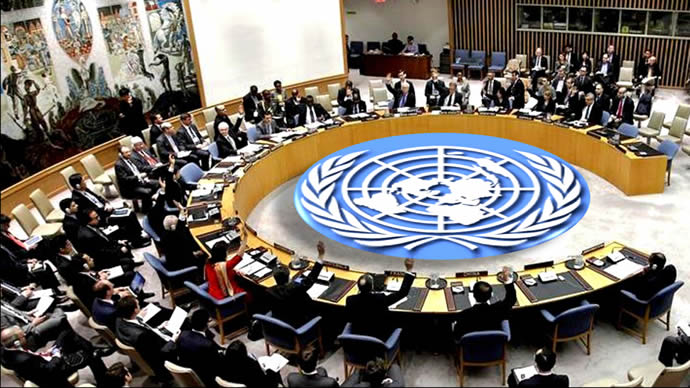
The crisis reached a fever pitch on January 5, as Maduro was led into a Manhattan federal court in shackles while, just miles away, the UN Security Council convened an emergency session to debate the legality of the "military abduction."
"I Am Still President": Defiance in Shackles
Inside a heavily secured Manhattan courtroom at noon on January 5, Nicolás Maduro delivered a defiant first statement to Judge Alvin Hellerstein. "I was captured at my home in Caracas," Maduro said in Spanish. Wearing a blue prison uniform over orange khakis, he identified himself as the constitutional leader of his country and declared, "I am innocent... I am still president of my country." Maduro and Cilia Flores both pleaded not guilty to a superseding indictment containing four core counts: narco-terrorism conspiracy, cocaine importation conspiracy, possession of machine guns, and conspiracy to possess destructive devices.
Prosecutors allege Maduro led the "Cartel of the Suns" for over two decades to "flood the U.S. with cocaine." If convicted, he faces a mandatory minimum of 50 years and a maximum of life in prison. Flores' attorney, Mark Donnelly, stated she suffered "severe bruising on her rib" and other significant injuries during the raid. The judge set the next hearing for March 17, 2026.
Trump’s Mandate vs. Rodríguez’s Olive Branch
As the legal battle begins, a new power struggle has emerged over who governs Venezuela. President Trump has asserted absolute authority over the transition. “We’re going to run the country until such time as we can do a safe, proper and judicious transition,” Trump stated. He emphasised that U.S. oil companies would be "very strongly involved" in rebuilding the nation’s infrastructure.
In Caracas, acting President Delcy Rodríguez has pivoted from initial defiance to a call for diplomatic engagement. While maintaining that Maduro remains the legitimate leader, she extended a direct appeal to Washington. “Our peoples and our region deserve peace and dialogue, not war,” Rodríguez wrote. She invited the U.S. to a "cooperation agenda" based on international law, even as Trump warned she would "pay a very big price" if she failed to comply with U.S. terms.
Wall Street Rallies as US Targets Energy Rebuild
Wall Street reacted to Maduro’s sudden ouster with a historic surge. On Monday, the Dow Jones Industrial Average briefly crossed the 49,000-point threshold for the first time. Investors drove energy stocks higher, led by Chevron (CVX), which gained 5.1% as the only U.S. oil company currently operating in Venezuela.
With Trump declaring the U.S. is "in charge," Energy Secretary Chris Wright is scheduled to meet with executives from Chevron, ExxonMobil, and ConocoPhillips this week to discuss reviving the sector. While Trump suggested the U.S. could reimburse firms for rebuilding infrastructure, industry experts warn that restoring production to its 1998 peak of 3.5 million barrels a day could take a decade and $100 billion (GH₵1.04 trillion) in investment.
For African oil producers like Nigeria and Angola, the prospect of a Venezuelan oil boom is a concern. Analysts warn that a return of Venezuelan crude could drive global prices toward $50 (GH₵521.50) per barrel, potentially threatening the 2026 national budgets of African states reliant on oil revenue.
Washington and Venezuela Clash at the UN
During an emergency briefing at the UN, Under-Secretary-General Rosemary DiCarlo delivered a warning from Secretary-General António Guterres. She noted that the rules governing the use of force "have not been respected" in the January 3 action. "The power of the law must prevail," she told ambassadors.
U.S. Ambassador Mike Waltz stood firm, insisting the operation was a law enforcement action. Waltz described Maduro as a fugitive and leader of a "vicious foreign terrorist organisation" using narcotics as a "weapon against the United States." He argued that "this is not regime change, this is justice." Venezuela’s Ambassador Samuel Moncada slammed the "illegitimate armed attack." He warned that "tolerating the kidnapping of a Head of State" would signal that the law is optional.
China and Russia Denounce "Gunboat Diplomacy"
China and Russia led a fierce assault on the legality of the U.S. mission. Russia’s Vassily Nebenzia accused the U.S. of acting as a "supreme judge" to seize territory and oil. He condemned the intervention as "a turn back to the era of lawlessness" and accused Washington of reviving "gunboat diplomacy." China’s Fu Cong expressed deep shock at the "unilateral, illegal, and bullying acts." He stated that the U.S. had "wantonly trampled upon Venezuela’s sovereignty" and added that no country can act as the "world's police." Both permanent members called for the immediate release of Maduro and Flores.
Latin American Nations Demand Decisive Action
The regional response was dominated by calls for non-intervention. Mexico’s delegate urged the Council to act "decisively and without double standards." Colombia’s Leonor Zalabata Torres strongly condemned the events. She warned that the Charter permits force only in self-defence, not to seize political control.
Zalabata Torres also highlighted the risk of a massive migratory crisis that could trigger a large influx of migrants into neighbouring states. The United Kingdom’s James Kariuki took a nuanced stance, calling Maduro’s claim to power "fraudulent" but reaffirming a commitment to the UN Charter as "essential for maintaining global peace."
Somalia and New Members Face the Fire
This geopolitical storm arrived as Somalia assumed the rotating Presidency of the Security Council for the first time in 54 years. Ambassador Abukar Dahir Osman finds himself navigating a Council paralysed by the U.S. veto.
The meeting also marked the debut of new members, Latvia and Panama. Latvia suggested the Maduro regime posed a "grave threat" to regional security. Panama’s Eloy Alfaro de Alba, recalling the 1989 U.S. invasion of his own country, warned that "there can be no peace without legitimacy."
Global Backlash: The Voice of Africa
The events ignited a fierce reaction from the Global South. The African Union (AU) expressed "grave concern" over the abduction, reaffirming its commitment to the "sovereignty of States." The AU emphasised that the crisis can only be resolved through "inclusive political dialogue among Venezuelans themselves."
The Economic Community of West African States (ECOWAS) echoed this, reminding the world of the obligation to respect "sovereignty and territorial integrity" under Article 2(4) of the UN Charter. Ghana issued a sharp rebuke, characterising the operation as an "unauthorised and unilateral invasion." An official statement from Accra warned that U.S. remarks were "reminiscent of the colonial and imperial era." South Africa’s government mirrored this, labelling the abduction "international piracy."
UN Next Steps: A Diplomatic Deadlock
The road ahead for the United Nations is fraught with obstacles. While the Security Council remains deadlocked by the U.S. veto, the UN General Assembly may move to invoke the "Uniting for Peace" resolution to formally condemn the intervention.
UN human rights chief Volker Türk has called for an independent monitor to ensure the safety of the 8 million Venezuelans requiring aid. The UN must now decide whether to recognise acting president Delcy Rodríguez or the U.S.-backed transition.
Ultimately, the crisis has forced a global reckoning: the world must now decide whether the international order is governed by the universal application of the UN Charter or by the unilateral enforcement of domestic law. Washington maintains that holding a "narco-terrorist" accountable is an act of global service, while critics warn that the precedent set on January 3 will likely redefine the limits of national sovereignty for the remainder of the century. As Caracas enters a period of profound uncertainty, the very definition of a "state" hangs in the balance.
Latest Stories
-
Kwaku Azar writes: A-G vs OSP
23 minutes -
Mfantsipim–Adisadel rivalry built excellence, not division – Sam Jonah
48 minutes -
Vice President launches Mfantsipim’s 150 years of shaping Ghana’s greatest mind
1 hour -
I assure Otumfuo, Mahama will join him to commission KNUST Teaching Hospital by end of this year – Haruna Iddrisu
2 hours -
Barcelona dominate derby to extend La Liga lead
2 hours -
Gov’t to roll out free special education for persons with disabilities from July 1 – Education Minister
2 hours -
Importers and Exporters Association declares full support for Publican AI port system
2 hours -
“We used it to test our officiating officials’ readiness” – Bawah Fuseini after CAA Athletics event
3 hours -
Volleyball emerges as Ghana’s fastest rising sport
3 hours -
National Sports Fund needs strong leadership from the top – Administrator David Wuaku
3 hours -
JoySports Exclusive: Steve McLaren in talks with GFA after expressing interest in Black Stars job
3 hours -
Fire guts auto parts warehouse at Bubuashie, one fire officer injured
3 hours -
I owe my victory to coach Ofori Asare – Allotey after winning WBA Africa Gold Super Flyweight belt
3 hours -
Church of Pentecost supports over 2,000 BECE candidates in Obuasi with career guidance seminar
5 hours -
Brandon Asante and Coventry all but promoted to Premier League despite Sheffield Wednesday draw
5 hours