

Audio By Carbonatix
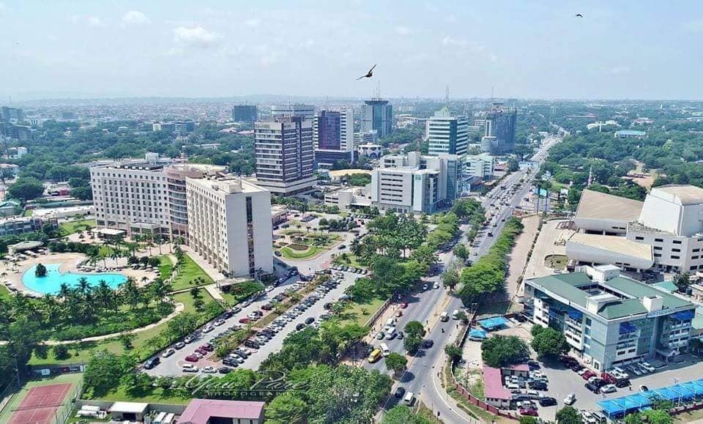
The Greater Accra Region recorded the highest number of both residential and non-residential structures of 2.1 million in Ghana, representing about 19.3% of all total structures nationally.
According to provisional estimates of the 2021 Population and Housing Census (PHC) by the Ghana Statistical Service, the number of structures in Greater Accra is however greater than the number of structures in six regions (North East, Savannah, Ahafo, , Upper West, Upper East and Oti regions) combined.
The GSS defined structures as residential, non-residential and uncompleted.
According to the PHC, three regions that is Greater Accra, Ashanti and Eastern combined have almost half (47.3%) of all structures listed.
Shockingly, the Ashanti region had the highest percentage of uncompleted structures, which was in excess of the national level of 20% of structures that were uncompleted. It had 22% of structures uncompleted.
The North East region registered the highest number of completed structures as 9 out of every 10 structures was completed.
At the national level, six out of every 10 structures (59.6%) was residential with the regional figures starting from just over half (53.1%) in the Western North and Bono Regions (53.7%) to almost three-quarters (73.5%) in the Savannah Region.
Greater Accra is most populous region
Meanwhile, Ghana’s population now stands at 30.8 million with the Greater Accra overtaking Ashanti as most populous region.
The Greater Acca region is made up of 5,446, 236 people as compared with 5,432,485 in the Ashanti region.
The Central Region is now the fourth most populous region following the splitting of the former Western, Brong Ahafo and Northern Regions who were all more populous than Central Region in 2010. It has a population of 2,859,821.
The Ahafo Region is the least populous region replacing the Upper West which had been the least populous in all the previous post-independence censuses. The Savannah and North East Regions are the second and third least populous regions respectively.
Data quality
The 2021 PHC instituted several data quality monitoring mechanisms and leveraged technology to implement interventions towards ensuring complete and accurate coverage.
These included the use of GIS technology and geospatial resources, such as collecting the GPS coordinates of all structures, use of census dashboard for real-time monitoring and continuous data validation by Data Quality Monitors at the various levels of operations.
Latest Stories
-
Baffour Awuah cooperating with investigators after surrender and arrest – EOCO
8 minutes -
Destruction of aspirants’ posters breaches democracy—Ashanti NPP Communications Director
18 minutes -
BNI investigates Ampofo Ankrah over alleged $623,000 World Cup visa scheme
30 minutes -
NPP National Delegates Conference: Police announce road closures, diversions around Baba Yara Stadium
38 minutes -
Agric Committee demands financing plan for Pwalugu Irrigation Project before 2027 Budget
40 minutes -
Minority calls for the immediate suspension of Ghana-Colombia maritime agreement
51 minutes -
Ghanaian professional Sydney Hushie appointed UNFPA Chief of Digital Centre of Excellence
56 minutes -
GHS urges health managers to use community scorecards to improve healthcare delivery
1 hour -
Ekyeamamfrom-Pivot irrigation project 90% complete but stalled over unpaid certificates
1 hour -
When the Gavel speaks, where is the choir that once sang for Wontumi?
1 hour -
NPP does not need a new chairman: It needs a brand architect
1 hour -
GNFS contains fire at Avenor North Industrial Area in Accra
1 hour -
NITA appoints Anthony Owusu-Ansah as Acting Deputy Director-General
1 hour -
RANA warns Salomey Bafoh case could have chilling effect on free expression
1 hour -
Who is the ‘hero’ Indian pilot who was stabbed on Israel-bound flight?
2 hours