

Audio By Carbonatix
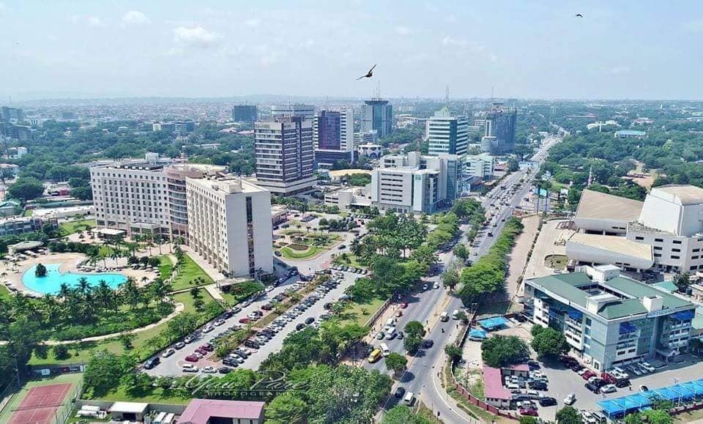
The Greater Accra Region recorded the highest number of both residential and non-residential structures of 2.1 million in Ghana, representing about 19.3% of all total structures nationally.
According to provisional estimates of the 2021 Population and Housing Census (PHC) by the Ghana Statistical Service, the number of structures in Greater Accra is however greater than the number of structures in six regions (North East, Savannah, Ahafo, , Upper West, Upper East and Oti regions) combined.
The GSS defined structures as residential, non-residential and uncompleted.
According to the PHC, three regions that is Greater Accra, Ashanti and Eastern combined have almost half (47.3%) of all structures listed.
Shockingly, the Ashanti region had the highest percentage of uncompleted structures, which was in excess of the national level of 20% of structures that were uncompleted. It had 22% of structures uncompleted.
The North East region registered the highest number of completed structures as 9 out of every 10 structures was completed.
At the national level, six out of every 10 structures (59.6%) was residential with the regional figures starting from just over half (53.1%) in the Western North and Bono Regions (53.7%) to almost three-quarters (73.5%) in the Savannah Region.
Greater Accra is most populous region
Meanwhile, Ghana’s population now stands at 30.8 million with the Greater Accra overtaking Ashanti as most populous region.
The Greater Acca region is made up of 5,446, 236 people as compared with 5,432,485 in the Ashanti region.
The Central Region is now the fourth most populous region following the splitting of the former Western, Brong Ahafo and Northern Regions who were all more populous than Central Region in 2010. It has a population of 2,859,821.
The Ahafo Region is the least populous region replacing the Upper West which had been the least populous in all the previous post-independence censuses. The Savannah and North East Regions are the second and third least populous regions respectively.
Data quality
The 2021 PHC instituted several data quality monitoring mechanisms and leveraged technology to implement interventions towards ensuring complete and accurate coverage.
These included the use of GIS technology and geospatial resources, such as collecting the GPS coordinates of all structures, use of census dashboard for real-time monitoring and continuous data validation by Data Quality Monitors at the various levels of operations.
Latest Stories
-
AfCFTA reinforces Ghana as gateway to Africa – Ghana’s UK High Commissioner at Asante Business Summit
53 minutes -
Minerals Commission is drafting wage, tender floors for mining contractors, official says
1 hour -
Sabalenka storms past Pegula to reach US Open final
2 hours -
Barca’s Rodri apologises over Valencia ‘weak’ comments
3 hours -
France wants to transform FIFA after withdrawing Infantino support
3 hours -
Man United cruise to victory on Champions League return
4 hours -
Kane score in rout as Bayern Munich beat Bodo/Glimt
4 hours -
GOIL CEO praises Star Oil counterpart despite fierce market rivalry
4 hours -
Como ease past Leipzig in dream Champions League debut
4 hours -
Gordon a better fit for Barca than Rashford – Deco
4 hours -
GOIL won’t give up ground as Star Oil battles for market share, says Edward Bawa
5 hours -
Kidnapped man begs family for help as captors threaten death over GH¢45,000 ransom
5 hours -
Fenerbahce boss stuns club by quitting after Roma draw
5 hours -
Spurs and Richarlison in dispute over contract
5 hours -
Arsenal close to finalising new contract for Arteta
5 hours