

Audio By Carbonatix
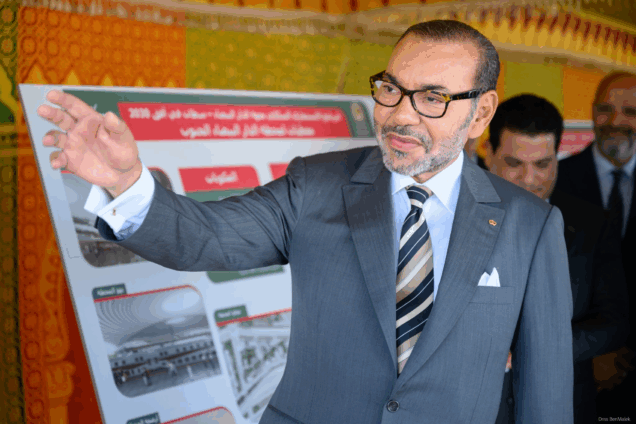
Morocco's King Mohammed VI on Wednesday inaugurated several major railway projects in the Hay Hassani district of Casablanca.
The projects, valued at about $1.94 billion, are designed to transform mobility across the Casablanca metropolitan area.
These flagship projects are part of a wider program with a total budget of $9.3 billion, aimed at supporting the steady development of the railway sector.
The program follows the April launch of the Kenitra–Marrakech High-Speed Rail Line (430 km).
It seeks to improve regional connections between Kenitra and Casablanca, enhance urban mobility in Casablanca, Rabat, and Marrakech, and foster a new national railway industry ecosystem.
The projects are financed 70% by the National Railways Office and 30% by the region.
They include the construction of three major new-generation stations, 10 new metropolitan train stations, upgrades to five existing stations, 260 km of new railway lines, 50 civil engineering structures, two technical centres (Zenata and Nouaceur), five maintenance workshops, and the acquisition of 48 new trains.
One of the highlights is the Casablanca-South Station, launched on Wednesday with an investment of about $68 million.
The facility will handle up to 12 million passengers annually and feature 6 platforms, 10 tracks, an outdoor space of 20,000 m², and parking for 700 vehicles.
It will connect with trams, buses, taxis, and high-speed trains, positioning it as a strategic transport hub.
The second new-generation station will serve the Hassan II Grand Stadium in Benslimane, with an investment of about $44 million and an annual passenger capacity of 12 million.
A third station at Mohammed V International Airport will cost $29 million and accommodate 5 million passengers a year. All three will be completed within 24 months.
For commuter services, 10 new metropolitan stations will be built within 20 months at a cost of about $61 million.
They include Mohammedia-Faculties, Zenata, Sidi Bernoussi, Ain Sbâa, Hay Mohammadi, Ville Nouvelle, Mers Sultan, Oasis, Sidi Maârouf, and Nouaceur. Once operational, the commuter network will move about 150,000 passengers daily across three lines totalling 92 km.
To expand capacity, 48 new railcars with seating for 1,000 passengers each will be purchased at a cost of about $680 million.
South Korean manufacturer Hyundai Rotem, selected to supply the trains, will also establish a factory in Morocco to support the country’s rail ecosystem and boost export potential.
Overall, these integrated projects are expected to generate major socio-economic benefits, create jobs, improve safety, protect the environment, and enhance the quality of life for citizens.
Latest Stories
-
Ga Mantse urges mining industry to protect communities beyond the life of mines
12 minutes -
Empowerher in Upper West region
33 minutes -
Ga Mantse challenges mining stakeholders to consider long-term impact of Ghana’s mineral wealth
42 minutes -
Afenyo-Markin accuses GoldBod of mismanaging Ghana’s gold resources
42 minutes -
Non-interest banking products must meet required standards – BoG Governor to NIFAC
43 minutes -
Social licence to mine can be withdrawn – Ga Mantse warns mining companies
44 minutes -
X1 Energy Drink Division One Super Cup: Attram De Visser secure third place after late own goal
44 minutes -
‘A mine may close, but the community must not’ – Ga Mantse calls for sustainable mining
47 minutes -
UG Pro VC calls for an integrated risk management approach to tackle Ghana’s perennial flooding
53 minutes -
Parents can buy additional NaCCA-approved textbooks for children – Deputy NaCCA boss
57 minutes -
Youth must have a real voice in national issues beyond jobs, creative arts – EU
59 minutes -
AGTC: How women-led initiative is turning golf into jobs and tourism opportunities
1 hour -
Exporters call for single-digit interest rates to boost Ghana’s horticulture sector
1 hour -
Young political leaders must look beyond party lines to strengthen Ghana’s democracy – EU
1 hour -
25 female KNUST physics students receive GH¢87,500 Whittaker Foundation suppo
1 hour