

Audio By Carbonatix
The Ashanti Region is far from meeting national HIV testing targets as stigma and fear continue to keep thousands from knowing their status, according to the Ghana AIDS Commission (GAC).
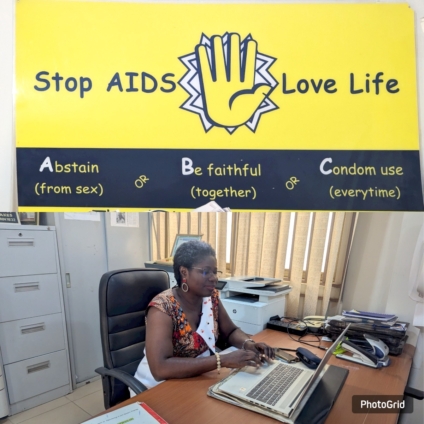
Olivia Graham, the Ashanti Regional Technical Coordinator of the GAC, said the region’s biggest barrier is no longer access to testing but public attitudes towards the virus.
“Only 68% of people living with HIV in Ghana know their status. The rest do not test because they fear stigma, they fear isolation, and they fear what people will say,” she said.
Ghana is working toward the global 95-95-95 HIV targets, which require 95% of persons living with HIV to know their status, 95% of those diagnosed to be on treatment, and 95% of those on treatment to achieve viral suppression.
While the country has reached 69% treatment coverage and 90% viral suppression, testing remains the weakest link nationally—and in Ashanti, the gap is wider. Only 40.4% of people estimated to be living with HIV in the region are currently on treatment.
Ms Graham said access is not the challenge since HIV testing is available at all government health facilities, including CHPS compounds, alongside community outreach services.
“You can get tested at any government facility. Access is there. People just do not want to test,” she stressed.
She added that stigma is being driven by persistent myths, including false beliefs that HIV can be contracted through buying food from infected persons or that testing is an admission of immoral behaviour.
Data from the Ghana Demographic and Health Survey reinforces her concerns, showing that more than 70% of respondents hold discriminatory attitudes towards people living with HIV. Stigma index studies also show high levels of self-stigma.
“This is not only an external stigma. People living with HIV internalise the comments they hear. They judge themselves before anyone judges them,” she noted.
Stigma is also affecting treatment adherence. Ms Graham said some patients travel long distances to avoid being recognised at local facilities. When they lack transportation money, they miss appointments and interrupt their treatment.
The region has also recorded cases of people abandoning antiretroviral therapy for unverified herbal remedies. She recounted an encounter with a herbalist who claimed to have a cure and sold it at high cost.
“People stop their free treatment, go for these cures, and return to the hospital worse,” she said, warning that there is currently no cure for HIV.
Despite the challenges, Ms Graham said support systems exist for people who test positive. These include trained counsellors, peer models, and mentor mothers—women living with HIV who have delivered HIV-negative babies and support pregnant women through treatment.
Self-test kits, distributed by civil society organisations such as WAPCAS, Hope for Future Generations, West Africa AIDS Foundation and other advocacy groups, are also helping people test privately before seeking confirmatory testing.
She urged the media to play a stronger role in correcting misinformation and reducing stigma.
“If the media uses language that promotes fear or stigma, it affects how people behave. We need accurate information,” she said, explaining that people on effective treatment with suppressed viral load have a significantly lower chance of transmitting the virus.
Ms Graham warned that many new infections in Ghana occur in what people perceive to be safe relationships.
“Most new infections are in stable relationships. It’s not about promiscuity,” she said, adding that condom use is often more consistent among sex workers than among couples.
She said the GAC and its partners will continue scaling up education, expanding testing, and ensuring treatment access across the region.
“When everybody knows their status and those who are positive start treatment, we all benefit. People stay healthy, and the risk of transmission goes down,” she emphasised.
Latest Stories
-
Ayariga pledges stakeholder-led approach to Nzema, Kokomba Market redevelopment
2 minutes -
Professional collaboration is key to Ghana’s land and property development – Western Regional Minister
10 minutes -
‘When you play Ghana, it’s a derby’ – Kessié sets tone for AFCON qualifying showdown
12 minutes -
Mahama urges global institutions to invest in Africa’s cultural infrastructure
18 minutes -
Kuami Eugene joins UNICEF Ghana to promote universal birth registration
21 minutes -
Renard warns Côte d’Ivoire against complacency Ahead of Ghana clash
23 minutes -
‘Can the patient feel the difference?’ – GMTF boss challenges health leaders
23 minutes -
Office of the Registrar of Companies marks Risk Awareness Week with push for risk-smart, resilient institution
34 minutes -
Full text: Mahama’s speech at high-level side event on return and restitution of cultural properties and heritage
37 minutes -
ICU urges Ghanaian smock weavers to scale up production for local and export markets
38 minutes -
Human remains are not collectibles, specimens – Mahama demands restitution of Africa’s heritage
39 minutes -
EOCO, Baffour Awuah clash: Article 117 does not give MPs blanket protection from arrest – Samson Ayenini
41 minutes -
Mahama unveils 3 pillars to advance global reparatory justice agenda
59 minutes -
JoyNews Democracy Is Not for Sale regional dialogue – My take
1 hour -
US ready to work with Ghana on reparatory justice despite opposing UN resolution – Ablakwa
1 hour