

Audio By Carbonatix
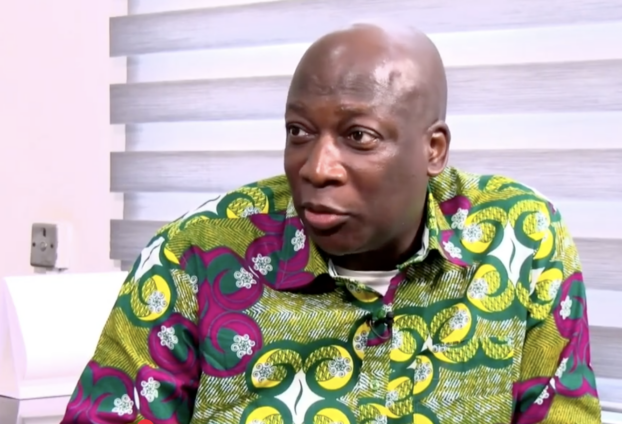
Business executive and former Unilever Executive Vice President, Yaw Nsarkoh, has criticised Ghana’s political class for focusing on the 2028 elections in 2026.
He warns that the obsession with succession politics reflects what he calls a system dominated by “the party of the elites.”
Speaking on Joy News’ PM Express on Tuesday, he said the country’s political discourse has shifted prematurely to the next election cycle, even as pressing development challenges remain unresolved.
“What is supposed to be the political alternative, the opposition [NPP] also immediately went into who is going to be their candidate,” he said.
“And from then on, it’s a game of everybody looking for how they can trip the other.”
He expressed concern about how early the conversation has turned to 2028.
“So that is in 2028, we are sitting in 2026, and the number of times that you hear the conversation about 2028, you do worry.”
According to him, this fixation on internal competition and succession battles has displaced the core purpose of democratic governance.
“So what has happened is that development did not come to be the real partner, accompanying partner of democracy, where the purpose of the democracy was actually to improve the well-being of people, to bring real development.”
Instead, he argued, political energy is being consumed by rivalry within a narrow governing class.
“We’re spending all our time on the factional infighting among what I call the political elites.”
He described Ghana’s two dominant parties as belonging to the same establishment bloc.
“The party of the elites is in power, and it has two segments, the NPP and the NDC. They’re all the party of the elites.”
His remarks point to a broader critique of how competitive politics has evolved. Rather than deepening accountability and accelerating socio-economic progress, he suggested that democracy has become entangled in elite struggles for control.
By framing both the governing party and the main opposition as segments of the same elite structure, Mr Nsarkoh challenged the conventional narrative of sharp ideological alternatives.
In his view, the real contest appears less about policy direction and more about internal positioning and advantage.
His comments come at a time when political conversations are increasingly dominated by potential flagbearer contests and internal alignments ahead of 2028.
For Mr Nsarkoh, that trend signals a troubling disconnect between political ambition and national development priorities.
The warning underscores concerns that early campaign manoeuvring could overshadow governance and delay tangible improvements in citizens’ lives.
Latest Stories
-
Power restoration fault suspected in Kumasi Central Market fire
3 hours -
The 7-foot giant of Ngleshie Amanfro: Seven-foot Ghanaian Ephraim Saawa dreams of joining the national basketball team
4 hours -
Government promises support for Kumasi Central Market fire victims
4 hours -
Vibes The Movie: Big Ghun’s Ghanaian film earns five nominations at 2026 REFFA
4 hours -
MamaCare CEO warns unresolved conflicts among health workers could undermine maternal and neonatal care
5 hours -
Health professionals urged to translate medical knowledge into practice to save mothers
5 hours -
Conflicts among care providers linked to maternal, neonatal deaths – Expert
6 hours -
GIS marks 10th TIME conference, champions improved teaching practices
7 hours -
BRICS Or Balance? What Ghana’s bid really means
7 hours -
GPRTU wants full TRAFFITECH-GH implementation to start in 2027
7 hours -
Mahama announces plans to import electric wheelchairs for PWDs
7 hours -
KGL U17 Colts 2026: Western beat Prempeh Elite Academy to set up final final with Greater Accra Region
8 hours -
Late Solanke strike salvages 10-man Spurs draw at Man United
8 hours -
Gender Ministry to monitor welfare of Nana Akua Addo’s children amid domestic violence case
8 hours -
Benedict Okyere Yeboah: Ghana’s football problem goes beyond sacking a coach
8 hours