

Audio By Carbonatix
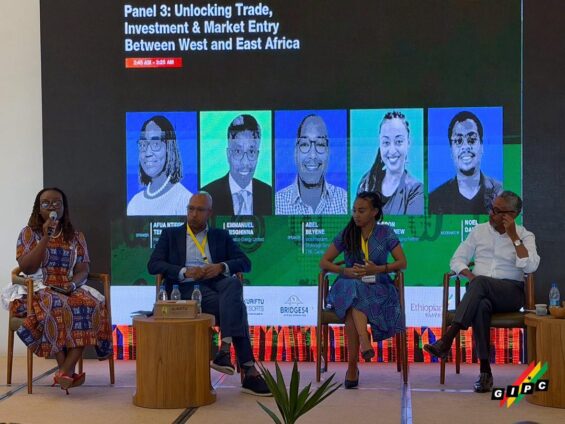
The Head of Marketing and Communications at the Ghana Investment Promotion Centre (GIPC), Afua Tekyi-Mills, has called for stronger commercial engagement between Ghana and Ethiopia to unlock trade, investment and industrial opportunities under the African Continental Free Trade Area (AfCFTA).
She said although Ghana and Ethiopia occupied strategic positions within Africa’s economic integration agenda, bilateral trade between the two countries remained far below its full potential.
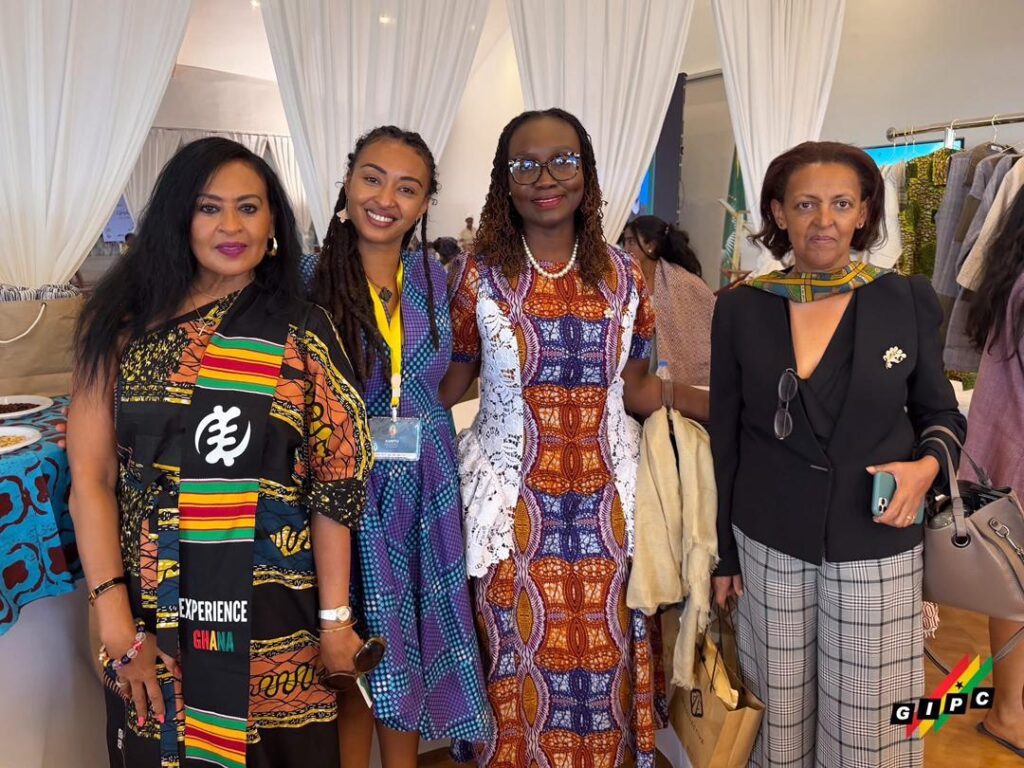
Ms Tekyi-Mills made the remarks during a panel discussion at the Ghana Business and Cultural Expo held at the Kuriftu Resort Africa Village in Addis Ababa, Ethiopia.
The Expo, organised to promote trade, investment, tourism and cultural collaboration between Ghana and Ethiopia, was held on the theme: “Creating an Enabling Environment for Cross-Border Investment.”
Speaking during the discussion, Ms Tekyi-Mills said Ghana, which hosts the AfCFTA Secretariat in Accra, and Ethiopia, home to the African Union headquarters in Addis Ababa, were strategically positioned to drive intra-African trade and investment.
“I believe now is the right time because the political and continental foundations are already in place, but the commercial relationship has not yet caught up with the potential,” she stated.
She noted that trade volumes between the two countries remained modest, describing the situation not as a weakness but as an indication of untapped opportunities waiting to be explored by businesses from both countries.
“The goodwill exists, the continental framework exists, the connectivity exists, but we now need to convert these into business, trade, investment, logistics and partnerships,” she added.
Ms Tekyi-Mills said Ghana’s growing non-traditional export sector and renewed investor confidence made the country an attractive destination for East African businesses seeking access to West African markets.
According to her, Ghana’s non-traditional exports reached more than US$5 billion in 2025, underscoring the country’s growing export base and the increasing competitiveness of value-added Ghanaian products. This positive export performance, together with ongoing investor interest across key sectors, reinforces Ghana’s position as a stable and attractive destination for trade and investment.
She also identified agriculture and agro-processing, manufacturing, textiles and garments, tourism, hospitality, logistics and aviation services as some of the most promising sectors for Ethiopian businesses interested in entering the Ghanaian market.
Ms Tekyi-Mills explained that Ghana’s agricultural sector contributed significantly to the country’s Gross Domestic Product and employed a substantial portion of the workforce, creating opportunities for investment in food processing, cold chain facilities, poultry production, rice milling and shea butter processing.
She further highlighted opportunities in textiles and fashion, saying both countries possessed strong cultural identities and complementary strengths that could support competitive African brands.
“Ghana has design, fashion, kente, batik and creative branding strengths, while Ethiopia has experience in garment production and industrial parks. There is room for collaboration that can serve broader African markets,” she said.
On investment incentives, Ms Tekyi-Mills said Ghana offered a combination of tax incentives, investor protections and market access advantages aimed at supporting both local and foreign investors.
She added that investors in strategic sectors could benefit from customised incentives and access to broader regional and continental markets through ECOWAS and AfCFTA.
Ms Tekyi-Mills stressed that beyond tax incentives, Ghana also offers a supportive investment framework, with legal protections against discrimination and expropriation, and guarantees that allow investors to transfer dividends and profits.
She encouraged Ethiopian businesses interested in entering Ghana to engage GIPC early to obtain guidance on investment opportunities, registration processes and sector-specific requirements.
She further urged businesses from both countries to explore practical partnerships in agro-processing, textiles, logistics and specialty food trade to establish a stronger West Africa-East Africa business corridor.
“The next steps is to now scale existing engagements into structured partnerships that create jobs, improve industrialisation and deepen African trade,” she said.
Presidential Staffer and Coordinator of the Black Star Experience, Rex Owusu Marfo, also addressed participants at the Expo and described Ghana Month as “more than a celebration,” highlighting its role in reconnecting Africans through culture, enterprise and shared identity.
Latest Stories
-
Dr Abu Sakara urges African youth to seize global upheaval for economic emancipation
2 minutes -
Fulham booed off after third defeat in a row
16 minutes -
Joy FM Back-to-School Fair 2026 ends after two days of discounts and one-stop shopping
19 minutes -
Man City maintain 100% start with win over Coventry
27 minutes -
Kwesi Pratt urges African youth to reject ‘Gen Z revolution’, reclaim Africa’s resources
28 minutes -
Forest and Tottenham both still looking for first win after scrappy draw
29 minutes -
Inter Milan mount stunning comeback to beat Napoli
33 minutes -
PPF urges African youth to demand debt cancellation and reparations
34 minutes -
Kwesi Pratt says reparations must deliver equal rights, African self-reliance
34 minutes -
Isaac Dogboe opens reveals mental health battles, calls for support for athletes
45 minutes -
MTN Ghana webinar urges SMEs to get financial discipline right
1 hour -
Duvor Klu, Hua crowned champions as J30 Accra Week 1 concludes
1 hour -
Gov’t to make rural telephony services cheaper by first quarter of 2027 – Sam George
2 hours -
National Chief Imam remains Ghana’s strongest symbol of interfaith harmony – Mahama Ayariga
2 hours -
Gov’t to upgrade all rural telephony networks to 4G capability – Sam George
2 hours