

Audio By Carbonatix
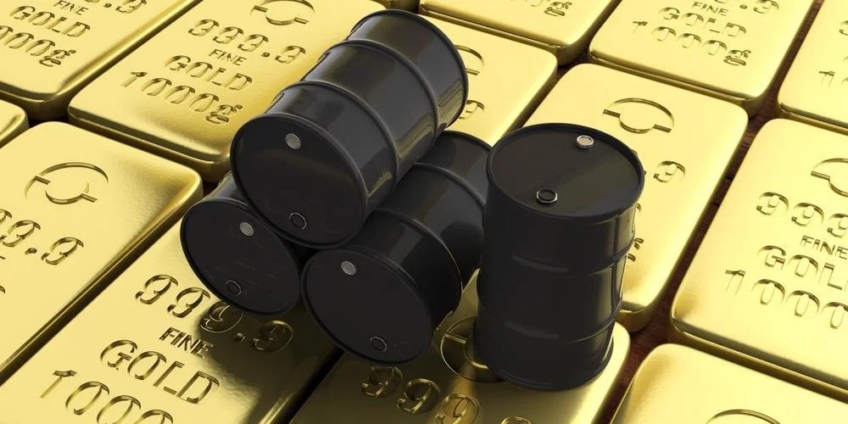
The Energy Minister John Jinapor has served notice of cancelling the inherited Gold-for-Oil programme instituted by the erstwhile administration.
The initiative, which leveraged the country's gold reserves in exchange for petroleum products, has been under intense scrutiny for its lack of transparency.
Speaking on JoyNews' PM Express the Minister criticised the current system, stating that it is deeply flawed and will be replaced with a more accountable framework.

“The current Gold-for-Oil programme we’ve inherited—we will discontinue it. Take it from me,” he declared.
However, he noted that an immediate shift is not feasible as a workable alternative needs to be put in place.
“If you only set up a Gold Board, you have to go to Parliament to secure legal backing. In the interim, we are trying to shape the current system, reduce losses, and make it more transparent. But ultimately, we want to replace this entire Gold-for-Oil programme,” he explained.
Addressing concerns about the country’s international financial reserves and ongoing engagement with the International Monetary Fund (IMF), Mr Jinapor reassured that the new system would be structured to align with global financial best practices.
“The IMF is not against gold trading. If we establish a single body—the Gold Board—responsible for procuring all gold domestically, either through agents or in collaboration with the private sector, we can ensure accountability,” he stated.
According to the Energy Minister, the Gold Board will account for all revenues generated from the tonnage of gold bought annually. These funds will be held in a dedicated account as hard currency, which will then be used to support the import of oil and other essential products.
On the issue of Ghana’s current strategic oil reserves, he stated that the Bulk Oil Storage and Transportation Company (BOST) has some stock available.
Mr Jinapor emphasised that while BOST will continue to play a role in maintaining national reserves, the private sector will also be engaged to ensure a minimum strategic stock is always available.
“The last time I checked, we had about three weeks’ worth of stock—not the optimum level, but we are still building up. It takes time to strengthen our reserves. Our goal is for BOST to maintain a certain minimum percentage in the market while collaborating with the private sector to keep a steady supply of reserves,” he explained.
Latest Stories
-
Turning invitations into arrests is making citizens reluctant to assist police – Twumasi Ankrah
12 minutes -
The Traffitech-GH SMS spot-fine system: The good, the sad, and the funny – Bright Simons writes
23 minutes -
Hawa Koomson pledges experienced and mature leadership of NPP women’s wing
2 hours -
Young woman found dead at Kasoa Peace Town
2 hours -
Playback: The Law examined lawful arrest in Ghana
2 hours -
Mahama urges African governments to treat healthcare as an investment, not budget cost
3 hours -
Bawumia congratulates John Boadu and new NPP executives, pledges support ahead of 2028
3 hours -
Aksa Energy delegation pays courtesy call on GRA Commissioner-General
3 hours -
‘No talent should be left out’ – Bawumia pledges inclusive NPP campaign for 2028
3 hours -
Prof. Mike Oquaye recounts how he blocked the Special Prosecutor’s attempt to arrest Bawku Central MP
3 hours -
Make health sovereignty a priority for Africa – Mahama
4 hours -
Dorimon Naa, Wa West DCE lead massive clean-up exercise; threaten sanctions against recalcitrant residents
4 hours -
Photos from Adom FM Y2K Jam
4 hours -
Praye Tiatia steals the show at Adom FM Y2K Jam [Watch]
4 hours -
Boakye Agyarko congratulates John Boadu, pledges support for NPP leadership
4 hours