

Audio By Carbonatix
The Ghana Armed Forces (GAF) has launched a renewed push to address a longstanding accommodation crisis confronting its personnel.
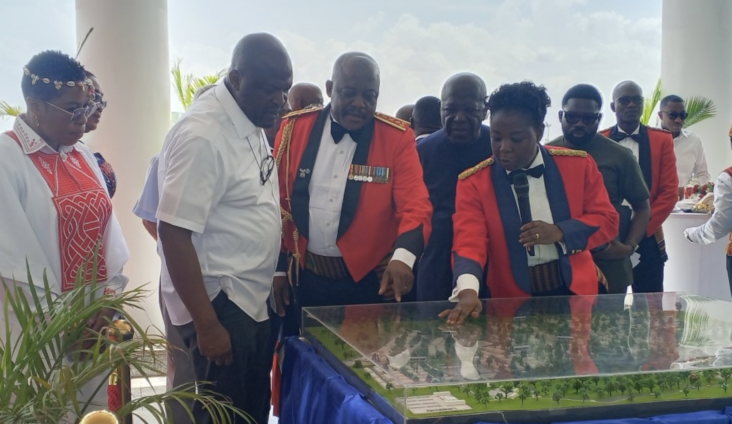
Senior military leadership, Government officials and private sector actors have rallied support at a fundraising luncheon for the redevelopment of Burma Camp.
The event, held at the Ghana Military Academy and Training Schools on Friday, highlighted what speakers described as a significant and urgent housing deficit affecting thousands of servicemen and women across the Army, Navy and Air Force.
Lieutenant General William Agyapong, the Chief of the Defence Staff, said many barracks facilities inherited from the colonial era had deteriorated and no longer met acceptable standards of safety, comfort and dignity.
“A significant number of these structures have become weak, outdated and unable to meet modern standards,” he said, noting that the situation continued to place pressure on personnel and their families.
He explained that the Ghana Armed Forces faced a widened accommodation gap due to increased operational demands, including border protection, counter-terrorism readiness and international peacekeeping commitments.
The Burma Camp Redevelopment Project formed part of a broader Barracks Rehabilitation Programme aimed at transitioning from piecemeal repairs to comprehensive redevelopment.
“The vision is to build a modern, well-planned residential community that provides dignified accommodation and improves living standards for our personnel,” he said.
The initiative, he said, was a strategic investment in national stability rather than a ceremonial appeal.
He assured stakeholders that robust financial controls, audit mechanisms and transparent implementation processes had been put in place to safeguard contributions.
Speaking on behalf of the Defence Ministry, Mr Kenneth Gilbert Adjei, Minister of Works and Housing, reaffirmed Government’s commitment to improving military welfare, while acknowledging that the scale of the housing deficit required complementary partnerships.
He disclosed that the Government had already commenced a housing project expected to deliver about 2,000 units, as part of a long-term plan to construct up to 10,000 units for the Armed Forces.
However, he noted that the growing size and responsibilities of the military meant that state funding alone was insufficient.
“This reality calls for innovation in how we mobilise resources,” Mr Adjei said, advocating structured public-private partnerships to accelerate infrastructure development within the defence sector.
He emphasised that the fundraising initiative was not a replacement of Government responsibility but rather complemented ongoing efforts.
Special Guest of Honour, Sam Jonah, underscored the human dimension of the housing crisis, estimating the accommodation deficit at about 14,000 units.
That is not just a statistic. It represents 14,000 families,” he said.
He described the situation as a national concern requiring urgent and collective action.
M Jonah described the redevelopment initiative as a credible, well-structured investment opportunity anchored on transparency, leadership and accountability.
“Supporting this project is not an act of charity. It is an act of investment,” he said, stressing that national security underpinned economic growth, investor confidence and societal stability.
He commended the establishment of a Board of Trustees to oversee the project, saying it would strengthen confidence among donors and ensure proper stewardship of funds.
The Burma Camp was established during the colonial period and remains the administrative headquarters of the Ghana Armed Forces and one of the country’s most important military installations.
Like many barracks across Ghana, its infrastructure has aged significantly over decades of continuous use.
Studies and official assessments over the years have consistently highlighted a housing deficit within the Armed Forces, driven by population growth, expanded operational roles and the limited pace of infrastructure renewal.
Government interventions, including periodic barracks rehabilitation and new housing projects, have provided partial relief.
However, experts note that the scale of the deficit requires sustained investment and innovative financing models.
The latest redevelopment initiative reflects a growing policy shift towards public-private collaboration in addressing critical national infrastructure gaps, particularly in sectors linked to security and institutional stability.
The success of the Burma Camp Redevelopment Project could serve as a model for modernising military accommodation nationwide while enhancing morale, operational readiness and long-term sustainability, the GAF said.
Latest Stories
-
Services drive 7.4% expansion in Ghana’s economic activity
7 minutes -
‘I don’t make music for awards, I make it to connect people’ – Rocky Dawuni
19 minutes -
Farmer jailed for three months over assault on wife in viral video
24 minutes -
Police arrest eight in Okaishie operation targeting illicit drugs and medicines
27 minutes -
David Agyemang Yeboah: Marriage is not the problem; your approach is
30 minutes -
Lawyer sues Standards Authority over used-vehicle import restrictions
32 minutes -
Ukraine to restart strikes on Russian oil refineries, Zelensky says
33 minutes -
CIMG awards drive competition among Ghanaian businesses
38 minutes -
NSA regional director Emmanuel Reagan files nomination to contest NDC Ashanti Regional Organiser position
43 minutes -
Obuasi SHTS: Number of students alleging sexual abuse rises to 16
49 minutes -
Ghana’s economy grows by 7.4% in July 2026
59 minutes -
NDC member challenges Dennis Yeboah Twumasi’s eligibility for Bono Regional Secretary elections
1 hour -
Popular Nigerian gospel singer Toluwanisings dies
1 hour -
Spio-Garbrah proposes debt swaps to fund reparative justice in Africa and Caribbean
1 hour -
Alban Bagbin calls for governance reforms and coordinated action to address Africa’s debt crisis
1 hour