

Audio By Carbonatix
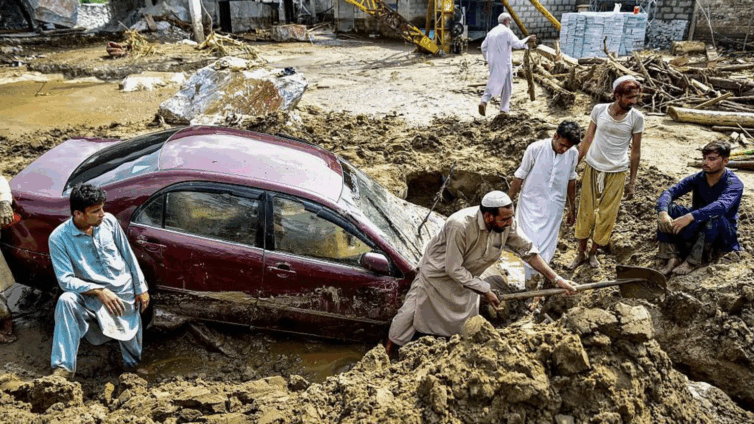
More than 200 people remain missing in one district of north-west Pakistan as a result of devastating monsoon flooding and landslides, an official has said.
Flash floods have killed more than 300 people in Pakistan and Pakistan-administered Kashmir in recent days, with most of the deaths recorded in the mountainous Khyber Pakhtunkhwa province.
A local official in the worst-affected Buner district told the BBC that at least 209 people were still missing there, but it is feared that number could rise.
Rescue teams have buried eight unidentified bodies as there were no family members found alive to claim them, said Jehangir Khan, spokesman for the deputy commissioner's office of Buner.
Some relatives are also unable to claim their relatives' bodies as roads are severely damaged, he added.
A provincial rescue spokesman told news agency AFP that "10 to 12 entire villages" were partially buried.
Asfandyar Khattak, head of the provincial disaster management authority, said "dozens" of people were missing in Shangla district.
Monsoon rains between June and September deliver about three-quarters of South Asia's annual rainfall.
While landslides and flash floods are common as a result, scientists say that climate change is making these weather events more intense and more frequent.
Torrential rain has also hit Indian-administered Kashmir, days after at least 60 people were killed there by flash floods.
Nine were killed in Pakistan-administered Kashmir this week, while another five died in the northern Gilgit-Baltistan region, authorities said.
Government forecasters say heavy rainfall is expected until 21 August in the north-west, where several areas have been declared disaster zones.
Pakistan has been reckoning with the devastation of this year's monsoon season since June. At least 650 people have been killed so far this year.
In July, Punjab, home to nearly half of Pakistan's 255 million people, recorded 73% more rainfall than the prior year and more deaths than in the entire previous monsoon season.
Northern Pakistan is also one of the most glaciated areas in the region, but these are rapidly thinning and retreating because of climate change - meaning rocks, soil, and other debris can be dislodged.
Monsoon rains can further destabilise mountain faces, exacerbating landslides that sometimes block rivers.
While the exact cause of the recent floods and landslides are yet to be determined, glaciologists say that ice melt is a contributing factor.
Latest Stories
-
Mobile Money Fintech LTD, UMB train hairdressers and beauticians
57 minutes -
Asylum votes show people want help, says Kemi Badenoch
2 hours -
Badenoch welcomes expanded grooming gangs inquiry
2 hours -
GACL MD sues Samuel Buabeng over alleged Facebook defamation
2 hours -
Christa Pike in critical condition after surviving two lethal injections, lawyer says
2 hours -
Kemi Badenoch backs face covering ban at protest
2 hours -
Man City not ‘above the rules’, says No 10 after backlash to Burnham remarks
3 hours -
Real Madrid submit ‘substantial’ dossier in Barca payments case
3 hours -
Messi completes purchase of second Spanish club
3 hours -
Government must engage horticulturists on tomato crisis – GhIH
3 hours -
King Promise’s ‘Can’t Tame Us’ becomes official Chelsea anthem
3 hours -
Afenyo-Markin demands Baffour Awuah’s release from EOCO’s custody, end to alleged political intimidation
3 hours -
Rapper Rick Ross arrested on domestic violence charges
3 hours -
Minority demands security review of Ghana-Colombia visa waiver and port deals
3 hours -
Pursue drug kingpins, not persecute political opponents – Afenyo-Markin tells EOCO
4 hours