

Audio By Carbonatix
The second day of NAIMOS' Eastern Region operation began at first light on December 5, 2025, as the team pushed deeper into the Atiwa Forest in pursuit of persistent illegal mining networks. From 0700 hours until nightfall, the team moved between Pimpong and Fante Ebuorho, two enclaves where galamsey activities had been flourishing along the banks of the Ayensu River.
Upon entering the forest, the task force found unmistakable evidence of large-scale destruction. At Pimpong, deep pits stretched across several acres of land, gouged into the earth in a pattern that revealed months of continuous excavation. The operators had cut channels to divert the Ayensu River directly onto the site, creating a flow of water that aided their illegal processing and sent polluted waste straight back into the natural river system.
What stood out most, however, was the sight of minors engaged in the operation. Several children between 13 and 16 years old were found working among the pits, handling tools and assisting adults who fled into the bush at the approach of the security team. Their presence added a disturbing dimension to the day’s findings and underscored the human cost of illegal mining.
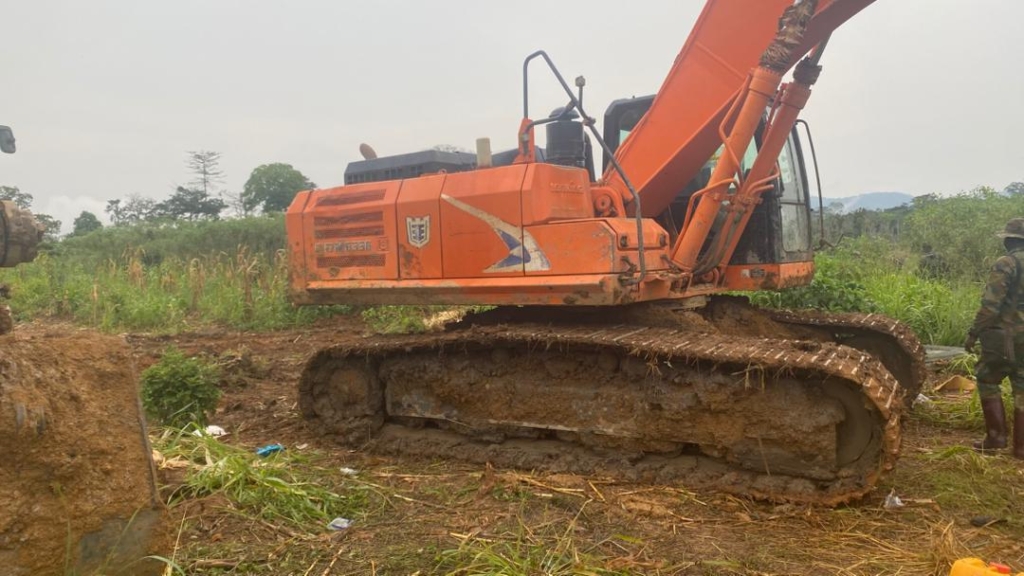
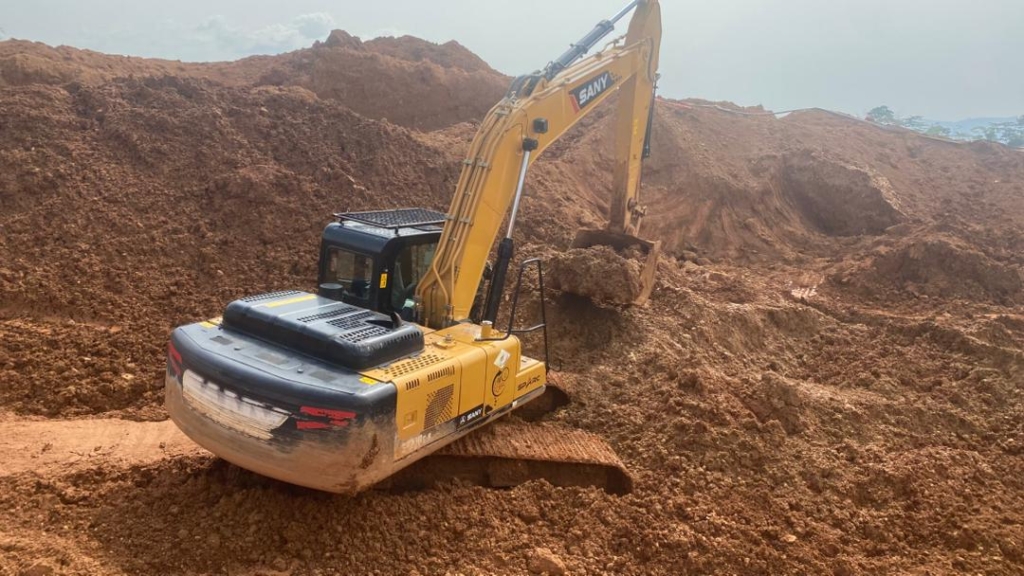
The NAIMOS officers secured the children and removed them from the area before continuing their work. Control boards and monitors were detached from multiple excavators to immobilise the machines, and fuel supplies and pumping devices were seized to prevent the rapid resumption of operations. The miners who escaped had left behind tools, scattered clothing and hastily abandoned workspaces, suggesting they had been warned of Naimos' movement. Clear tracks on the forest roads showed that some excavators had been driven away only hours before the team arrived, likely moved to roadside locations where the operators hoped to evade confiscation.

At Fante Ebuorho, the situation mirrored what the team observed at Pimpong. The Ayensu River had again been diverted into a separate channel carved into the mining area, feeding the washing pits where the miners worked. The water that flowed back into the original river course was heavily contaminated. But amid the destruction, the team noticed a sign of progress: the main body of the river appeared cleaner in sections where illegal mining had ceased for months. It was a reminder that interventions of this scale can reverse environmental damage if mining pits are closed and the ecosystem is allowed to heal.
NAIMOS personnel reported that the illegal miners relied heavily on lookout scouts to protect their operations. These informants sat along access routes disguised as pedestrians or farmhands and alerted operators of approaching security teams. Because officers often had to leave their vehicles behind and walk long distances through the bush, the galamseyers had enough time to flee, abandoning machinery but avoiding arrest.

Even with these challenges, the presence of NAIMOS had shaken the illegal networks across the forest. Residents from nearby communities who encountered the team expressed gratitude for the renewed crackdown, noting that the polluted river had threatened their farms and water sources. Many told officers they could already see improvements in water clarity where mining had been halted, confirming the environmental impact of the task force’s work.
The day’s discoveries also exposed the growing trend of child involvement in mining, prompting officers to emphasise the need for urgent community sensitisation to prevent Ghana’s gold sector from attracting international sanctions similar to those once imposed on cocoa exports. The use of minors, the diversion of rivers, and the continued deployment of excavators in protected forests collectively highlighted the scale of criminal activity and the complexity of dismantling the network.
Despite the long distances, the rough terrain, and the lack of reliable communication tools across teams, the task force pressed forward with determination. The operation demonstrated not only their resolve but also the necessity of equipping each patrol vehicle with functional communication devices to ensure coordination in the difficult forest terrain.
Day Two ended as it began, with NAIMOS firmly at the front of the national fight against illegal mining. Their commitment in the Eastern Region continued to weaken the confidence of galamsey operators who had for years exploited the forest, the rivers and the children drawn into the trade. The task force’s progress offered a clear message: wherever illegal mining persists, NAIMOS will follow.
Latest Stories
-
T-bills auction: Government exceeds target marginally; yield on 91-day bill remains unchanged
3 hours -
GPL 2026/27: 10-man Aduana hand Kotoko defeat in Kumasi
3 hours -
GPL 2026/27: Medeama ease past Basake Holy Stars
4 hours -
Appiah Adomako writes: Why DVLA must stop treating every expired licence holder as delinquent
4 hours -
Localization must transfer decision-making power, not just project responsibilities
4 hours -
Modernising Ghana’s traditional markets through the 24-Hour Economy markets initiative
4 hours -
New economy will boost local production and create jobs – Finance Minister
4 hours -
Real-Time VAT on cross-border digital services – not a new tax and does not violate double taxation principle
5 hours -
Digitalisation, AI key to Ghana’s tourism transformation – GHATOF
5 hours -
Stronger GTA-private sector partnership needed to grow tourism – GHATOF
5 hours -
Amazon eyes Ghana for broadband expansion after talks with Mahama
6 hours -
National Investment Quiz 2026: Six schools qualify for quarter-finals
6 hours -
‘Do not let Russia pay for its madness with lives of your people’ – Zelensky to Ghana, 46 other countries
6 hours -
6,079 promotion cases fully processed and paid – CAGD says amid nationwide teachers’ strike
7 hours -
Teacher unions to meet government Monday over nationwide strike
7 hours