

Audio By Carbonatix
The Paediatric Society of Ghana has urged President John Mahama to take global leadership in classifying environmental destruction, particularly illegal mining, as a crime against humanity, warning that its long-term impact on children is both severe and irreversible.
In a statement issued by the Secretary, Dr (Med) Gabrielle Obeng-Koranteng on April 22, the Society said Ghana stands at a critical moment where decisive action is needed not only at the national level but also on the global stage to confront what it described as a growing public health crisis.
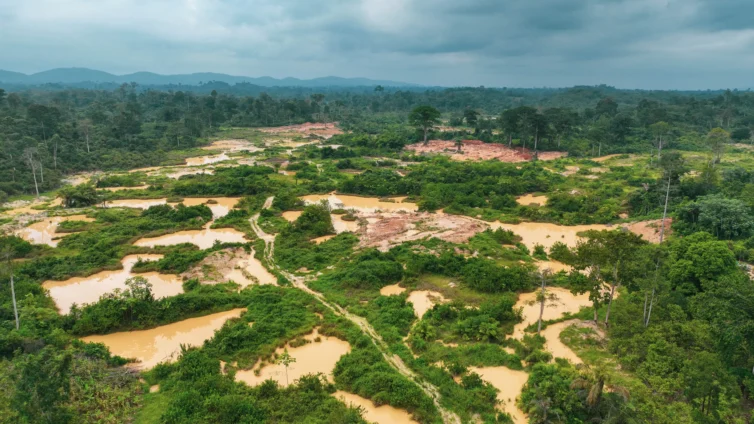
The group argued that illegal mining, known locally as galamsey, goes beyond environmental degradation, stressing that it represents a “slow, silent assault” on children due to the contamination of water bodies and exposure to toxic substances such as mercury and arsenic.
The Society commended the President for his leadership in securing global recognition of the transatlantic slave trade as a crime against humanity, describing the development as a significant moral milestone in global history.
However, it cautioned that Ghana faces what it termed an “unfolding national tragedy,” drawing parallels between the long-term consequences of the slave trade and the destructive impact of illegal mining.
The Society said galamsey is actively poisoning water bodies, contaminating food systems, and exposing children to dangerous heavy metals such as mercury and arsenic.
It warned that these pollutants not only harm present populations but also threaten unborn children through long-term environmental damage.
The Society pointed to growing clinical and environmental evidence linking prenatal exposure to mercury to irreversible brain damage, reduced IQ, and neurodevelopmental disorders.
It added that polluted water sources are increasing cases of chronic diseases, infections, and malnutrition among children.
“Galamsey is not just an environmental issue; it is a slow, silent assault on the Ghanaian child,” the statement said, noting that environmental degradation also contributes to poverty, food insecurity, and displacement, factors that disproportionately affect children.
The group further argued that the generational impact of illegal mining mirrors historical injustices, stressing that crimes against humanity should be measured not only by intent but by the scale and lasting consequences of harm.
As part of its recommendations, the Society urged the government to elevate galamsey to a national emergency, implement a coordinated and science-driven response across key sectors, and enforce strict protection of water bodies and forest reserves.
It also called for investment in child-centred environmental health systems to detect and treat conditions such as heavy metal toxicity, as well as broader efforts to address long-term health risks, including kidney disease, childhood cancers, and developmental disorders.
Additionally, the Society appealed to the President to champion the issue globally, positioning environmental destruction of this scale within the broader framework of crimes against humanity.
The Paediatric Society reaffirmed its readiness to support government efforts through research, technical expertise, and advocacy, stressing that the health and future of Ghanaian children depend on urgent and decisive action.
Latest Stories
-
Tarkwa court jails labourer for three years over GH¢123,000 theft
35 minutes -
GAEC must retain nuclear scientists for Ghana’s nuclear ambitions – Minister
1 hour -
Man reportedly mistaken for game and shot by hunter dead in forest
1 hour -
19-year-old mason jailed 15 years for defiling seven-year-old pupil
1 hour -
Ghana’s banking sector assets rise 20.47% to GH¢500.2bn – BoG Governor
1 hour -
22 injured as Sprinter bus overturns at Sege after tyre burst
1 hour -
UN housing expert urges Ghana to strengthen Rent Control Department amid housing affordability concerns
1 hour -
Delta-BCI partnership reaches 166,000 people with breast cancer education
2 hours -
Power restoration fault suspected in Kumasi Central Market fire
7 hours -
The 7-foot giant of Ngleshie Amanfro: Seven-foot Ghanaian Ephraim Saawa dreams of joining the national basketball team
7 hours -
Government promises support for Kumasi Central Market fire victims
8 hours -
Vibes The Movie: Big Ghun’s Ghanaian film earns five nominations at 2026 REFFA
8 hours -
‘I’m a fulfilled man’—Justice Korbieh on missing out on Supreme Court despite two nominations
8 hours -
MamaCare CEO warns unresolved conflicts among health workers could undermine maternal and neonatal care
8 hours -
Health professionals urged to translate medical knowledge into practice to save mothers
9 hours