

Audio By Carbonatix
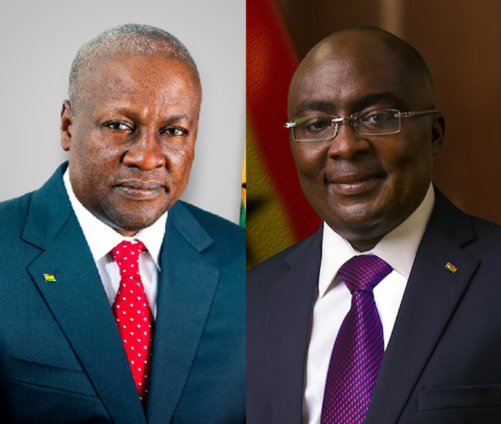
Some tax analysts have cast doubts over the ambitious tax proposals announced in the manifestos of the two major political parties, the New Patriotic Party (NPP), and the National Democratic Congress (NDC) to be rolled out under an International Monetary Fund (IMF) programme.
Both parties have promised to remove the Electronic Transaction Levy, the COVID-19 -Levy and reduce some taxes at the ports.
But Speaking to Joy Business, tax analyst Francis Timore Boi cautioned that the blanket removal of the taxes without alternative plans to boost revenue may derail the IMF programme.
He argued for example that the Covid-19 levy and the E-levy combined are projected to give the government about GH₵7.7 billion in 2025.
Mr Timore Boi expressed worry that no alternative revenue generation model has been proposed by the two major parties to make up for the shortfall that may occur as a result of the proposal to remove the taxes.
Read Also: NPP or NDC can scrap E-levy and betting tax, it won’t cost the economy much – Kwasi Peprah
He warned that this could go contrary to the IMF programme aimed at improving revenue and redirecting government expenditure to critical areas to help alleviate poverty.
“If any policy you seek to introduce may bring down revenue, the IMF may not be happy with that. You are planning to abolish the COVID-19 levy and the e-levy. COVID-19 levy alone in 2025 is estimated to bring in about GH₵5.6 billion. If you take it off, how are you going to replace it? In 2025, we are expecting E-levy to give us about GH₵2.1 billion and in 2026, it is projected to increase to about GH₵2.4 billion”.
Stressing the need to assess such tax proposals, Mr Timore Boi said the political parties must provide a workable budget that will provide a foresight of how the revenue shocks that will be created will be remedied.
“It is important because the budget has not shown us that you are going to introduce new taxes”.
He added that even though e- levy is an unpopular tax and the general sentiment is that it should go, there must be a discussion on how to fill the financial holes that will be created after its abolishment.
Latest Stories
-
Atta Akyea fumes as Manhyia MP is to spend another night in EOCO custody
9 minutes -
SSNIT says La Beach clearance was to protect hotel investments, beaches to remain public
1 hour -
APSU congratulates St Augustine’s College after back-to-back National Investment Quiz wins
1 hour -
Renewed flood intervention at Mallam Junction raises hopes among residents, businesses
2 hours -
St Augustine’s College retain National Investment Quiz title after nail-biting grand finale
2 hours -
Education infrastructure investment will drive Banda’s development – Ahmed Ibrahim
2 hours -
Teacher unions strike: Gov’t presents fresh proposals as talks end inconclusively
3 hours -
51,000 teachers’ promotion arrears to be validated for October payment – Education Minister
3 hours -
Kwabena Boamah appointed Board Chair for Impact Investing Ghana
3 hours -
Striking teacher unions to meet Fair Wages and Salaries Commission on October 6
4 hours -
EOCO working with AG to arraign Nana Baffour Awuah before weekend court
4 hours -
Duraplast reassures customers after fire, announces October 5 reopening
4 hours -
Call off strike, gov’t will not renege on promotion arrears pledge – Haruna Iddrisu to teacher unions
4 hours -
Committee set up to validate teachers eligible for 20% deprived-area allowance – Education Minister
4 hours -
Five-member committee to search for new Black Stars coach after Sports Ministry-GFA meeting
4 hours