


Audio By Carbonatix
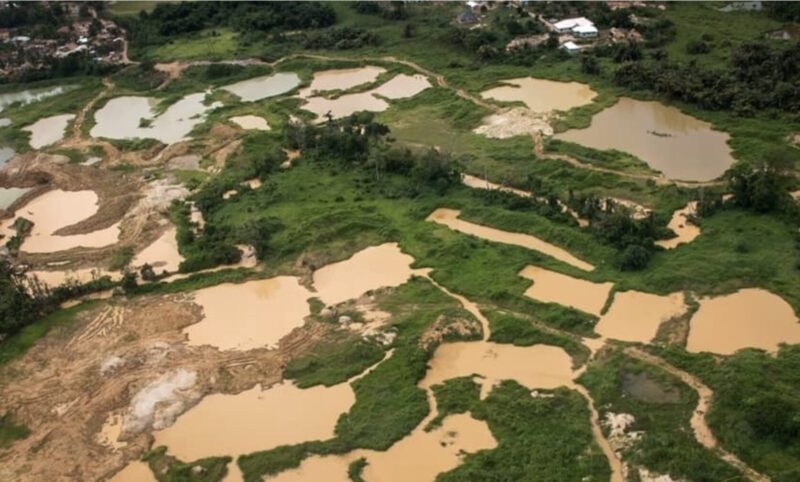
Food and Agric Minister Bryan Acheampong says declaring a state of emergency to combat illegal mining aka “galamsey,” would be ineffective without the active involvement of local communities.
In an interview on Joy News’ PM Express Business Edition the Minister highlighted the need for a national dialogue that engages all sectors of society to confront the crisis head-on.
Acheampong stressed that while government interventions have been launched, including deploying security forces, the challenge is beyond the scope of military or police actions.
“If we spread 34,000 soldiers across the country, they won’t even be able to stop galamsey in the Ashanti region alone. We need communal effort, not just central government enforcement,” he stated.
The Minister noted that while security personnel perform short-term acts of enforcement, illegal miners quickly return once the soldiers leave, which is why a community-led approach is essential.
Acheampong emphasised the critical role of community members in protecting their lands and resources.
He pointed out that those directly affected by the environmental devastation of galamsey, such as polluted rivers and destroyed farmlands, need to take the lead.
“You need a mindset change by the people in the community. When you fight the people who are destroying your land and polluting your waters, security personnel can back you up. But if you wait for central government to bring in soldiers or police, they don’t come and stay there,” he stated.
The Minister also argued that the responsibility for addressing galamsey does not rest solely with district authorities or political appointees.
He clarified that, apart from the District Chief Executive (DCE), most of those in local governance structures are part of the community and should play a vital role in stopping illegal mining activities.
“Are you saying the DCE is the only one looking on for all this to happen? Galamsey is happening in communities, not in the DCE’s house,” he asserted.
According to Acheampong, the fight against galamsey must move beyond Accra and into the affected communities themselves.
“We need a national dialogue on this matter. We need to agree on the role of the community, civil society, security forces, political parties, and the media. Only then can we swing into action.”
He concluded with a stern warning that without community involvement, the crisis would continue to escalate, putting Ghana’s food security, water supply, and environment at risk.
“What will a state of emergency do if you don’t have the community rising up to stop galamsey?” he asked, urging Ghanaians to take responsibility for safeguarding their own environments.
Latest Stories
-
Ghana explores centre of excellence for hearing, communication and cochlear implant care
1 hour -
Schizophrenia-related disorders lead mental health cases recorded in Ghana
1 hour -
Dutch authorities enlist Ghana in hunt for fugitive drug lord Bolle Jos
2 hours -
Ghana housing finance conference adopts communiqué to improve affordable housing access
6 hours -
Special Initiatives Minister urges Wa Technical Institute to enrol more girls as EU-backed solar training lab opens
7 hours -
In the matter of my first year at the Bar
7 hours -
ActionAid Ghana calls for an end to child marriage, greater investment in girls’ rights
7 hours -
Newsfile to tackle World Cup visa scandal, beach demolitions, education strikes, BRICS bid
7 hours -
UK-Ghana Trade & Investment Summit: Trade Resource Centre to help businesses maximise UK-Ghana trade opportunities
8 hours -
Embassy of Denmark celebrates World Maritime Day
8 hours -
Linking LEAP to productive inclusion could cut extreme poverty by 2030 – UNICEF
9 hours -
Trade Ministry backs use of creative arts to rehabilitate prison inmates
9 hours -
Negotiations with government to continue despite strike suspension – GNAT
9 hours -
‘Ghana cannot afford to waste public resources; every cedi has a job’ – Ato Forson
9 hours -
Ghana expects economic boost as World Assemblies of God Congress brings 10,000 delegates to Accra
9 hours