


Audio By Carbonatix
Ghana’s roads are claiming more lives as the number of crashes rise marginally. The latest provisional data from the National Road Safety Authority (NRSA) covering January to September 2025 paints a worrying picture where deaths are up by 20 percent, even though pedestrian knockdowns and overall crashes have reduced over the same period in 2024.
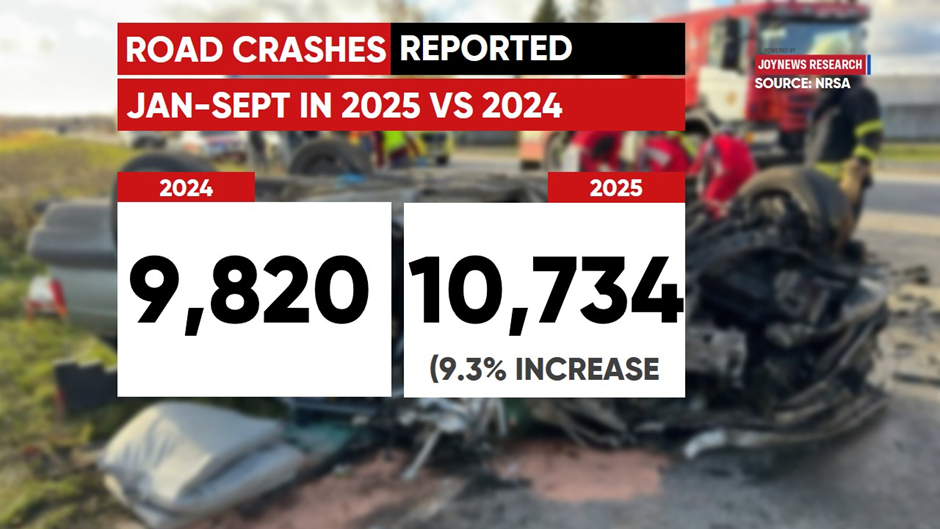
Analysing the provisional data on Road Traffic Crash & Casualty Situation revealed that 2,180 people died in road crashes between January and September 2025 — up from 1,817 deaths during the same period in 2024. The country also recorded 10,734 crashes, involving more than 18,000 vehicles of all types, from private cars and commercial vehicles to motorbikes and tricycles.

While the number of crashes rose by 9.3 percent, the jump in fatalities was much sharper, 20%, suggesting that Ghana’s roads are becoming deadlier per crash.
More crashes don’t always mean more deaths — but 2025 is different
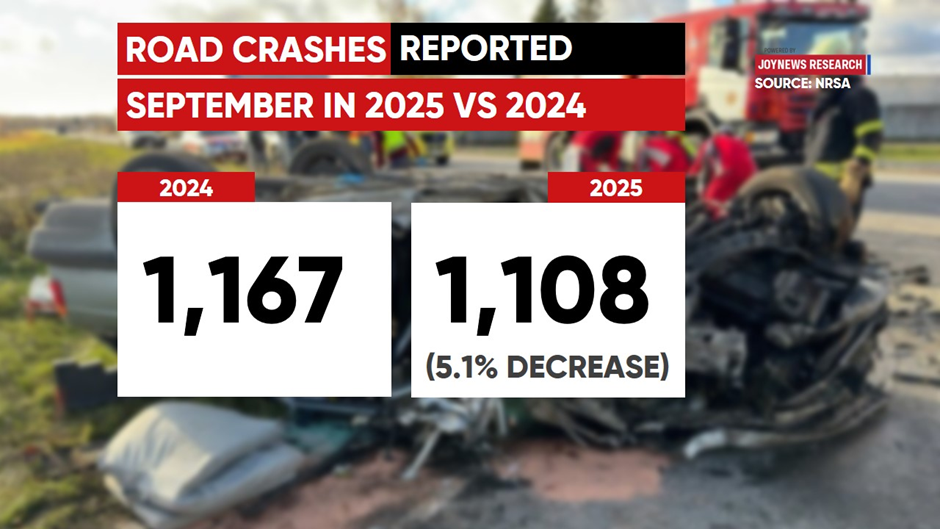
In September alone, the number of reported road crashes dropped by 5.1 percent compared to the same month last year. Yet, deaths surged by nearly 20 percent. This widening gap points to more severe crashes, poor emergency response, and the growing dominance of high-risk road users such as motorcyclists.
The data also shows that pedestrian knockdowns fell by 14.5 percent over the period. A sign of some success in awareness and urban traffic control but that progress has not translated into safer roads for drivers and passengers.
Deadliest seasons
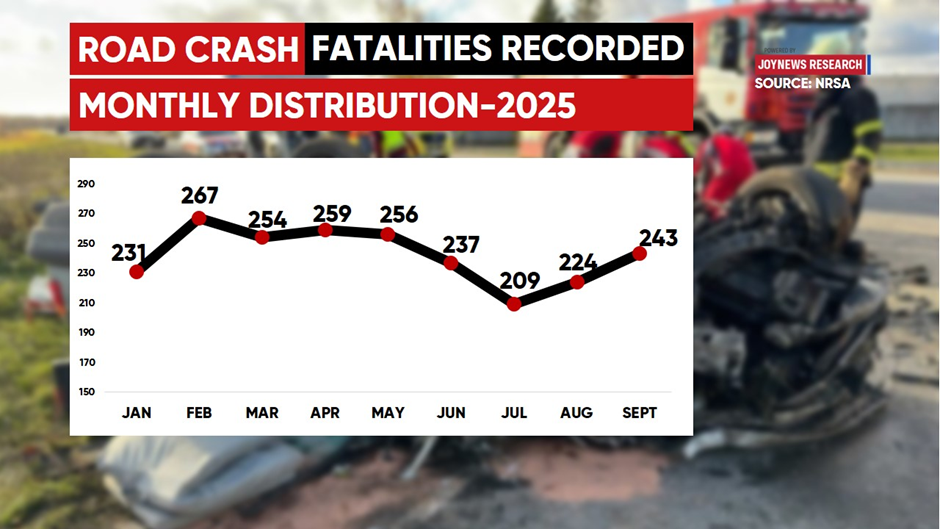
February remains the deadliest month of 2025 so far, with 267 deaths, followed by May, which recorded the highest number of crashes (1,332). Both months coincide with high mobility periods — one after school reopening and the other at the start of the rainy season.
Overall, Ghana’s road crash burden continues to rise despite years of awareness campaigns and improved data systems. The NRSA concludes that the Ashanti, Eastern, and Greater Accra Regions remain the country’s critical injury and death zones.
Better post-crash emergency response, stricter motorcycle regulation, and targeted enforcement in high-risk regions may aid curb the issue. Until then, the numbers suggest a grim truth that Ghana’s roads carry a deadlier cost.
Latest Stories
-
US seeks changes to rejected $109m health compact with Ghana – Mahama
3 minutes -
Nine dead in mass shooting at Pennsylvania home
21 minutes -
‘Time for Ukraine to get new president,’ says Trump after Zelensky condemns diesel deal
23 minutes -
Hincapie injury adds to Arsenal issues after Guimaraes rescue act
32 minutes -
Henderson scores twice as Chelsea thumb Bournemouth
41 minutes -
Photos: Mentapulse Africa convenes health and labour summit to address talent retention
54 minutes -
Mahama inspects Nkokɔ Nketenkete plant, eyes Bechem as chicken capital
1 hour -
Ghana not seeking full BRICS membership, applying as Partner Country – Ablakwa
1 hour -
Woman injures three people in third Poland school knife attack in a week
1 hour -
Ghana should join BRICS as partner, not member – NPP Bono East Regional Secretary
1 hour -
Ghana High Commission warns nationals in South Africa over protests in Johannesburg, Durban
1 hour -
Mahama praises Roads Minister for keeping Big Push contractors on their toes
1 hour -
World Cup Visa Scandal: ‘My client has not collected money for visas’ – Ampofo Ankrah’s lawyer
1 hour -
US immigration officials defend ICE agents who shot man in same car as child
2 hours -
Commentator Katie Zacharia picked as new White House press secretary
2 hours