

Audio By Carbonatix
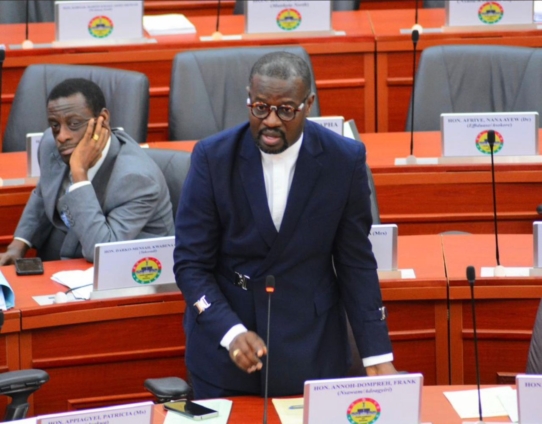
Minority Chief Whip and Nsawam-Adoagyiri MP Frank Annoh-Dompreh has called for urgent legislation to criminalise ecocide in Ghana, warning that environmental destruction is reaching alarming levels.
Raising the issue in Parliament on Monday, he said the scale of environmental degradation, particularly from illegal mining, demands decisive legal action.
“Honourable Speaker, I rise today with a profound sense of urgency and responsibility to speak on a matter that transcends partisan politics, economic growth, and short-term development agenda.”
“I speak to the need for legislative action against ecocide — the mass destruction of ecosystems — and for Ghana to align itself with a growing global movement to make environmental devastation a punishable crime both domestically and internationally.”

He explained that ecocide has a clear legal meaning under emerging international frameworks.
“Ecocide, as defined by an independent expert panel convened by Stop Ecocide International, refers to ‘unlawful or wanton acts committed with knowledge that there is a substantial likelihood of severe and either widespread or long-term damage to the environment’.”
“This is not abstract rhetoric; it is a legal concept with measurable criteria — damage that is severe, widespread, or long-term.”
According to him, existing international law does not yet recognise ecocide as a standalone crime during peacetime.
“The current legal framework in international law — notably the Rome Statute of the International Criminal Court — lists genocide, crimes against humanity, war crimes, and aggression.”
“Ecocide is not yet recognised as a standalone international crime during peacetime.”
He said the absence of such recognition has created a legal vacuum that allows large-scale environmental destruction to occur with limited accountability.
“This absence in international law creates a legal vacuum: corporations, state actors, and individuals can commit ecological destruction — deforestation, industrial pollution, oil spills, and climate-amplifying activities — with limited criminal liability.”
Mr Annoh-Dompreh pointed to the Niger Delta as a stark example of ecological devastation.
“The Nigerian Niger Delta, for example, has suffered over 7,000 oil spills from 1970 to 2000, devastating water, soil, and human health, with full environmental restoration estimated to take decades.”
He said momentum is building globally to criminalise ecocide.
“At least 11 countries have already incorporated ecocide into domestic law, including Armenia, Belarus, Kazakhstan, Russia, Ukraine, Moldova, Georgia, Ecuador, Chile, France and Belgium.”
“In 2023, Belgium became the first European Union country to criminalise ecocide as part of its penal code revisions.”
He argued that criminalising ecocide would send a powerful moral and legal signal.
“This is not merely environmental law — it is justice law.”
“Criminalisation signals a societal consensus that destroying ecosystems is morally and legally unacceptable.”
Turning to Ghana’s situation, the Minority Chief Whip warned that the country’s ecosystems are under severe pressure.
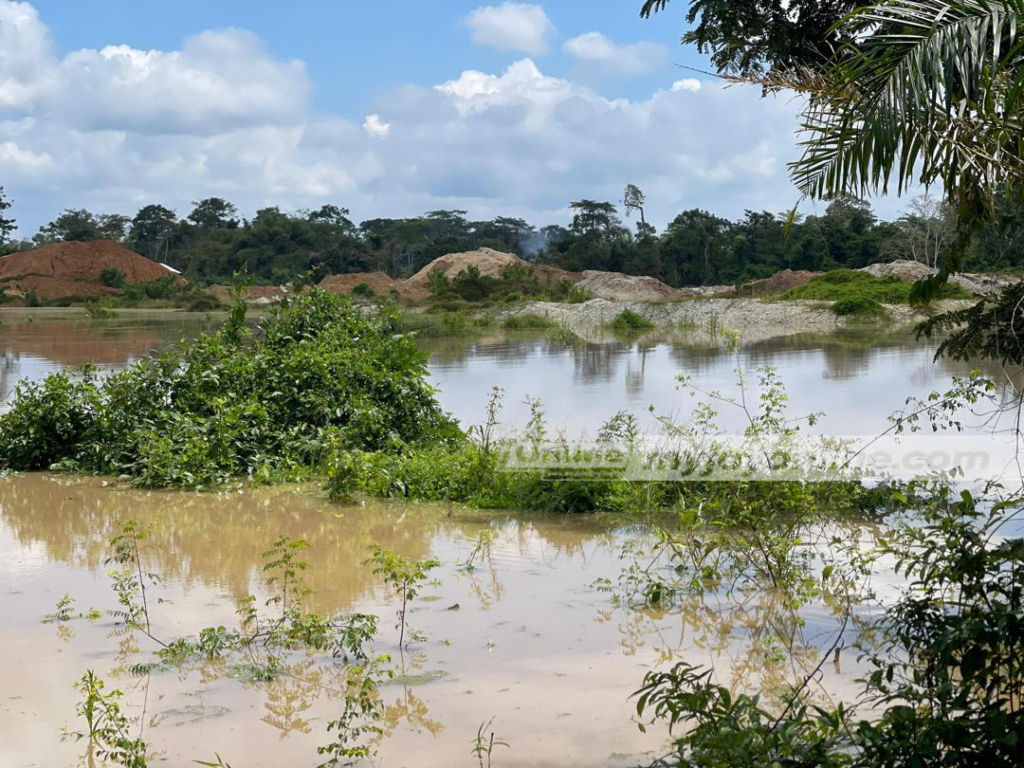
“As a country affected by deforestation, illegal mining (galamsey), and water pollution, Ghana’s ecosystems are under severe stress.”
“Recent reports indicate that up to 60% of our water bodies have suffered pollution due to illegal mining.”

He stressed that environmental destruction threatens public health, agriculture and long-term prosperity.
“The consequences of ecological damage are intergenerational — they affect our children, their livelihoods, and their right to a healthy environment.”
Mr Annoh-Dompreh urged Parliament to introduce legislation that clearly defines and criminalises ecocide in Ghana.
“Introduce a standalone legal provision defining and criminalising ecocide with clear thresholds for severity, duration, and impact.”
He also called on Ghana to champion the recognition of ecocide as an international crime.
“Advocate at the Assembly of States Parties of the International Criminal Court to include ecocide as the fifth international crime.”
“Ghana has an opportunity to be a regional and continental leader championing ecocide law.”
He said enforcement agencies must also be strengthened to ensure accountability.
“Empower Ghana’s environmental protection agencies and judiciary with investigative authority, evidence standards, and prosecutorial capacity to ensure accountability.”
Mr Annoh-Dompreh concluded by urging swift action to protect Ghana’s ecosystems and future prosperity.
“Protecting our ecosystems is not an optional policy. It is a fundamental commitment to future generations.”
“Let us give meaning to that commitment by making ecocide a crime under Ghanaian law.”
Latest Stories
-
Mahama: Ghana’s health reset will prioritise local drug production
16 minutes -
Mahama lists maternal and child health as first test of Accra Reset
17 minutes -
Beyond the GH¢500b Target: A legislative blueprint to protect Ghana’s workforce (Part 2)
18 minutes -
Alan Kyerematen explains why he contested 2024 election under Movement for Change
19 minutes -
+233 to host Pat Thomas’ 80th birthday concert
46 minutes -
EPA warns climate resilience plans face $22.6bn financing demand
46 minutes -
Today’s front pages: Tuesday, September 22, 2026
47 minutes -
Alan: ‘NPP has abandoned values of UP tradition, but I believe in those values’
48 minutes -
Sustaining economic gains is Mahama’s real test – Alan Kyerematen
50 minutes -
‘We won political independence, but global power remained elsewhere’ – Mahama
57 minutes -
Mahama to take Accra Reset agenda into AU framework in 2027
59 minutes -
Drugs cases disgracing Ghana before the world – Catholic Bishops Conference tells Government
1 hour -
Accra Reset must move from ‘design to execution’ – Mahama
1 hour -
Dangote praises Mahama’s handling of Ghana’s economic recovery
1 hour -
Mexico beckons as Ghana calls 20 to chase World Cup glory
2 hours